
Pulp Fiction, 1865 · page 356 of 400
The Argosy — page 356: what you’re looking at
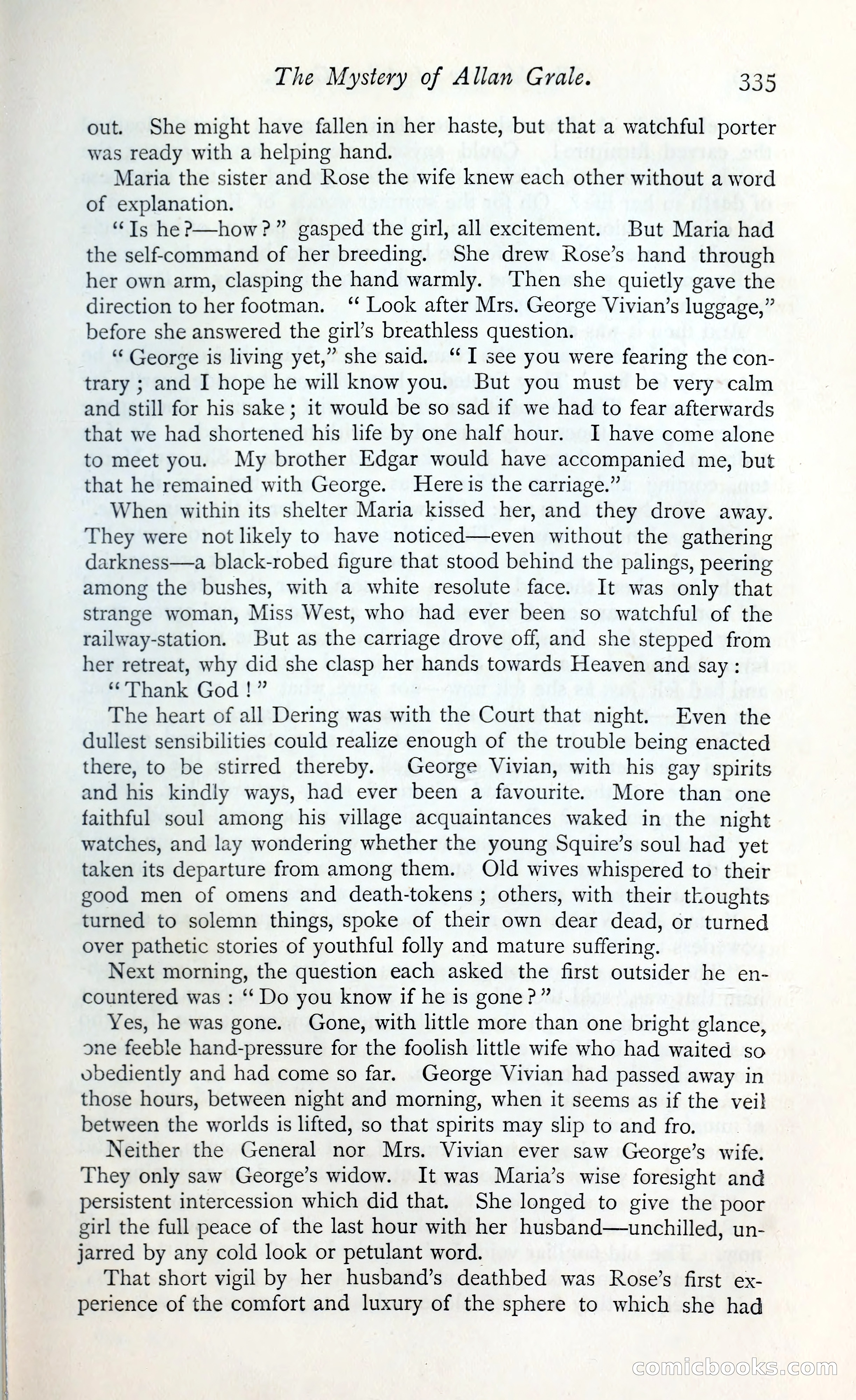
A restored page from Pulp Fiction, 1865. Page through the whole issue in the reader above.
📄 Transcribed text from this page (OCR, searchable)
Machine-transcribed from the original scan — historical spelling and the odd misread are preserved.
The Mystery of Allan Grale. 335 out. She might have fallen in her haste, but that a watchful porter was ready with a helping hand. Maria the sister and Rose the wife knew each other without a word of explanation. “Ts he?—how?” gasped the girl, all excitement. But Maria had the selfcommand of her breeding. She drew Rose’s hand through her own arm, clasping the hand warmly. ‘Then she quietly gave the direction to her footman. ‘‘ Look after Mrs. George Vivian’s luggage,” before she answered the girl’s breathless question. “ George is living yet,” she said. ‘“ I see you were fearing the con- trary ; and I hope he will know you. But you must be very calm and still for his sake; it would be so sad if we had to fear afterwards that we had shortened his life by one half hour. I have come alone to meet you. My brother Edgar would have accompanied me, but that he remained with George. Hereis the carriage.” When within its shelter Maria kissed her, and they drove away. They were not likely to have noticed—even without the gathering darkness—a black-robed figure that stood behind the palings, peering among the bushes, with a white resolute face. It was only that strange woman, Miss West, who had ever been so watchful of the railway-station. But as the carriage drove off, and she stepped from her retreat, why did she clasp her hands towards Heaven and say: “Thank God !” The heart of all Dering was siieh the Court that night. Even the dullest sensibilities could realize enough of the trouble being enacted there, to be stirred thereby. George Vivian, with his gay spirits and his kindly ways, had ever been a favourite. More than one faithful soul among his village acquaintances waked in the night watches, and lay wondering whether the young Squire’s soul had yet taken its departure from among them. Old wives whispered to their good men of omens and death-tokens ; others, with their thoughts turned to solemn things, spoke of their own dear dead, or turned over pathetic stories of youthful folly and mature suffering. Next morning, the question each asked the first outsider he en- countered was: ‘‘ Do you know if he is gone ?” Yes, he was gone. Gone, with little more than one bright glance, one feeb! e hand-pressure for the foolish little wife who had waited so obediently and had come so far. George Vivian had passed away in those hours, between night and morning, when it seems as if the veil between the worlds is lifted, so that spirits may slip to and fro. Neither the General nor Mrs. Vivian ever saw George’s wife. They only saw George’s widow. It was Maria’s wise foresight and persistent intercession which did that. She longed to give the poor girl the full peace of the last hour with her husband—unchilled, un- jarred by any cold look or petulant word. That short vigil by her husband’s deathbed was Rose’s first ex- perience of the comfort and luxury of the sphere to which she had COMRNIC OOOKS.C