
Pulp Fiction, 1865 · page 353 of 400
The Argosy — page 353: what you’re looking at
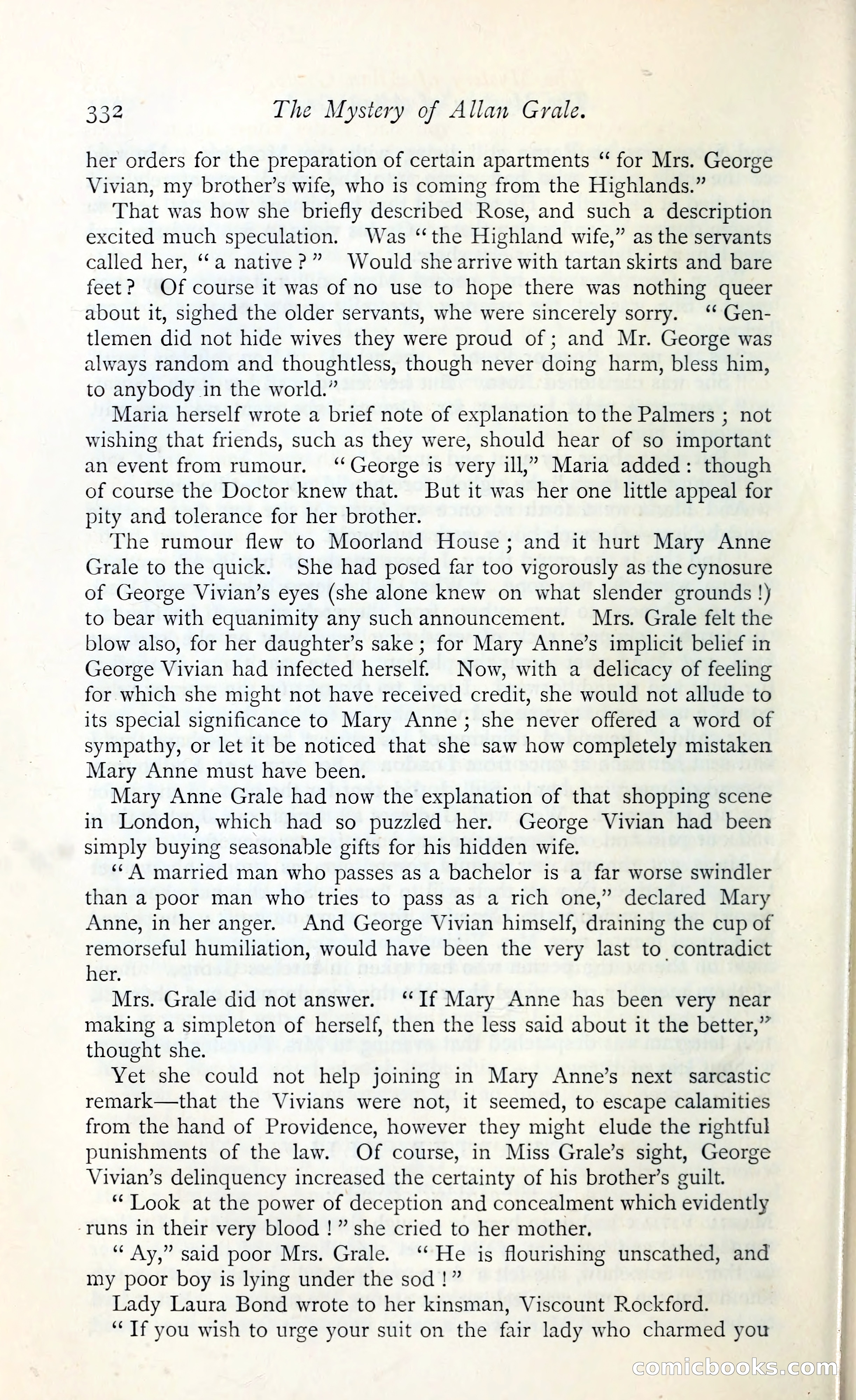
A restored page from Pulp Fiction, 1865. Page through the whole issue in the reader above.
📄 Transcribed text from this page (OCR, searchable)
Machine-transcribed from the original scan — historical spelling and the odd misread are preserved.
332 The Mystery of Allan Grale. her orders for the preparation of certain apartments ‘‘ for Mrs. George Vivian, my brother’s wife, who is coming from the Highlands.” That was how she briefly described Rose, and such a description excited much speculation. Was ‘‘the Highland wife,” as the servants called her, ‘‘a native?” Would she arrive with tartan skirts and bare feet? Of course it was of no use to hope there was nothing queer about it, sighed the older servants, whe were sincerely sorry. ‘‘ Gen- tlemen did not hide wives they were proud of ; and Mr. George was always random and thoughtless, though never doing harm, bless him, to anybody in the world.” Maria herself wrote a brief note of explanation to the Palmers ; not wishing that friends, such as they were, should hear of so important an event from rumour. ‘‘ George is very ill,” Maria added: though of course the Doctor knew that. But it was her one little appeal for pity and tolerance for her brother. The rumour flew to Moorland House; and it hurt Mary Anne Grale to the quick. She had posed far too vigorously as the cynosure of George Vivian’s eyes (she alone knew on what slender grounds !) to bear with equanimity any such announcement. Mrs. Grale felt the blow also, for her daughter’s sake; for Mary Anne’s implicit belief in George Vivian had infected herself. Now, with a delicacy of feeling for which she might not have received credit, she would not allude to its special significance to Mary Anne; she never offered a word of sympathy, or let it be noticed that she saw how completely mistaken Mary Anne must have been. Mary Anne Grale had now the explanation of that shopping scene in London, which had so puzzled her. George Vivian had been simply buying seasonable gifts for his hidden wife. ‘*A married man who passes as a bachelor is a far worse swindler than a poor man who tries to pass as a rich one,” declared Mary Anne, in her anger. And George Vivian himself, draining the cup of remorseful humiliation, would have been the very last to contradict her. Mrs. Grale did not answer. ‘‘If Mary Anne has been very near making a simpleton of herself, then the less said about it the better,” thought she. Yet she could not help joining in Mary Anne’s next sarcastic remark—that the Vivians were not, it seemed, to escape calamities from the hand of Providence, however they might elude the rightful punishments of the law. Of course, in Miss Grale’s sight, George Vivian’s delinquency increased the certainty of his brother’s guilt. ‘Look at the power of deception and concealment which evidently ‘runs in their very blood !” she cried to her mother, ‘‘ Ay,” said poor Mrs. Grale. ‘He is flourishing unscathed, and my poor boy is lying under the sod !” Lady Laura Bond wrote to her kinsman, Viscount Rockford. ‘Tf you wish to urge your suit on the fair lady who charmed you CONnIIENOOlKS (E(@)