
Pulp Fiction, 1865 · page 311 of 400
The Argosy — page 311: what you’re looking at
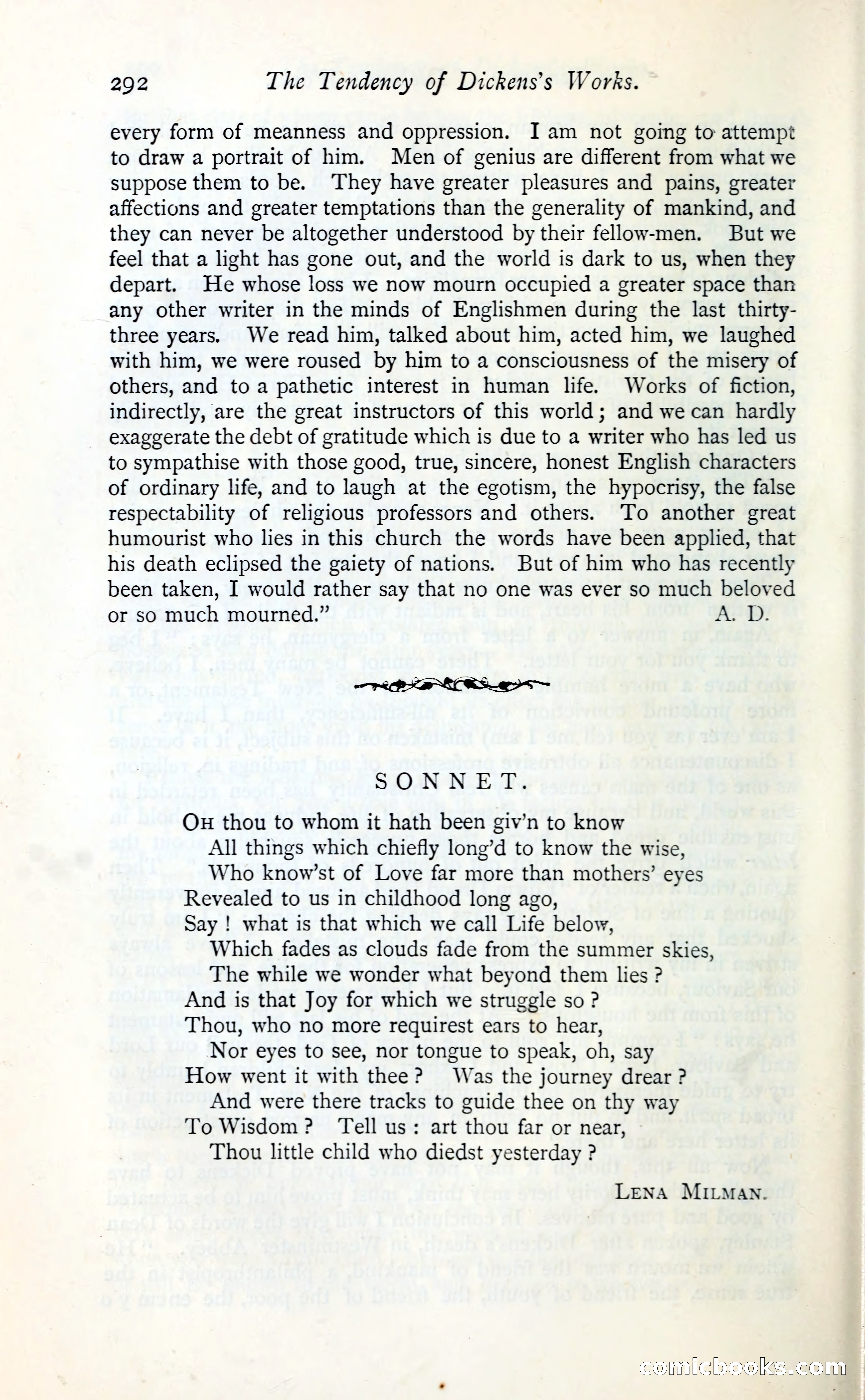
A restored page from Pulp Fiction, 1865. Page through the whole issue in the reader above.
📄 Transcribed text from this page (OCR, searchable)
Machine-transcribed from the original scan — historical spelling and the odd misread are preserved.
292 The Tendency of Dickens's Works. every form of meanness and oppression. I am not going to attempt to draw a portrait of him. Men of genius are different from what we suppose them to be. ‘They have greater pleasures and pains, greater affections and greater temptations than the generality of mankind, and they can never be altogether understood by their fellow-men. But we feel that a light has gone out, and the world is dark to us, when they depart. He whose loss we now mourn occupied a greater space than any other writer in the minds of Englishmen during the last thirty- three years. We read him, talked about him, acted him, we laughed with him, we were roused by him to a consciousness of the misery of others, and to a pathetic interest in human life. Works of fiction, indirectly, are the great instructors of this world; and we can hardly exaggerate the debt of gratitude which is due to a writer who has led us to sympathise with those good, true, sincere, honest English characters of ordinary life, and to laugh at the egotism, the hypocrisy, the false respectability of religious professors and others. ‘To another great humourist who lies in this church the words have been applied, that his death eclipsed the gaiety of nations. But of him who has recently been taken, I would rather say that no one was ever so much beloved or so much mourned.” A. D. SONNET, Ou thou to whom it hath been giv’n to know All things which chiefly long’d to know the wise, Who know’st of Love far more than mothers’ eyes Revealed to us in childhood long ago, Say ! what is that which we call Life below, Which fades as clouds fade from the summer skies, The while we wonder what beyond them lies ? And is that Joy for which we struggle so ? Thou, who no more requirest ears to hear, Nor eyes to see, nor tongue to speak, oh, say How went it with thee? Was the journey drear ? And were there tracks to guide thee on thy way To Wisdom? ‘Tell us: art thou far or near, Thou little child who diedst yesterday ? LENA MILMAN. CONnIClMOOlKS (E(@)