
Pulp Fiction, 1865 · page 279 of 400
The Argosy — page 279: what you’re looking at
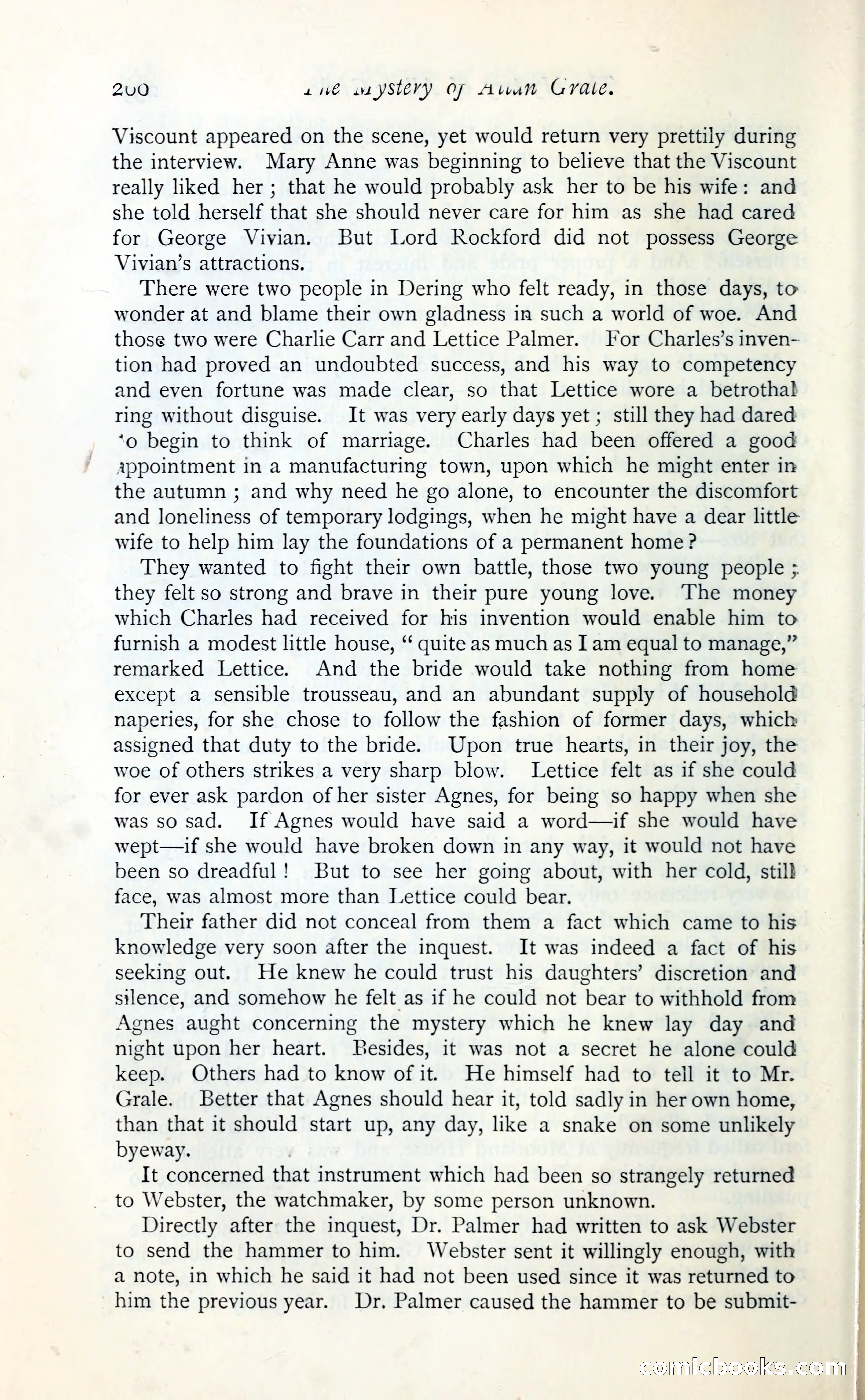
A restored page from Pulp Fiction, 1865. Page through the whole issue in the reader above.
📄 Transcribed text from this page (OCR, searchable)
Machine-transcribed from the original scan — historical spelling and the odd misread are preserved.
2V0 2we anystery Of Alun Grale. Viscount appeared on the scene, yet would return very prettily during the interview. Mary Anne was beginning to believe that the Viscount really liked her; that he would probably ask her to be his wife: and she told herself that she should never care for him as she had cared for George Vivian. But Lord Rockford did not possess George Vivian’s attractions. There were two people in Dering who felt ready, in those days, to wonder at and blame their own gladness in such a world of woe. And those two were Charlie Carr and Lettice Palmer. For Charles’s inven- tion had proved an undoubted success, and his way to competency and even fortune was made clear, so that Lettice wore a betrothal ring without disguise. It was very early days yet; still they had dared ‘o begin to think of marriage. Charles had been offered a good appointment in a manufacturing town, upon which he might enter in the autumn ; and why need he go alone, to encounter the discomfort and loneliness of temporary lodgings, when he might have a dear little wife to help him lay the foundations of a permanent home? They wanted to fight their own battle, those two young people ;. they felt so strong and brave in their pure young love. ‘The money which Charles had received for his invention would enable him to furnish a modest little house, ‘‘ quite as much as I am equal to manage,” remarked Lettice. And the bride would take nothing from home except a sensible trousseau, and an abundant supply of household naperies, for she chose to follow the fashion of former days, which assigned that duty to the bride. Upon true hearts, in their joy, the woe of others strikes a very sharp blow. Lettice felt as if she could for ever ask pardon of her sister Agnes, for being so happy when she was so sad. If Agnes would have said a word—if she would have wept—if she would have broken down in any way, it would not have been so dreadful! But to see her going about, with her cold, stil? face, was almost more than Lettice could bear. Their father did not conceal from them a fact which came to his knowledge very soon after the inquest. It was indeed a fact of his seeking out. He knew he could trust his daughters’ discretion and silence, and somehow he felt as if he could not bear to withhold from Agnes aught concerning the mystery which he knew lay day and night upon her heart. Besides, it was not a secret he alone could keep. Others had to know of it. He himself had to tell it to Mr. Grale. Better that Agnes should hear it, told sadly in her own home, than that it should start up, any day, like a snake on some unlikely byeway. It concerned that instrument which had been so strangely returned to Webster, the watchmaker, by some person unknown. Directly after the inquest, Dr. Palmer had written to ask Webster to send the hammer to him. Webster sent it willingly enough, with a note, in which he said it had not been used since it was returned to him the previous year. Dr. Palmer caused the hammer to be submit- CONMMICECOOO KS. (EO)