
Pulp Fiction, 1865 · page 249 of 400
The Argosy — page 249: what you’re looking at
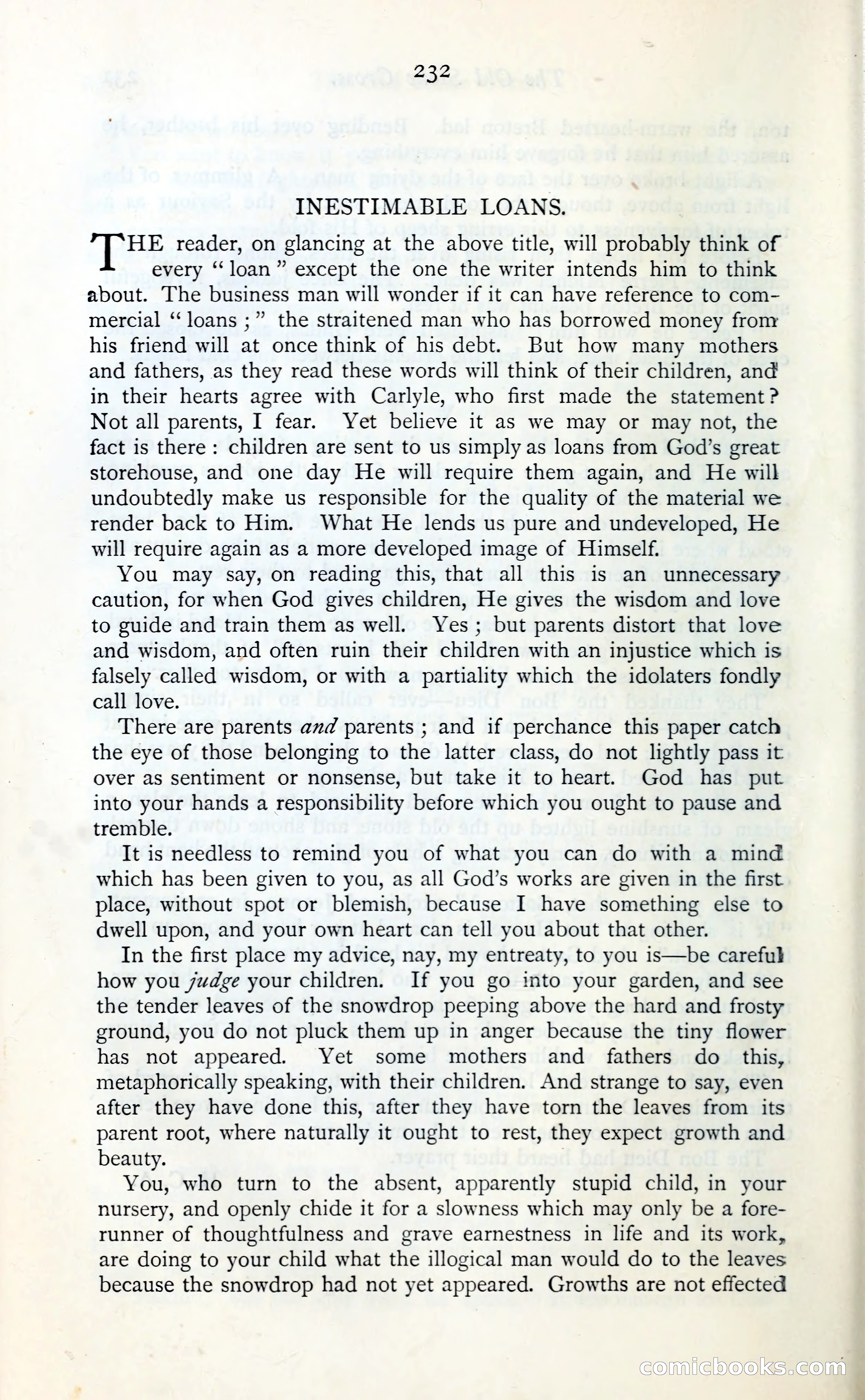
A restored page from Pulp Fiction, 1865. Page through the whole issue in the reader above.
📄 Transcribed text from this page (OCR, searchable)
Machine-transcribed from the original scan — historical spelling and the odd misread are preserved.
232 INESTIMABLE LOANS. ERE reader, on glancing at the above title, will probably think of every “loan” except the one the writer intends him to think about. The business man will wonder if it can have reference to com- mercial ‘loans ;” the straitened man who has borrowed money from his friend will at once think of his debt. But how many mothers and fathers, as they read these words will think of their children, and in their hearts agree with Carlyle, who first made the statement ? Not all parents, I fear. Yet believe it as we may or may not, the fact is there: children are sent to us simply as loans from God’s great storehouse, and one day He will require them again, and He will undoubtedly make us responsible for the quality of the material we render back to Him. What He lends us pure and undeveloped, He will require again as a more developed image of Himself. You may say, on reading this, that all this is an unnecessary caution, for when God gives children, He gives the wisdom and love to guide and train them as well. Yes; but parents distort that love and wisdom, and often ruin their children with an injustice which is falsely called wisdom, or with a partiality which the idolaters fondly call love. There are parents azd parents ; and if perchance this paper catch the eye of those belonging to the latter class, do not lightly pass it over as sentiment or nonsense, but take it to heart. God has put into your hands a responsibility before which you ought to pause and tremble. It is needless to remind you of what you can do with a mind which has been given to you, as all God’s works are given in the first place, without spot or blemish, because I have something else to dwell upon, and your own heart can tell you about that other. In the first place my advice, nay, my entreaty, to you is—be careful how you jwdge your children. If you go into your garden, and see the tender leaves of the snowdrop peeping above the hard and frosty ground, you do not pluck them up in anger because the tiny flower has not appeared. Yet some mothers and fathers do this, metaphorically speaking, with their children. And strange to say, even after they have done this, after they have torn the leaves from its parent root, where naturally it ought to rest, they expect growth and beauty. | You, who turn to the absent, apparently stupid child, in your nursery, and openly chide it for a slowness which may only be a fore- runner of thoughtfulness and grave earnestness in life and its work, are doing to your child what the illogical man would do to the leaves because the snowdrop had not yet appeared. Growths are not effected CONnIIClMOOKS (E(©) m