
Pulp Fiction, 1865 · page 236 of 400
The Argosy — page 236: what you’re looking at
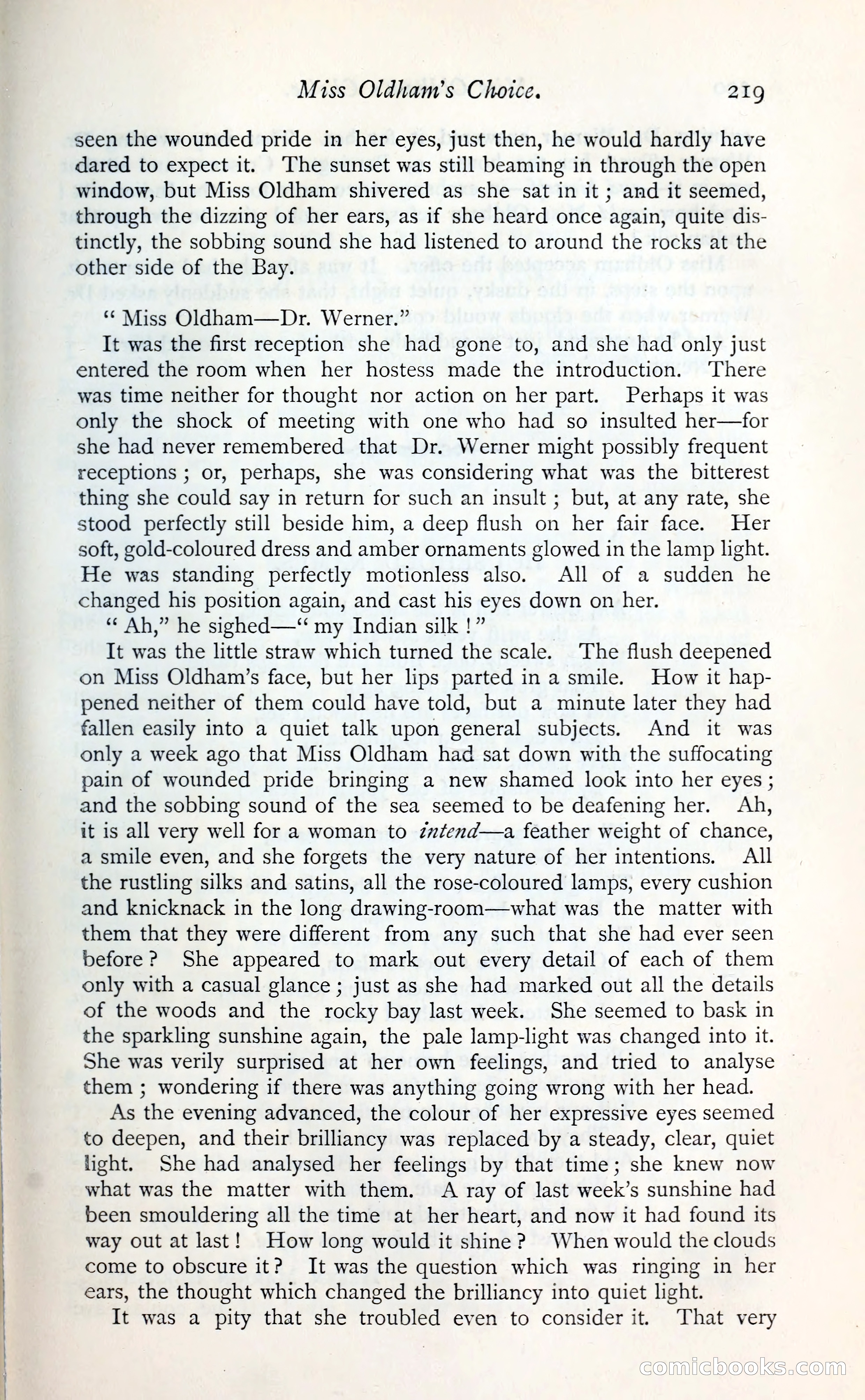
A restored page from Pulp Fiction, 1865. Page through the whole issue in the reader above.
📄 Transcribed text from this page (OCR, searchable)
Machine-transcribed from the original scan — historical spelling and the odd misread are preserved.
———eeoOOS— tl Str Miss Oldham’s Choice. 219 seen the wounded pride in her eyes, just then, he would hardly have dared to expect it. ‘The sunset was still beaming in through the open window, but Miss Oldham shivered as she sat in it; and it seemed, through the dizzing of her ears, as if she heard once again, quite dis- tinctly, the sobbing sound she had listened to around the rocks at the other side of the Bay. “ Miss Oldham—Dr. Werner.” It was the first reception she had gone to, and she had only just entered the room when her hostess made the introduction. ‘There was time neither for thought nor action on her part. Perhaps it was only the shock of meeting with one who had so insulted her—for she had never remembered that Dr. Werner might possibly frequent receptions ; or, perhaps, she was considering what was the bitterest thing she could say in return for such an insult ; but, at any rate, she stood perfectly still beside him, a deep flush on her fair face. Her soft, gold-coloured dress and amber ornaments glowed in the lamp lhght. He was standing perfectly motionless also. All of a sudden he changed his position again, and cast his eyes down on her. “‘ Ah,” he sighed—‘ my Indian silk !” It was the little straw which turned the scale. The flush deepened on Miss Oldham’s face, but her lips parted in a smile. How it hap- pened neither of them could have told, but a minute later they had fallen easily into a quiet talk upon general subjects. And it was only a week ago that Miss Oldham had sat down with the suffocating pain of wounded pride bringing a new shamed look into her eyes ; and the sobbing sound of the sea seemed to be deafening her. Ah, it is all very well for a woman to zzfend—a feather weight of chance, a smile even, and she forgets the very nature of her intentions. All the rustling silks and satins, all the rose-coloured lamps, every cushion and knicknack in the long drawing-room—what was the matter with them that they were different from any such that she had ever seen before? She appeared to mark out every detail of each of them only with a casual glance ; just as she had marked out all the details of the woods and the rocky bay last week. She seemed to bask in the sparkling sunshine again, the pale lamp-light was changed into it. She was verily surprised at her own feelings, and tried to analyse © them ; wondering if there was anything going wrong with her head. As the evening advanced, the colour of her expressive eyes seemed to deepen, and their brilliancy was replaced by a steady, clear, quiet light. She had analysed her feelings by that time; she knew now what was the matter with them. A ray of last week’s sunshine had been smouldering all the time at her heart, and now it had found its way out at last! How long would it shine? When would the clouds come to obscure it? It was the question which was ringing in her ears, the thought which changed the brilliancy into quiet light. It was a pity that she troubled even to consider it. That very COMnnicloolKs (CO) am