
Pulp Fiction, 1865 · page 157 of 400
The Argosy — page 157: what you’re looking at
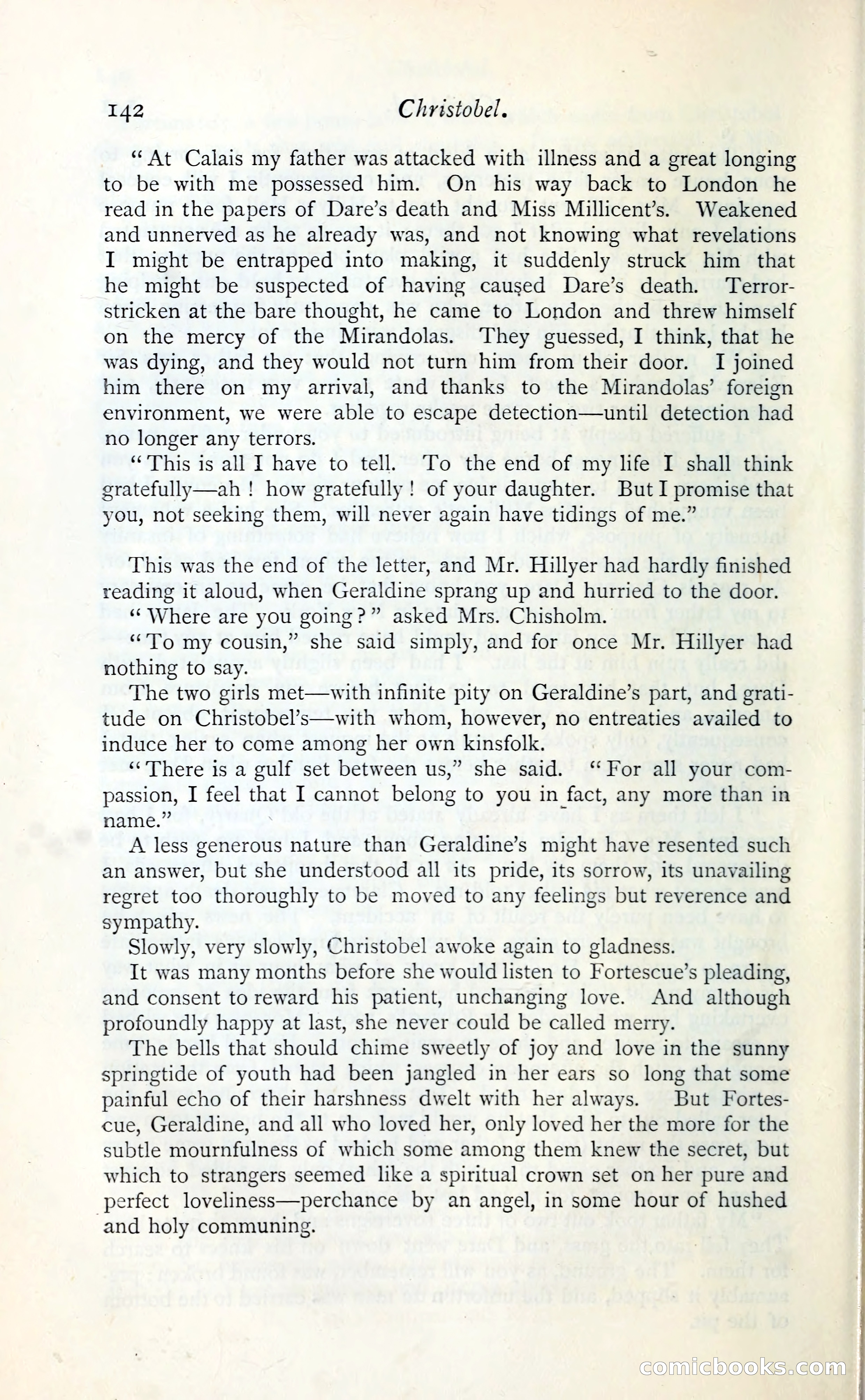
A restored page from Pulp Fiction, 1865. Page through the whole issue in the reader above.
📄 Transcribed text from this page (OCR, searchable)
Machine-transcribed from the original scan — historical spelling and the odd misread are preserved.
142 Christobel. “At Calais my father was attacked with illness and a great longing to be with me possessed him. On his way back to London he read in the papers of Dare’s death and Miss Millicent’s. Weakened and unnerved as he already was, and not knowing what revelations I might be entrapped into making, it suddenly struck him that he might be suspected of having caused Dare’s death. ‘Terror- stricken at the bare thought, he came to London and threw himself on the mercy of the Mirandolas. ‘They guessed, I think, that he was dying, and they would not turn him from their door. I joined him there on my arrival, and thanks to the Mirandolas’ foreign environment, we were able to escape detection—until detection had no longer any terrors. “This is all I have to tell. ‘To the end of my life I shall think gratefully—ah ! how gratefully! of your daughter. But I promise that you, not seeking them, will never again have tidings of me.” This was the end of the letter, and Mr. Hillyer had hardly finished reading it aloud, when Geraldine sprang up and hurried to the door. ‘Where are you going?” asked Mrs. Chisholm. “To my cousin,” she said simply, and for once Mr. Hillyer had nothing to say. The two girls met—with infinite pity on Geraldine’s part, and grati- tude on Christobel’s—with whom, however, no entreaties availed to induce her to come among her own kinsfolk. ‘There 1s a gulf set between us,” she said. ‘‘ For all your com- passion, I feel that I cannot belong to you in fact, any more than in name.” A less generous nature than Geraldine’s might have resented such an answer, but she understood all its pride, its sorrow, its unavailing regret too thoroughly to be moved to any feelings but reverence and sympathy. Slowly, very slowly, Christobel awoke again to gladness. It was many months before she would listen to Fortescue’s pleading, and consent to reward his patient, unchanging love. And although profoundly happy at last, she never could be called merry. The bells that should chime sweetly of joy and love in the sunny springtide of youth had been jangled in her ears so long that some painful echo of their harshness dwelt with her always. But Fortes- cue, Geraldine, and all who loved her, only loved her the more for the subtle mournfulness of which some among them knew the secret, but which to strangers seemed like a spiritual crown set on her pure and perfect loveliness—perchance by an angel, in some hour of hushed and holy communing. CONNIE OOKS (E€©) am