
Pulp Fiction, 1865 · page 137 of 400
The Argosy — page 137: what you’re looking at
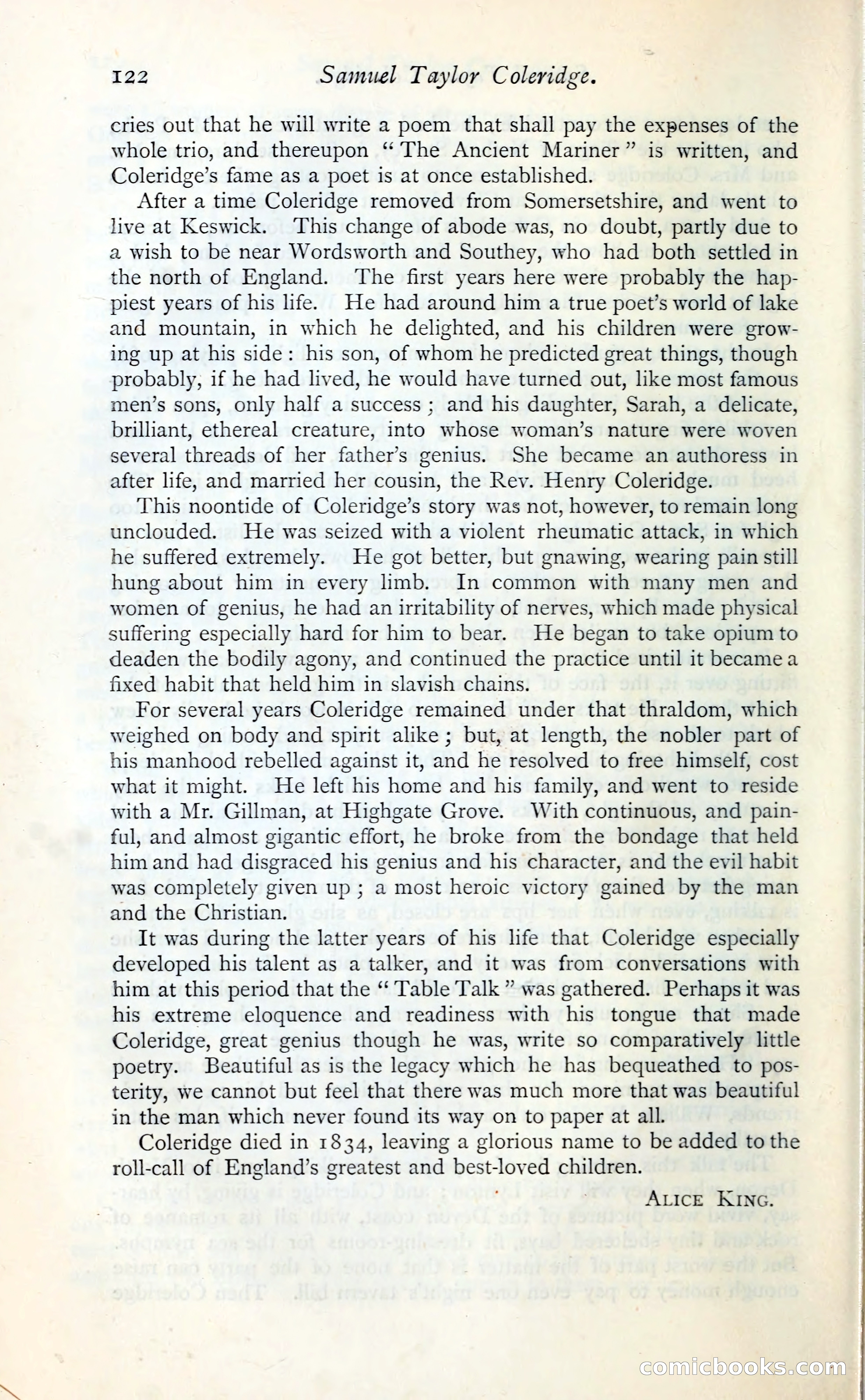
A restored page from Pulp Fiction, 1865. Page through the whole issue in the reader above.
📄 Transcribed text from this page (OCR, searchable)
Machine-transcribed from the original scan — historical spelling and the odd misread are preserved.
122 Samuel Taylor Coleridge. cries out that he will write a poem that shall pay the expenses of the whole trio, and thereupon “‘ The Ancient Mariner” is written, and Coleridge’s fame as a poet is at once established. After a time Coleridge removed from Somersetshire, and went to live at Keswick. ‘This change of abode was, no doubt, partly due to a wish to be near Wordsworth and Southey, who had both settled in the north of England. ‘The first years here were probably the hap- piest years of his life. He had around him a true poet’s world of lake and mountain, in which he delighted, and his children were grow- ing up at his side: his son, of whom he predicted great things, though probably, if he had lived, he would have turned out, like most famous men’s sons, only half a success ; and his daughter, Sarah, a delicate, brilliant, ethereal creature, into whose woman’s nature were woven several threads of her father’s genius. She became an authoress in after life, and married her cousin, the Rev. Henry Coleridge. This noontide of Coleridge’s story was not, however, to remain long unclouded. He was seized with a violent rheumatic attack, in which he suffered extremely. He got better, but gnawing, wearing pain still hung about him in every limb. In common with many men and women of genius, he had an irritability of nerves, which made physical suffering especially hard for him to bear. He began to take opium to deaden the bodily agony, and continued the practice until it became a fixed habit that held him in slavish chains. For several years Coleridge remained under that thraldom, which weighed on body and spirit alike; but, at length, the nobler part of his manhood rebelled against it, and he resolved to free himself, cost what it might. He left his home and his family, and went to reside with a Mr. Gillman, at Highgate Grove. With continuous, and pain- ful, and almost gigantic effort, he broke from the bondage that held him and had disgraced his genius and his character, and the evil habit was completely given up ; a most heroic victory gained by the man and the Christian. It was during the latter years of his life that Coleridge especially developed his talent as a talker, and it was from conversations with him at this period that the “ Table Talk ” was gathered. Perhaps it was his extreme eloquence and readiness with his tongue that made Coleridge, great genius though he was, write so comparatively little poetry. Beautiful as is the legacy which he has bequeathed to pos- terity, we cannot but feel that there was much more that was beautiful in the man which never found its way on to paper at all. Coleridge died in 1834, leaving a glorious name to be added to the roll-call of England’s greatest and best-loved children. ALICE KING. Gomilchbooks Go