
Pulp Fiction, 1865 · page 131 of 400
The Argosy — page 131: what you’re looking at
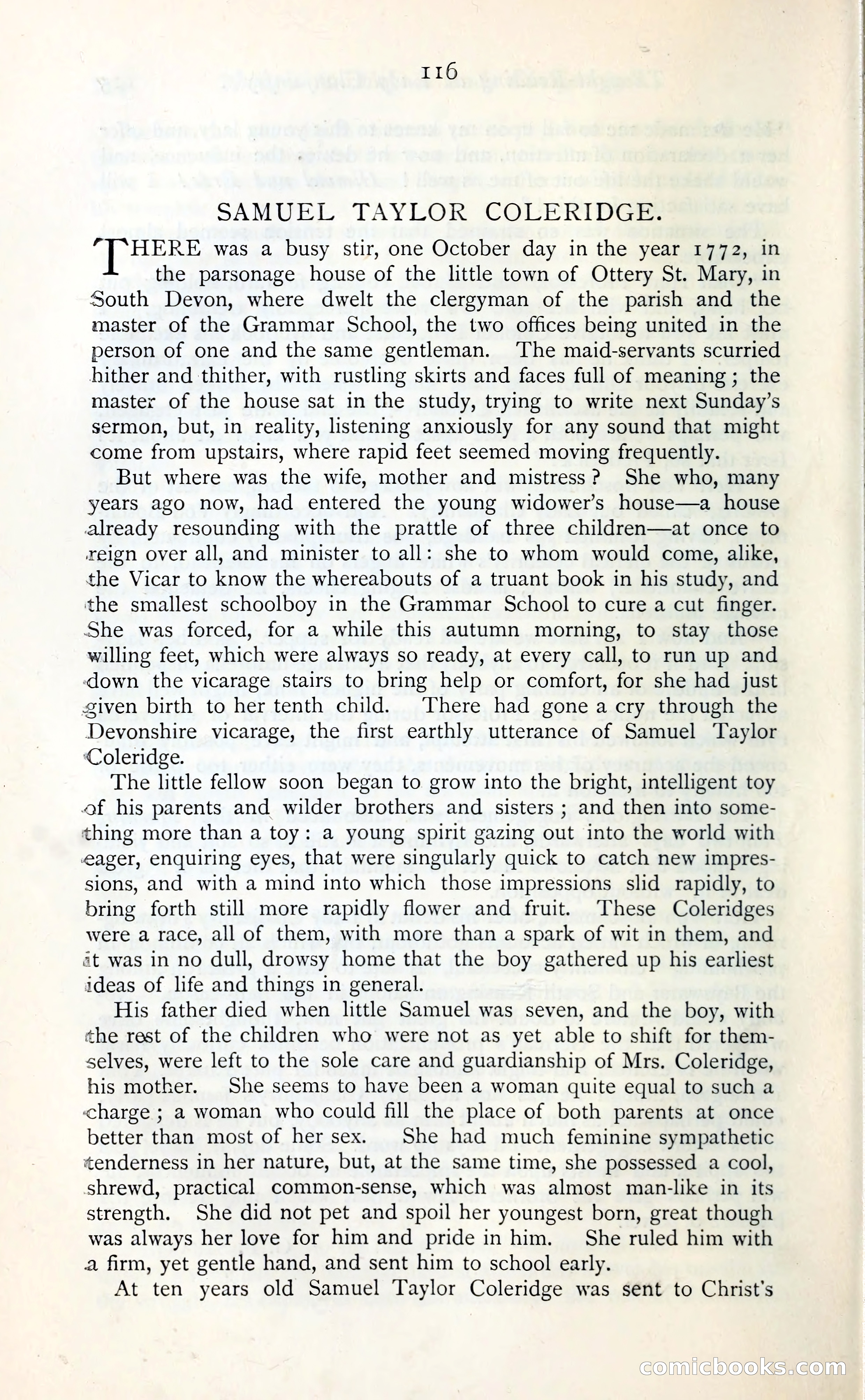
A restored page from Pulp Fiction, 1865. Page through the whole issue in the reader above.
📄 Transcribed text from this page (OCR, searchable)
Machine-transcribed from the original scan — historical spelling and the odd misread are preserved.
116 SAMUEL TAYLOR COLERIDG# “| ee was a busy stir, one October day in the year 1772, in the parsonage house of the little town of Ottery St. Mary, in South Devon, where dwelt the clergyman of the parish and the master of the Grammar School, the two offices being united in the person of one and the same gentleman. ‘The maid-servants scurried hither and thither, with rustling skirts and faces full of meaning; the master of the house sat in the study, trying to write next Sunday’s sermon, but, in reality, listening anxiously for any sound that might come from upstairs, where rapid feet seemed moving frequently. But where was the wife, mother and mistress? She who, many years ago now, had entered the young widower’s house—a house already resounding with the prattle of three children—at once to reign over all, and minister to all: she to whom would come, alike, the Vicar to know the whereabouts of a truant book in his study, and the smallest schoolboy in the Grammar School to cure a cut finger. She was forced, for a while this autumn morning, to stay those willing feet, which were always so ready, at every call, to run up and down the vicarage stairs to bring help or comfort, for she had just given birth to her tenth child. There had gone a cry through the Devonshire vicarage, the first earthly utterance of Samuel ‘Taylor Coleridge. The little fellow soon began to grow into the bright, intelligent toy of his parents and wilder brothers and sisters ; and then into some- thing more than a toy: a young spirit gazing out into the world with eager, enquiring eyes, that were singularly quick to catch new impres- sions, and with a mind into which those impressions slid rapidly, to bring forth still more rapidly flower and fruit. These Coleridges were a race, all of them, with more than a spark of wit in them, and at was in no dull, drowsy home that the boy gathered up his earliest ideas of life and things in general. His father died when little Samuel was seven, and the boy, with the rest of the children who were not as yet able to shift for them- selves, were left to the sole care and guardianship of Mrs. Coleridge, his mother. She seems to have been a woman quite equal to such a charge ; a woman who could fill the place of both parents at once better than most of her sex. She had much feminine sympathetic tenderness in her nature, but, at the same time, she possessed a cool, shrewd, practical common-sense, which was almost man-like in its strength. She did not pet and spoil her youngest born, great though was always her love for him and pride in him. She ruled him with a firm, yet gentle hand, and sent him to school early. At ten years old Samuel Taylor Coleridge was sent to Christ's CONNIE NOOLKS (E(0)