
Pulp Fiction, 1865 · page 301 of 400
The Argosy — page 301: what you’re looking at
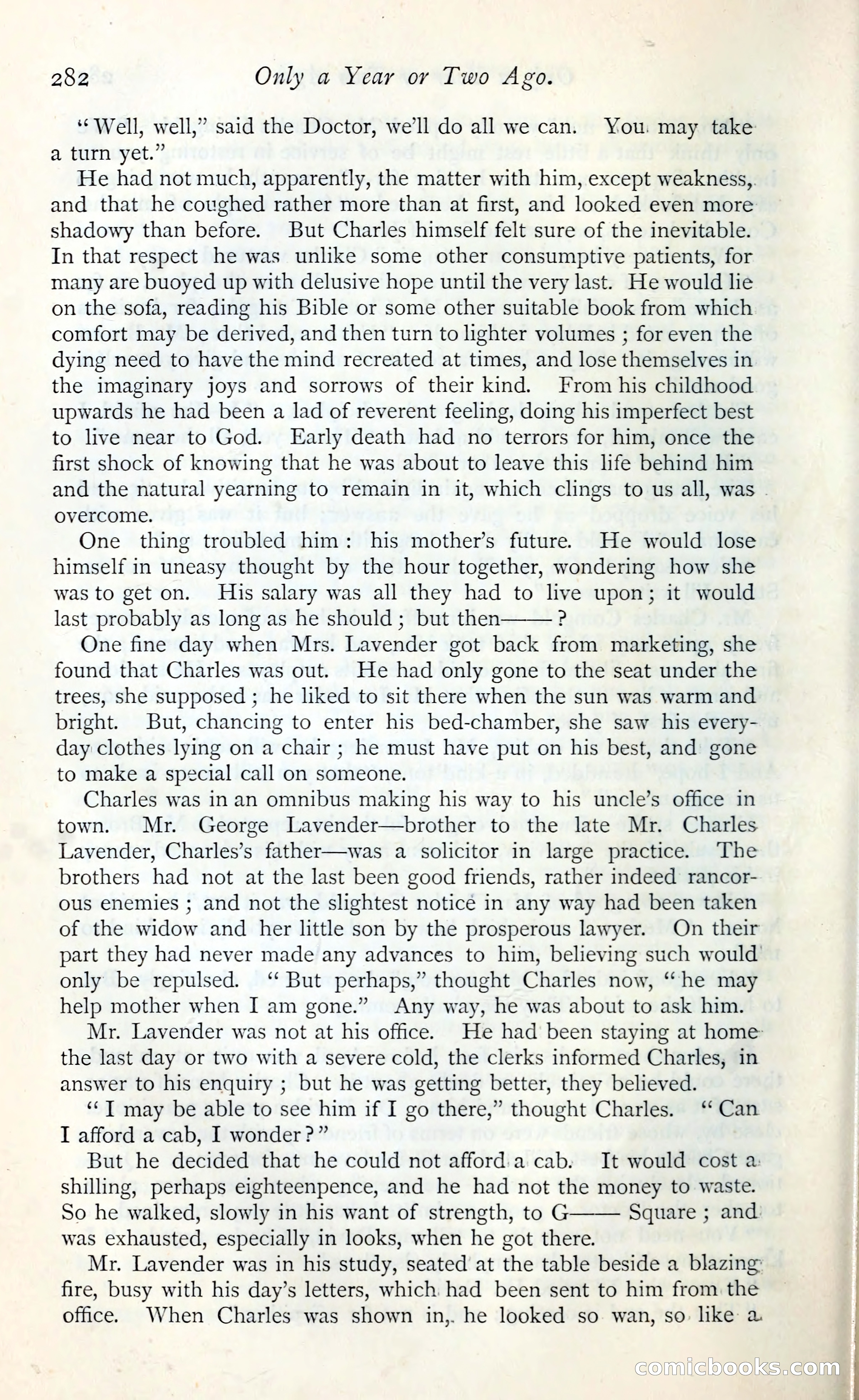
A restored page from Pulp Fiction, 1865. Page through the whole issue in the reader above.
📄 Transcribed text from this page (OCR, searchable)
Machine-transcribed from the original scan — historical spelling and the odd misread are preserved.
282 Only a Year or Two Ago. ‘Well, well,” said the Doctor, we'll do all we can. You: may take a turn yet.” He had not much, apparently, the matter with him, except weakness,. and that he coughed rather more than at first, and looked even more shadowy than before. But Charles himself felt sure of the inevitable. In that respect he was unlike some other consumptive patients, for many are buoyed up with delusive hope until the very last. He would lie on the sofa, reading his Bible or some other suitable book from which comfort may be derived, and then turn to lighter volumes ; for even the dying need to have the mind recreated at times, and lose themselves in the imaginary joys and sorrows of their kind. From his childhood upwards he had been a lad of reverent feeling, doing his imperfect best to live near to God. Early death had no terrors for him, once the first shock of knowing that he was about to leave this life behind him and the natural yearning to remain in it, which clings to us all, was . overcome. One thing troubled him: his mother’s future. He would lose himself in uneasy thought by the hour together, wondering how she was to get on. His salary was all they had to live upon; it would last probably as long as he should; but then P One fine day when Mrs. Lavender got back from marketing, she found that Charles was out. He had only gone to the seat under the trees, she supposed ; he liked to sit there when the sun was warm and bright. But, chancing to enter his bed-chamber, she saw his every- day clothes lying on a chair ; he must have put on his best, and gone to make a special call on someone. Charles was in an omnibus making his way to his uncle’s office in town. Mr. George Lavender—brother to the late Mr. Charles Lavender, Charles’s father—was a solicitor in large practice. ‘The brothers had not at the last been good friends, rather indeed rancor- ous enemies ; and not the slightest noticé in any way had been taken of the widow and her little son by the prosperous lawyer. On their part they had never made any advances to him, believing such would only be repulsed. ‘‘ But perhaps,” thought Charles now, “he may help mother when I am gone.” Any way, he was about to ask him. Mr. Lavender was not at his office. He had been staying at home: the last day or two with a severe cold, the clerks informed Charles, in answer to his enquiry ; but he was getting better, they believed. ‘‘T may be able to see him if I go there,” thought Charles. ‘“ Can I afford a cab, I wonder?” But he decided that he could not afford:a cab. It would cost a shilling, perhaps eighteenpence, and he had not the money to waste. So he walked, slowly in his want of strength, to G Square ; and was exhausted, especially in looks, when he got there. Mr. Lavender was in his study, seated at the table beside a blazing: fire, busy with his day’s letters, which had been sent to him from the office. When Charles was sown in,. he looked so wan, so like a CORNIELDOC Ss (E(0) m