
Pulp Fiction, 1865 · page 294 of 400
The Argosy — page 294: what you’re looking at
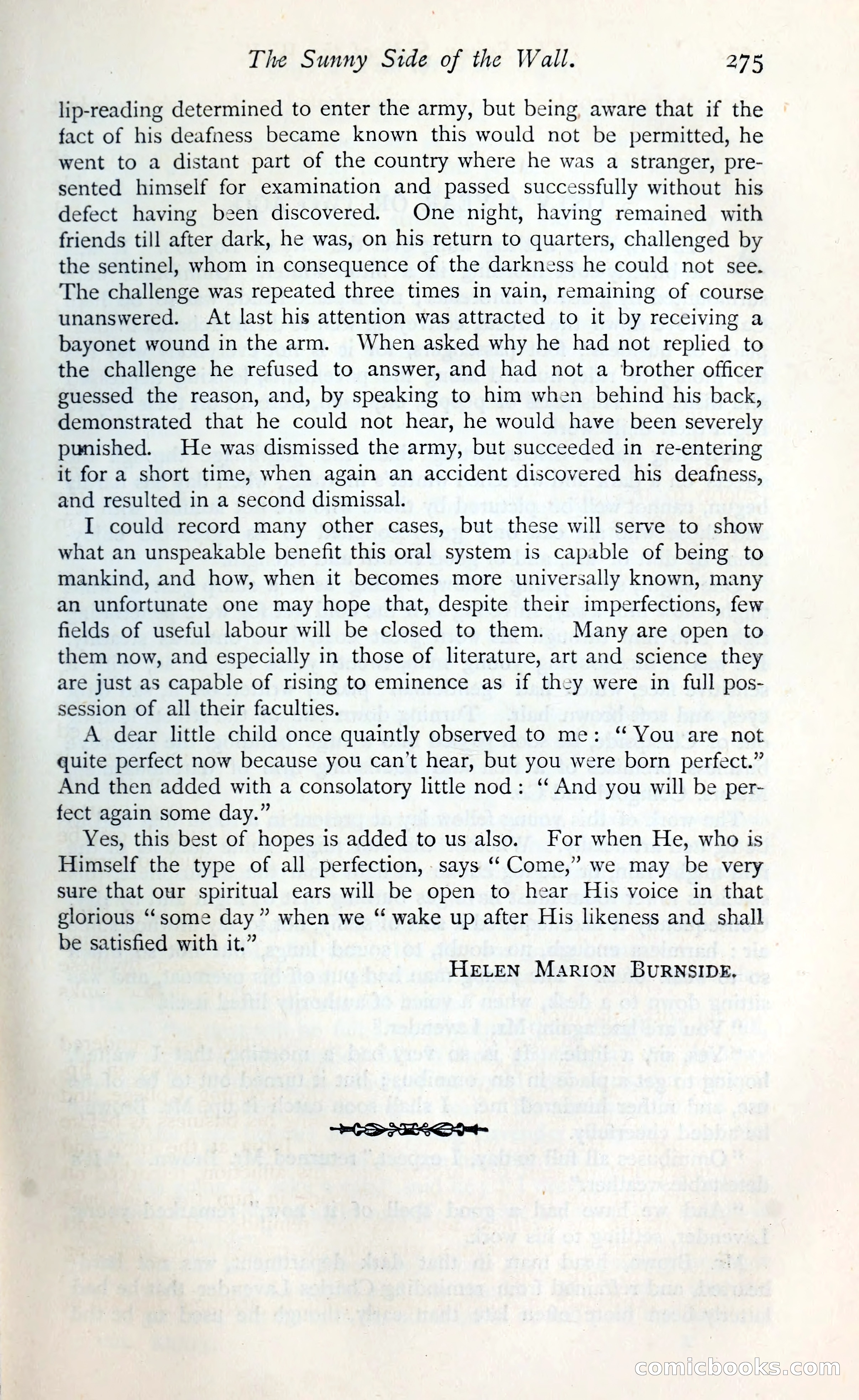
A restored page from Pulp Fiction, 1865. Page through the whole issue in the reader above.
📄 Transcribed text from this page (OCR, searchable)
Machine-transcribed from the original scan — historical spelling and the odd misread are preserved.
Tie Sunny Side of the Wall. 275 lip-reading determined to enter the army, but being, aware that if the fact of his deafness became known this would not be permitted, he went to a distant part of the country where he was a stranger, pre- sented himself for examination and passed successfully without his defect having been discovered. One night, having remained with friends till after dark, he was, on his return to quarters, challenged by the sentinel, whom in consequence of the darkness he could not see. The challenge was repeated three times in vain, remaining of course unanswered. At last his attention was attracted to it by receiving a bayonet wound in the arm. When asked why he had not replied to the challenge he refused to answer, and had not a brother officer guessed the reason, and, by speaking to him when behind his back, demonstrated that he could not hear, he would have been severely punished. He was dismissed the army, but succeeded in re-entering it fora short time, when again an accident discovered his deafness, and resulted in a second dismissal. I could record many other cases, but these will serve to show what an unspeakable benefit this oral system is capable of being to mankind, and how, when it becomes more universally known, many an unfortunate one may hope that, despite their imperfections, few fields of useful labour will be closed to them. Many are open to them now, and especially in those of literature, art and science they are just as capable of rising to eminence as if they were in full pos- session of all their faculties. A dear little child once quaintly observed to me: ‘“ You are not quite perfect now because you can’t hear, but you were born perfect.” And then added with a consolatory httle nod: ‘‘ And you will be per- fect again some day.” Yes, this best of hopes is added to us also. For when He, who is Himself the type of all perfection, . says ‘‘ Come,’ we may be very sure that our spiritual ears will be open to hear His voice in that glorious ‘“‘some day” when we “ wake up after His likeness and shall be satisfied with it.” HELEN MARION BURNSIDE, COUN a VNOOKS (SO) an