
Pulp Fiction, 1865 · page 265 of 400
The Argosy — page 265: what you’re looking at
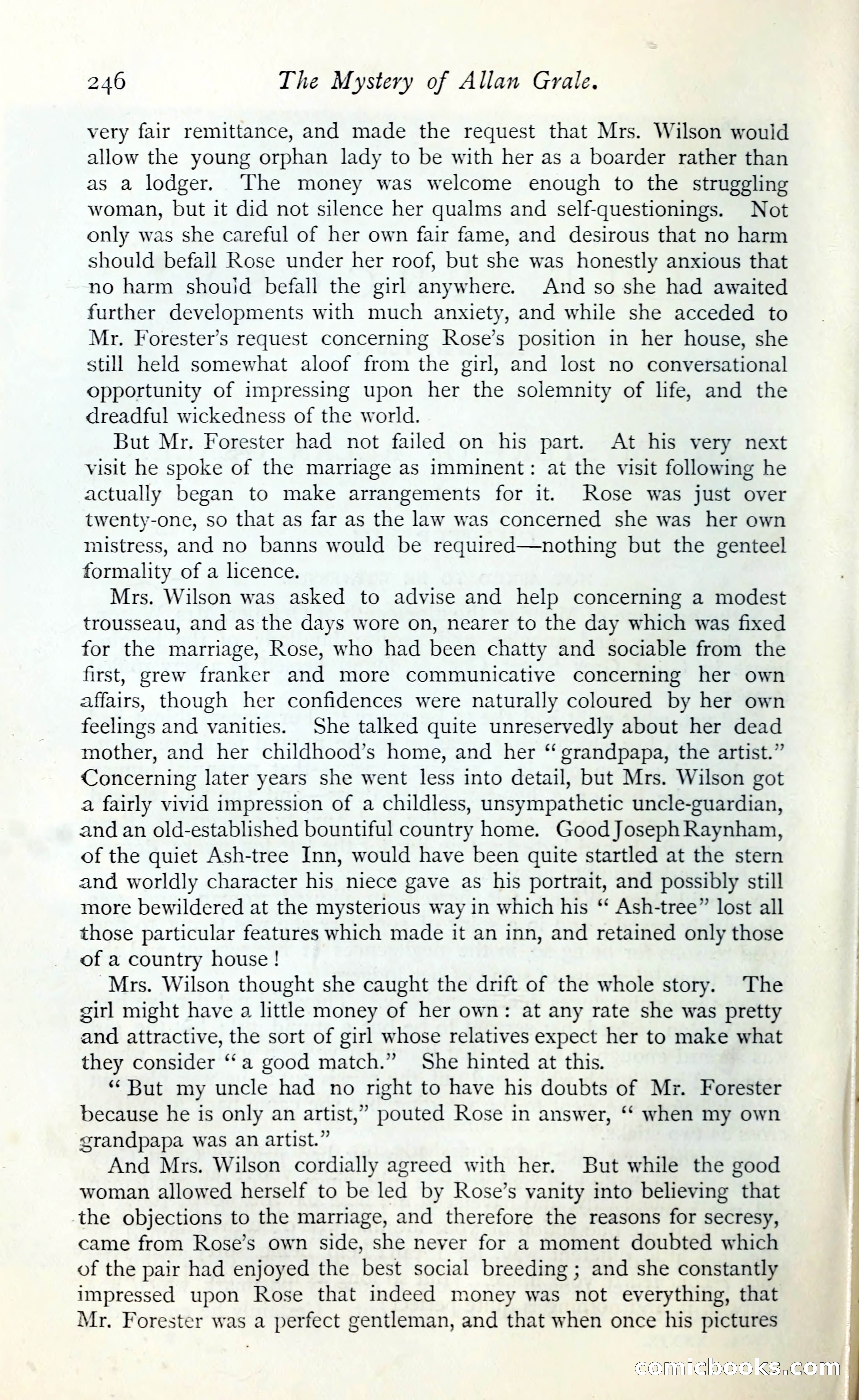
A restored page from Pulp Fiction, 1865. Page through the whole issue in the reader above.
📄 Transcribed text from this page (OCR, searchable)
Machine-transcribed from the original scan — historical spelling and the odd misread are preserved.
246 The Mystery of Allan Grale. very fair remittance, and made the request that Mrs. Wilson would allow the young orphan lady to be with her as a boarder rather than as a lodger. ‘The money was welcome enough to the struggling woman, but it did not silence her qualms and self-questionings. Not only was she careful of her own fair fame, and desirous that no harm should befall Rose under her roof, but she was honestly anxious that no harm shouid befall the girl anywhere. And so she had awaited further developments with much anxiety, and while she acceded to Mr. Forester’s request concerning Rose’s position in her house, she still held somewhat aloof from the girl, and lost no conversational opportunity of impressing upon her the solemnity of life, and the dreadful wickedness of the world. But Mr. Forester had not failed on his part. At his very next visit he spoke of the marriage as imminent: at the visit following he actually began to make arrangements for it. Rose was just over twenty-one, so that as far as the law was concerned she was her own mistress, and no banns would be required—nothing but the genteel formality of a licence. Mrs. Wilson was asked to advise and help concerning a modest trousseau, and as the days wore on, nearer to the day which was fixed for the marriage, Rose, who had been chatty and sociable from the first, grew franker and more communicative concerning her own affairs, though her confidences were naturally coloured by her own feelings and vanities. She talked quite unreservedly about her dead mother, and her childhood’s home, and her “ grandpapa, the artist.” Concerning later years she went less into detail, but Mrs. Wilson got a fairly vivid impression of a childless, unsympathetic uncle-guardian, and an old-established bountiful country home. Good Joseph Raynham, of the quiet Ash-tree Inn, would have been quite startled at the stern and worldly character his niece gave as his portrait, and possibly still more bewildered at the mysterious way in which his “ Ash-tree” lost all those particular features which made it an inn, and retained only those of a country house! Mrs. Wilson thought she caught the drift of the whole story. The girl might have a little money of her own: at any rate she was pretty and attractive, the sort of girl whose relatives expect her to make what they consider ‘‘a good match.” She hinted at this. “ But my uncle had no right to have his doubts of Mr. Forester because he is only an artist,” pouted Rose in answer, ‘‘ when my own grandpapa was an artist.” And Mrs. Wilson cordially agreed with her. But while the good woman allowed herself to be led by Rose’s vanity into believing that the objections to the marriage, and therefore the reasons for secresy, came from Rose’s own side, she never for a moment doubted which of the pair had enjoyed the best social breeding ; and she constantly impressed upon Rose that indeed money was not everything, that Mr. Forester was a perfect gentleman, and that when once his pictures EOMIGIOOKS (e(@)