
Pulp Fiction, 1865 · page 226 of 400
The Argosy — page 226: what you’re looking at
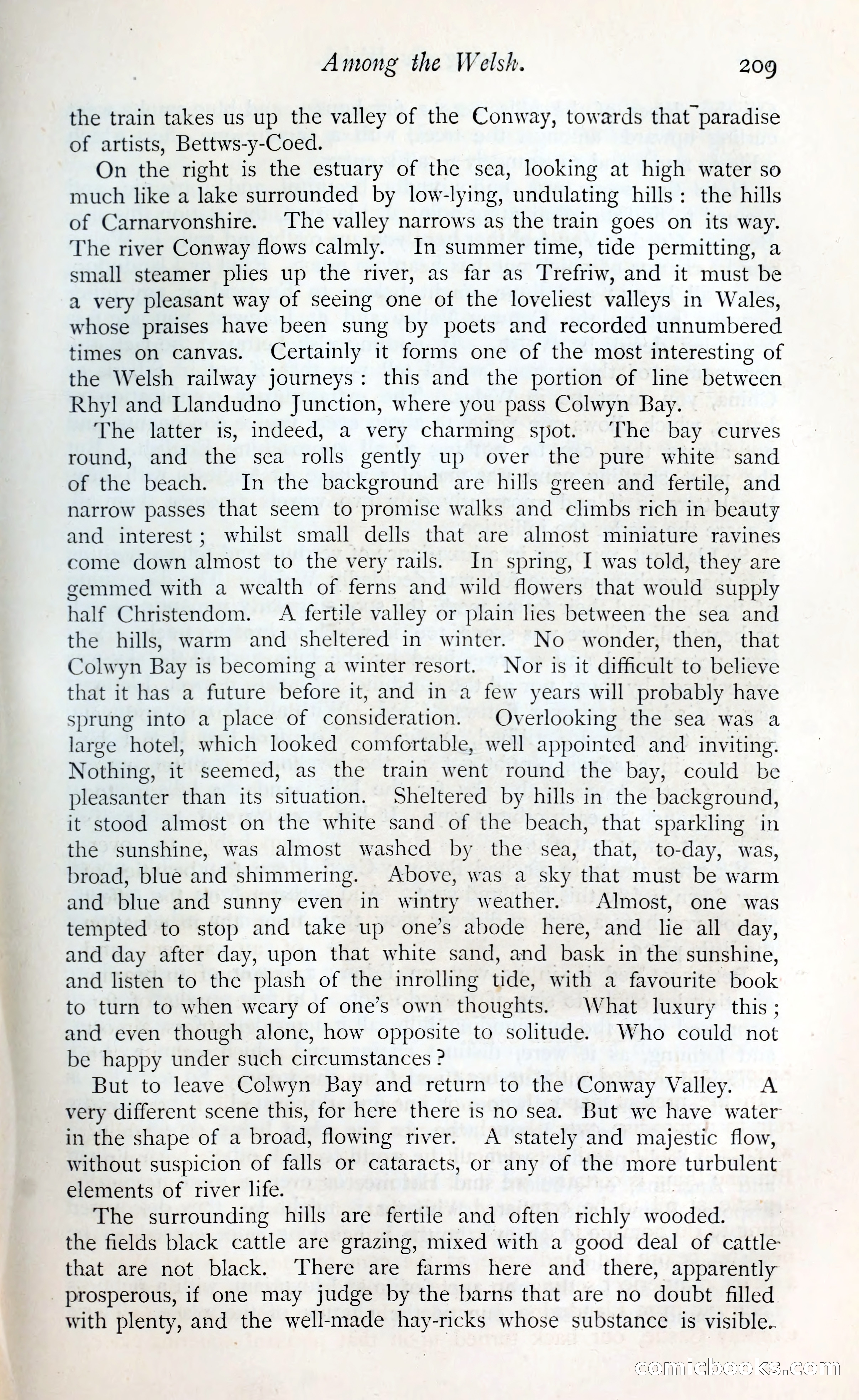
A restored page from Pulp Fiction, 1865. Page through the whole issue in the reader above.
📄 Transcribed text from this page (OCR, searchable)
Machine-transcribed from the original scan — historical spelling and the odd misread are preserved.
Among the Welsh. 209 the train takes us up the valley of the Conway, towards that paradise of artists, Bettws-y-Coed. On the right is the estuary of the sea, looking at high water so much like a lake surrounded by low-lying, undulating hills: the hills of Carnarvonshire. The valley narrows as the train goes on its way. The river Conway flows calmly. In summer time, tide permitting, a small steamer plies up the river, as far as ‘Trefriw, and it must be a very pleasant way of seeing one of the loveliest valleys in Wales, whose praises have been sung by poets and recorded unnumbered times on canvas. Certainly it forms one of the most interesting of the Welsh railway journeys: this and the portion of line between Rhyl and Llandudno Junction, where you pass Colwyn Bay. The latter is, indeed, a very charming spot. The bay curves round, and the sea rolls gently up over the pure white sand of the beach. In the background are hills green and fertile, and narrow passes that seem to promise walks and climbs rich in beauty and interest; whilst small dells that are almost miniature ravines come down almost to the very rails. In spring, I was told, they are gemmed with a wealth of ferns and wild flowers that would supply half Christendom. A fertile valley or plain hes between the sea and the hills; warm and sheltered in winter. No wonder, then, that Colwyn Bay is becoming a winter resort. Nor is it difficult to believe that it has a future before it, and in a few years will probably have sprung into a place of consideration. Overlooking the sea was a large hotel, which looked comfortable, well appointed and inviting. Nothing, it seemed, as the train went round the bay, could be ~ pleasanter than its situation. Sheltered by hills in the background, it stood almost on the white sand of the beach, that sparkling in the sunshine, was almost washed by the sea, that, to-day, was, broad, blue and shimmering. Above, was a sky that must be warm and blue and sunny even in wintry weather. Almost, one was tempted to stop and take up one’s abode here, and lie all day, and day after day, upon that white sand, and bask in the sunshine, and listen to the plash of the inrolling tide, with a favourite book to turn to when weary of one’s own thoughts. What luxury this; and even though alone, how opposite to sohtude. Who could not be happy under such circumstances ? But to leave Colwyn Bay and return to the Conway Valley. <A very different scene this, for here there is no sea. But we have water in the shape of a broad, flowing river. <A stately and majestic flow, without suspicion of falls or cataracts, or any of the more turbulent elements of river life. , The surrounding hills are fertile and often richly wooded. the fields black cattle are grazing, mixed with a good deal of cattle that are not black. ‘There are farms here and there, apparently prosperous, if one may judge by the barns that are no doubt filled with plenty, and the well-made hay-ricks whose substance is visible.. COnnIClOoks (SO