
Pulp Fiction, 1865 · page 160 of 400
The Argosy — page 160: what you’re looking at
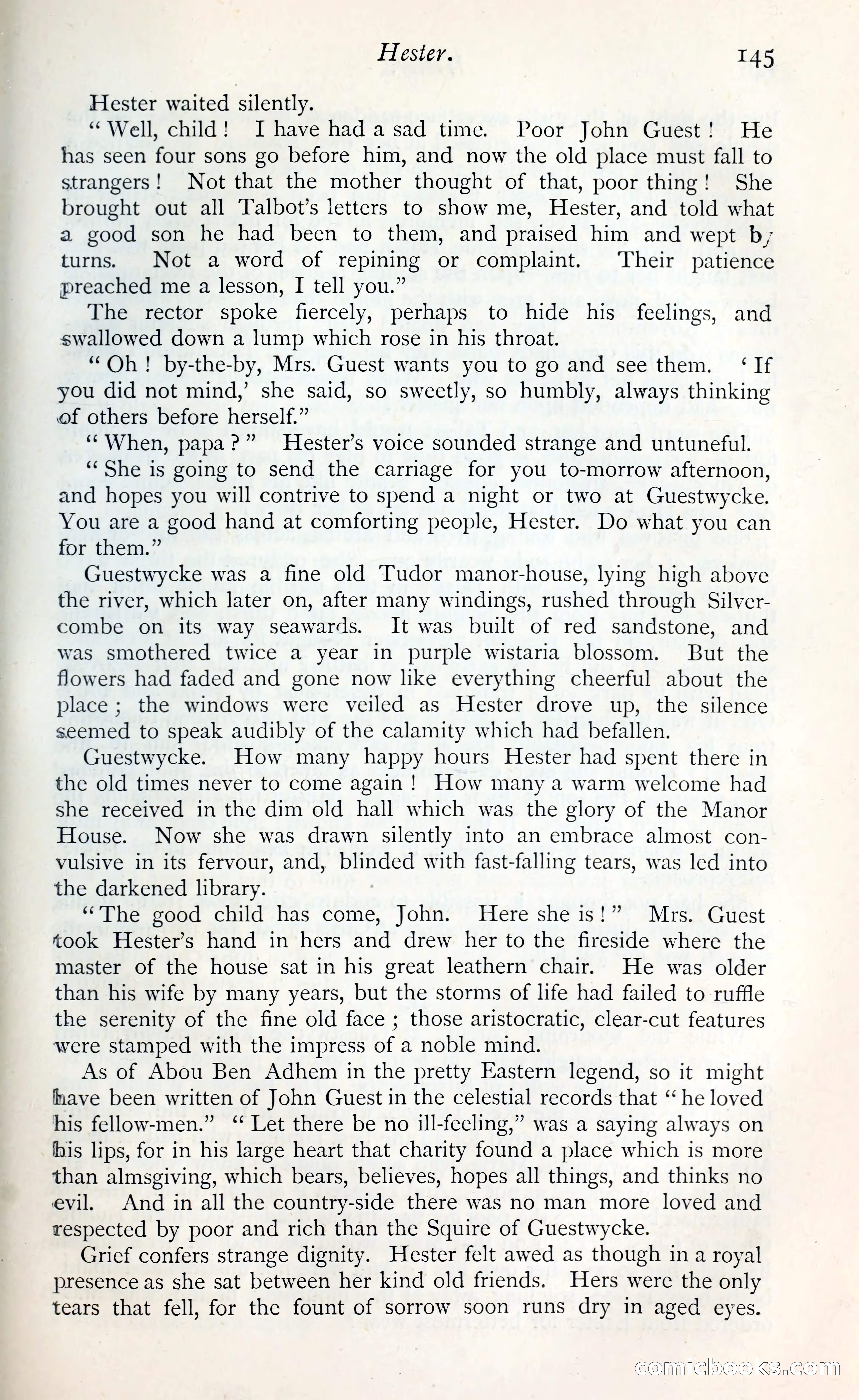
A restored page from Pulp Fiction, 1865. Page through the whole issue in the reader above.
📄 Transcribed text from this page (OCR, searchable)
Machine-transcribed from the original scan — historical spelling and the odd misread are preserved.
Hester. I45 Hester waited silently. “Well, child! I have had asad time. Poor John Guest! He has seen four sons go before him, and now the old place must fall to strangers! Not that the mother thought of that, poor thing! She brought out all Talbot’s letters to show me, Hester, and told what a good son he had been to them, and praised him and wept b; turns. Not a word of repining or complaint. ‘Their patience preached me a lesson, I tell you.” The rector spoke fiercely, perhaps to hide his feelings, and swallowed down a lump which rose in his throat. “Oh! by-the-by, Mrs. Guest wants you to go and see them. ‘If you did not mind,’ she said, so sweetly, so humbly, always thinking of others before herself.” “When, papa?” Hester’s voice sounded strange and untuneful. ‘““She is going to send the carriage for you to-morrow afternoon, and hopes you will contrive to spend a night or two at Guestwycke. You are a good hand at comforting people, Hester. Do what you can aor, thea.’ Guestwycke was a fine old Tudor manor-house, lying high above the river, which later on, after many windings, rushed through Silver- combe on its way seawards. It was built of red sandstone, and was smothered twice a year in purple wistaria blossom. But the flowers had faded and gone now like everything cheerful about the place ; the windows were veiled as Hester drove up, the silence seemed to speak audibly of the calamity which had befallen. Guestwycke. How many happy hours Hester had spent there in the old times never to come again! How many a warm welcome had she received in the dim old hall which was the glory of the Manor House. Now she was drawn silently into an embrace almost con- vulsive in its fervour, and, blinded with fast-falling tears, was led into the darkened library. “The good child has come, John. Here she is!” Mrs. Guest took Hester’s hand in hers and drew her to the fireside where the master of the house sat in his great leathern chair. He was older than his wife by many years, but the storms of life had failed to ruffle the serenity of the fine old face ; those aristocratic, clear-cut features were stamped with the impress of a noble mind. As of Abou Ben Adhem in the pretty Eastern legend, so it might Ihave been written of John Guest in the celestial records that “he loved his fellow-men.” ‘ Let there be no ill-feeling,” was a saying always on his lips, for in his large heart that charity found a place which is more than almsgiving, which bears, believes, hopes all things, and thinks no evil. And in all the country-side there was no man more loved and respected by poor and rich than the Squire of Guestwycke. Grief confers strange dignity. Hester felt awed as though ina roy ‘al presence as she sat between her kind old friends. Hers were the only tears that fell, for the fount of sorrow soon runs dry in aged eyes. GOnmilGaooks (SO)