
Pulp Fiction, 1865 · page 126 of 400
The Argosy — page 126: what you’re looking at
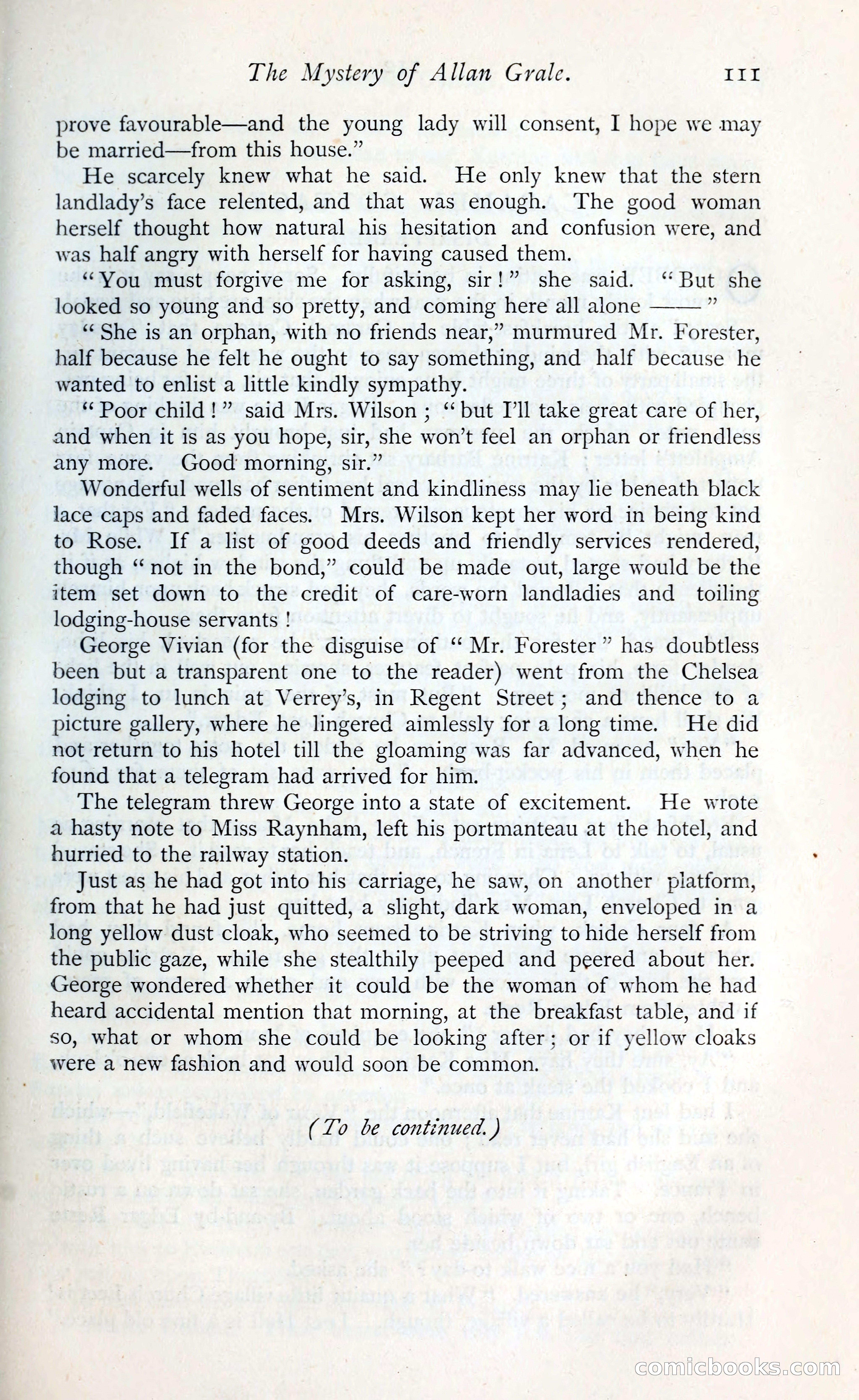
A restored page from Pulp Fiction, 1865. Page through the whole issue in the reader above.
📄 Transcribed text from this page (OCR, searchable)
Machine-transcribed from the original scan — historical spelling and the odd misread are preserved.
The Mystery of Allan Grale. III prove favourable—and the young lady will consent, I hope we may be married—from this house.” He scarcely knew what he said. He only knew that the stern landlady’s face relented, and that was enough. The good woman herself thought how natural his hesitation and confusion were, and was half angry with herself for having caused them. “You must forgive me for asking, sir!” she said. ‘‘ But she looked so young and so pretty, and coming here all alone ——— ” «She is an orphan, with no friends near,” murmured Mr. Forester, half because he felt he ought to say something, and half because he wanted to enlist a little kindly sympathy. * Poor child!” said Mrs. Wilson; “but I’ll take great care of her, and when it is as you hope, sir, she won’t feel an orphan or friendless any more. Good morning, sir.” Wonderful wells of sentiment and kindliness may le beneath black lace caps and faded faces. Mrs. Wilson kept her word in being kind to Rose. If a list of good deeds and friendly services rendered, though “not in the bond,” could be made out, large would be the item set down to the credit of care-worn landladies and _ toiling lodging-house servants ! George Vivian (for the disguise of ‘‘ Mr. Forester ” has doubtless been but a transparent one to the reader) went from the Chelsea lodging to lunch at Verrey’s, in Regent Street; and thence to a picture gallery, where he lingered aimlessly for a long time. He did not return to his hotel till the gloaming was far advanced, when he found that a telegram had arrived for him. The telegram threw George into a state of excitement. He wrote a hasty note to Miss Raynham, left his portmanteau at the hotel, and hurried to the railway station. Just as he had got into his carriage, he saw, on another platform, from that he had just quitted, a slight, dark woman, enveloped in a long yellow dust cloak, who seemed to be striving to hide herself from the public gaze, while she stealthily peeped and peered about her. George wondered whether it could be the woman of whom he had heard accidental mention that morning, at the breakfast table, and if so, what or whom she could be looking after; or if yellow cloaks were a new fashion and would soon be common. (Zo be contenued. ) CORNICLOO <S (C(O)