
Pulp Fiction, 1865 · page 86 of 399
The Argosy — page 86: what you’re looking at
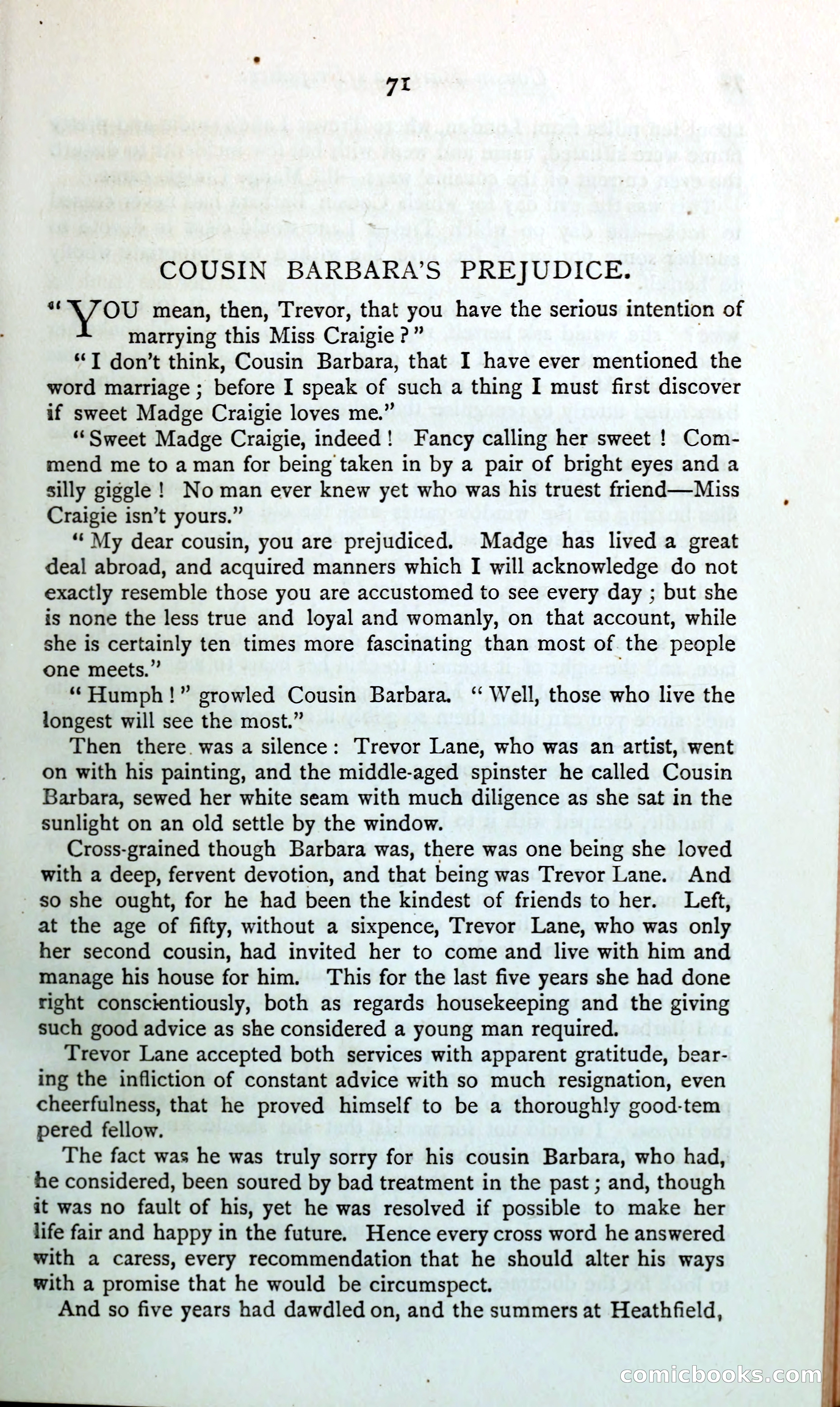
A restored page from Pulp Fiction, 1865. Page through the whole issue in the reader above.
📄 Transcribed text from this page (OCR, searchable)
Machine-transcribed from the original scan — historical spelling and the odd misread are preserved.
71 COUSIN BARBARA’S PREJUDICE. **4\70OU mean, then, Trevor, that you have the serious intention of marrying this Miss Craigie ?” : *T don’t think, Cousin Barbara, that I have ever mentioned the word marriage ; before I speak of such a thing I must first discover if sweet Madge Craigie loves me.” “Sweet Madge Craigie, indeed! Fancy calling her sweet ! Com- mend me to a man for being taken in by a pair of bright eyes and a silly giggle ! No man ever knew yet who was his truest friend—Miss Craigie isn’t yours.” “‘ My dear cousin, you are prejudiced. Madge has lived a great deal abroad, and acquired manners which I will acknowledge do not exactly resemble those you are accustomed to see every day ; but she is none the less true and loyal and womanly, on that account, while she is certainly ten times more fascinating than most of the people one meets.” “Humph!” growled Cousin Barbara. ‘ Well, those who live the longest will see the most.” Then there. was a silence: Trevor Lane, who was an artist, went on with his painting, and the middle-aged spinster he called Cousin Barbara, sewed her white seam with much diligence as she sat in the sunlight on an old settle by the window. Cross-grained though Barbara was, there was one being she loved with a deep, fervent devotion, and that being was Trevor Lane. And _ so she ought, for he had been the kindest of friends to her. Left, at the age of fifty, without a sixpence, Trevor Lane, who was only her second cousin, had invited her to come and live with him and manage his house for him. This for the last five years she had done right conscientiously, both as regards housekeeping and the giving such good advice as she considered a young man required. Trevor Lane accepted both services with apparent gratitude, bear- ing the infliction of constant advice with so much resignation, even cheerfulness, that he proved himself to be a thoroughly good-tem pered fellow. The fact was he was truly sorry for his cousin Barbara, who had, he considered, been soured by bad treatment in the past ; and, though it was no fault of his, yet he was resolved if possible to make her life fair and happy in the future. Hence every cross word he answered with a caress, every recommendation that he should alter his ways with a promise that he would be circumspect. And so five years had dawdled on, and the summers at Heathfield, EORNIELOOKS, (EC)