
Pulp Fiction, 1865 · page 74 of 399
The Argosy — page 74: what you’re looking at
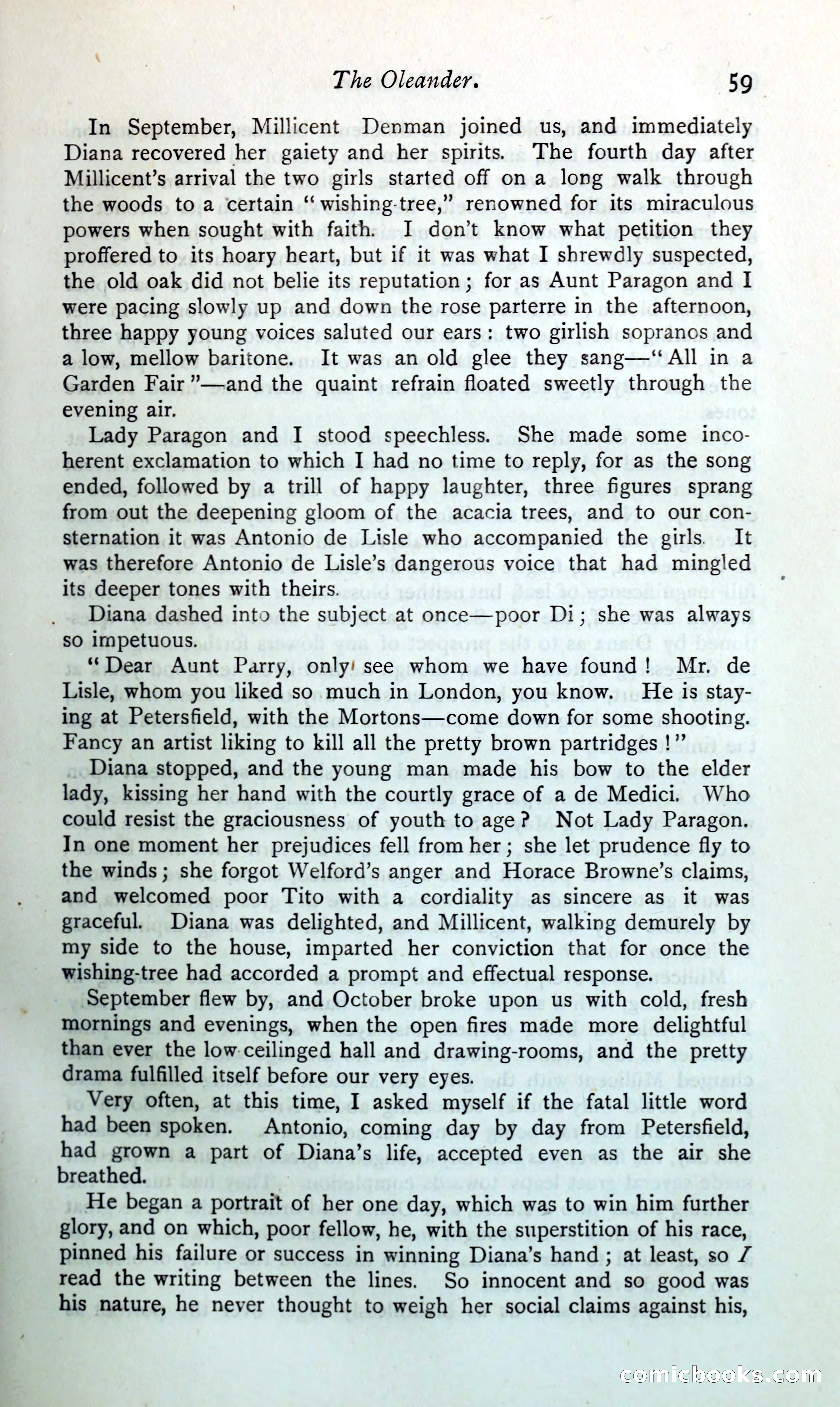
A restored page from Pulp Fiction, 1865. Page through the whole issue in the reader above.
📄 Transcribed text from this page (OCR, searchable)
Machine-transcribed from the original scan — historical spelling and the odd misread are preserved.
The Oleander. 59 In September, Millicent Denman joined us, and immediately Diana recovered her gaiety and her spirits. The fourth day after Millicent’s arrival the two girls started off ona long walk through the woods to a certain “ wishing-tree,”’ renowned for its miraculous powers when sought with faith. I don’t know what petition they proffered to its hoary heart, but if it was what I shrewdly suspected, the old oak did not belie its reputation; for as Aunt Paragon and I were pacing slowly up and down the rose parterre in the afternoon, three happy young voices saluted our ears: two girlish sopranos and a low, mellow baritone. It was an old glee they sang—‘‘ All in a Garden Fair ”—and the quaint refrain floated sweetly through the evening air. Lady Paragon and I stood speechless. She made some inco- herent exclamation to which I had no time to reply, for as the song ended, followed by a trill of happy laughter, three figures sprang from out the deepening gloom of the acacia trees, and to our con- sternation it was Antonio de Lisle who accompanied the girls. It was therefore Antonio de Lisle’s dangerous voice that had mingled its deeper tones with theirs. Diana dashed into the subject at once—poor Di; she was always sO impetuous. “Dear Aunt Parry, only! see whom we have found! Mr. de Lisle, whom you liked so much in London, you know. He Is stay- ing at Petersfield, with the Mortons—come down for some shooting. Fancy an artist liking to kill all the pretty brown partridges !” _ Diana stopped, and the young man made his bow to the elder lady, kissing her hand with the courtly grace of a de Medici. Who could resist the graciousness of youth to age? Not Lady Paragon. In one moment her prejudices fell from her; she let prudence fly to the winds; she forgot Welford’s anger and Horace Browne’s claims, and welcomed poor Tito with a cordiality as sincere as it was _ graceful. Diana was delighted, and Millicent, walking demurely by my side to the house, imparted her conviction that for once the wishing-tree had accorded a prompt and effectual response. September flew by, and October broke upon us with cold, fresh mornings and evenings, when the open fires made more delightful than ever the low-ceilinged hall and drawing-rooms, and the pretty drama fulfilled itself before our very eyes. Very often, at this time, I asked myself if the fatal little word had been spoken. Antonio, coming day by day from Petersfield, had grown a part of Diana’s life, accepted even as the air she breathed. | He began a portrait of her one day, which was to win him further glory, and on which, poor fellow, he, with the superstition of his race, pinned his failure or success in winning Diana’s hand ; at least, so Z read the writing between the lines. So innocent and so good was his nature, he never thought to weigh her social claims against his, EONNIE OOO KS (E() m