
Pulp Fiction, 1865 · page 365 of 399
The Argosy — page 365: what you’re looking at
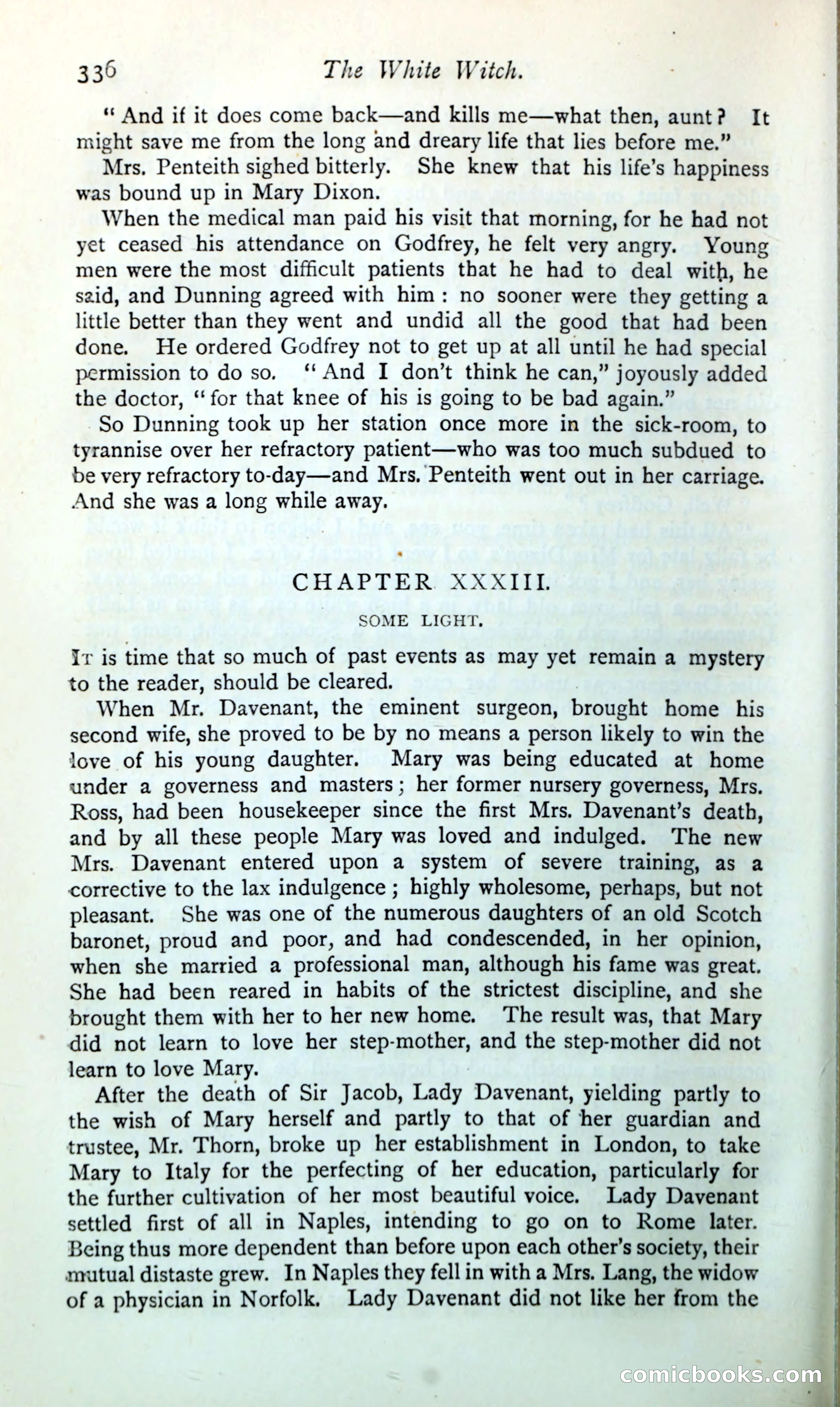
A restored page from Pulp Fiction, 1865. Page through the whole issue in the reader above.
📄 Transcribed text from this page (OCR, searchable)
Machine-transcribed from the original scan — historical spelling and the odd misread are preserved.
330 The White Witch. ‘* And if it does come back—and kills me—what then, aunt? It might save me from the long and dreary life that lies before me.” Mrs. Penteith sighed bitterly. She knew that his life’s happiness was bound up in Mary Dixon. When the medical man paid his visit that morning, for he had not yet ceased his attendance on Godfrey, he felt very angry. Young men were the most difficult patients that he had to deal with, he szid, and Dunning agreed with him: no sooner were they getting a little better than they went and undid all the good that had been done. He ordered Godfrey not to get up at all until he had special permission to do so. ‘‘And I don’t think he can,” joyously added the doctor, ‘‘ for that knee of his is going to be bad again.” So Dunning took up her station once more in the sick-room, to tyrannise over her refractory patient—who was too much subdued to be very refractory to-day—and Mrs, Penteith went out in her carriage. And she was a long while away. CHAPTER. XXXIIL SOME LIGHT. Ir is time that so much of past events as may yet remain a mystery to the reader, should be cleared. When Mr. Davenant, the eminent surgeon, brought home his second wife, she proved to be by no means a person likely to win the love of his young daughter. Mary was being educated at home under a governess and masters; her former nursery governess, Mrs. Ross, had been housekeeper since the first Mrs. Davenant’s death, and by all these people Mary was loved and indulged. The new Mrs. Davenant entered upon a system of severe training, as a corrective to the lax indulgence ; highly wholesome, perhaps, but not pleasant. She was one of the numerous daughters of an old Scotch baronet, proud and poor, and had condescended, in her opinion, when she married a professional man, although his fame was great. She had been reared in habits of the strictest discipline, and she brought them with her to her new home. The result was, that Mary did not learn to love her step-mother, and the step-mother did not learn to love Mary. After the death of Sir Jacob, Lady Davenant, yielding partly to the wish of Mary herself and partly to that of her guardian and trustee, Mr. Thorn, broke up her establishment in London, to take Mary to Italy for the perfecting of her education, particularly for the further cultivation of her most beautiful voice. Lady Davenant settled first of all in Naples, intending to go on to Rome later. Being thus more dependent than before upon each other’s society, their mutual distaste grew. In Naples they fellin with a Mrs. Lang, the widow of a physician in Norfolk, Lady Davenant did not like her from the Eomicbooks