
Pulp Fiction, 1865 · page 332 of 399
The Argosy — page 332: what you’re looking at
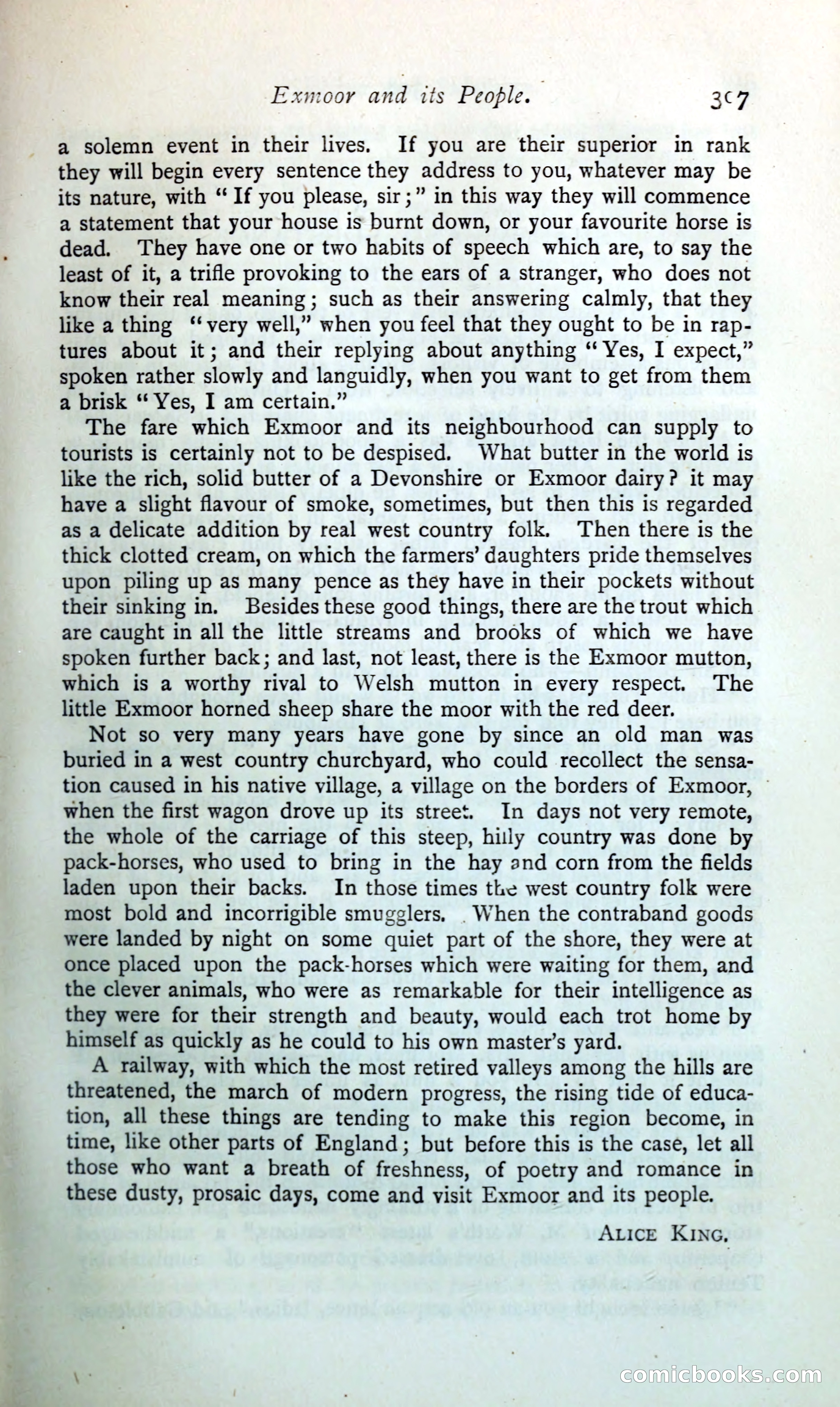
A restored page from Pulp Fiction, 1865. Page through the whole issue in the reader above.
📄 Transcribed text from this page (OCR, searchable)
Machine-transcribed from the original scan — historical spelling and the odd misread are preserved.
Exmoor and its People. 307 a solemn event in their lives. If you are their superior in rank they will begin every sentence they address to you, whatever may be its nature, with “‘ If you please, sir;” in this way they will commence a statement that your house is burnt down, or your favourite horse is dead. They have one or two habits of speech which are, to say the least of it, a trifle provoking to the ears of a stranger, who does not know their real meaning; such as their answering calmly, that they like a thing ‘“‘very well,” when you feel that they ought to be in rap- tures about it; and their replying about anything “‘ Yes, I expect,” spoken rather slowly and languidly, when you want to get from them a brisk *“‘ Yes, I am certain.” The fare which Exmoor and its neighbourhood can supply to tourists is certainly not to be despised. What butter in the world is like the rich, solid butter of a Devonshire or Exmoor dairy? it may have a slight flavour of smoke, sometimes, but then this is regarded as a delicate addition by real west country folk. Then there is the thick clotted cream, on which the farmers’ daughters pride themselves upon piling up as many pence as they have in their pockets without their sinking in. SBesides these good things, there are the trout which are caught in all the little streams and brooks of which we have spoken further back; and last, not least, there is the Exmoor mutton, which is a worthy rival to Welsh mutton in every respect. The little Exmoor horned sheep share the moor with the red deer. Not so very many years have gone by since an old man was buried in a west country churchyard, who could recollect the sensa- tion caused in his native village, a village on the borders of Exmoor, © when the first wagon drove up its street. In days not very remote, the whole of the carriage of this steep, hilly country was done by pack-horses, who used to bring in the hay and corn from the fields laden upon their backs. In those times the west country folk were most bold and incorrigible smugglers, . When the contraband goods were landed by night on some quiet part of the shore, they were at once placed upon the pack-horses which were waiting for them, and the clever animals, who were as remarkable for their intelligence as they were for their strength and beauty, would each trot home by himself as quickly as he could to his own master’s yard. A railway, with which the most retired valleys among the hills are threatened, the march of modern progress, the rising tide of educa- tion, all these things are tending to make this region become, in time, like other parts of England; but before this is the case, let all those who want a breath of freshness, of poetry and romance in these dusty, prosaic days, come and visit Exmoor and its people. ALICE KING, (E@) m i EONNIE OOO KS