
Pulp Fiction, 1865 · page 303 of 399
The Argosy — page 303: what you’re looking at
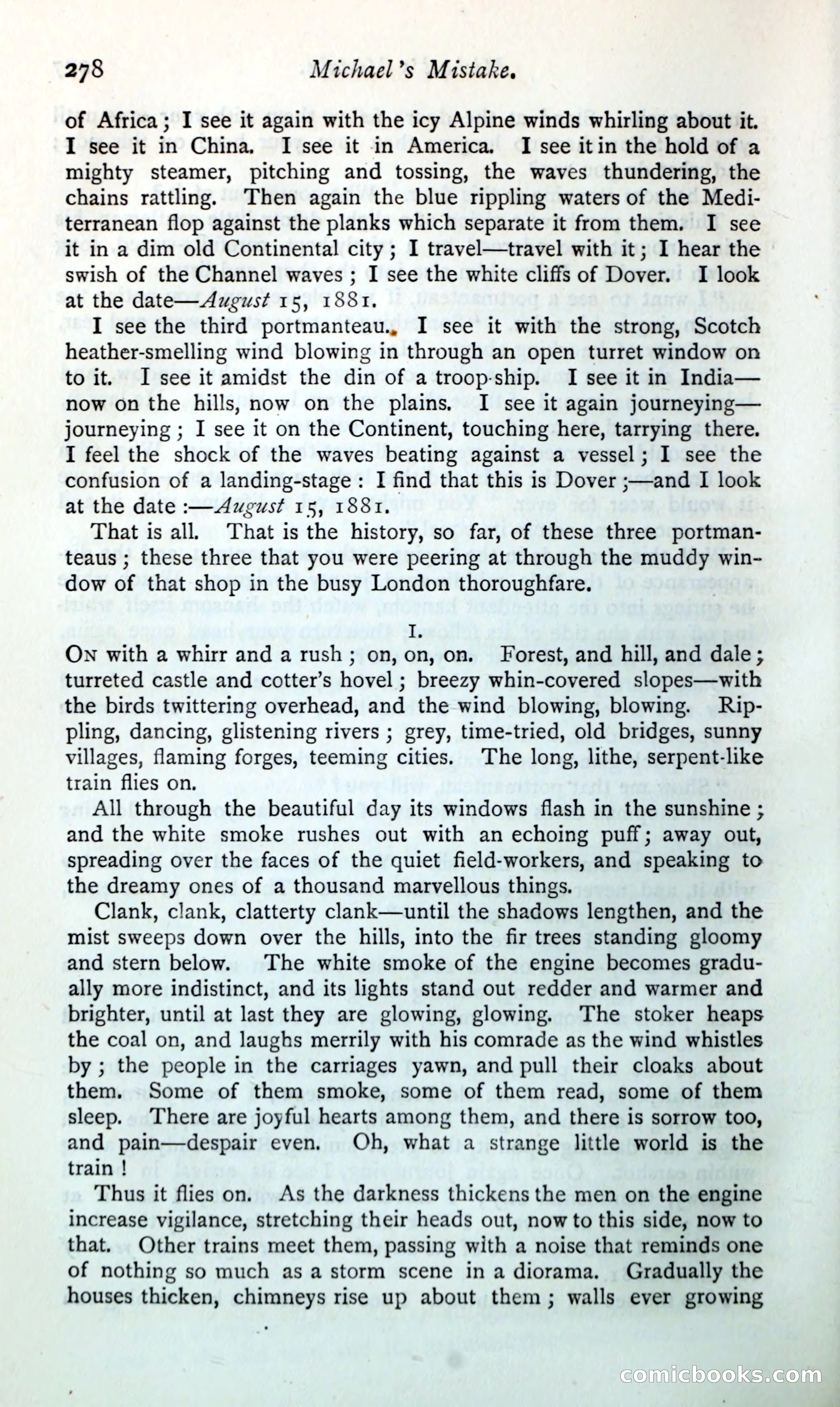
A restored page from Pulp Fiction, 1865. Page through the whole issue in the reader above.
📄 Transcribed text from this page (OCR, searchable)
Machine-transcribed from the original scan — historical spelling and the odd misread are preserved.
278 Michael’s Mistake. of Africa; I see it again with the icy Alpine winds whirling about it. I see it in China, I see it in America. I see itin the hold of a mighty steamer, pitching and tossing, the waves thundering, the chains rattling. ‘Then again the blue rippling waters of the Medi- terranean flop against the planks which separate it from them. I see it in a dim old Continental city ; I travel—travel with it; I hear the swish of the Channel waves ; I see the white cliffs of Dover. I look at the date—August 15, 1881. I see the third portmanteau., I see it with the strong, Scotch heather-smelling wind blowing in through an open turret window on to it. I see it amidst the din of atroop-ship. I see it in India— now on the hills, now on the plains. I see it again journeying— journeying ; I see it on the Continent, touching here, tarrying there. I feel the shock of the waves beating against a vessel; I see the confusion of a landing-stage: I find that this is Dover ;—and I look at the date :—Awueust 15, 1881. That is all, That is the history, so far, of these three portman- teaus ; these three that you were peering at through the muddy win- dow of that shop in the busy London thoroughfare. I, ON with a whirr and a rush; on,on, on. Forest, and hill, and dale; turreted castle and cotter’s hovel; breezy whin-covered slopes—with the birds twittering overhead, and the wind blowing, blowing. Rip- pling, dancing, glistening rivers ; grey, time-tried, old bridges, sunny villages, flaming forges, teeming cities. The long, lithe, serpent-like train flies on. All through the beautiful day its windows flash in the sunshine ; and the white smoke rushes out with an echoing puff; away out, spreading over the faces of the quiet field-workers, and speaking to the dreamy ones of a thousand marvellous things. Clank, clank, clatterty clank—until the shadows lengthen, and the mist sweeps down over the hills, into the fir trees standing gloomy and stern below. The white smoke of the engine becomes gradu- ally more indistinct, and its lights stand out redder and warmer and brighter, until at last they are glowing, glowing. ‘The stoker heaps the coal on, and laughs merrily with his comrade as the wind whistles by ; the people in the carriages yawn, and pull their cloaks about them. Some of them smoke, some of them read, some of them sleep. ‘There are joyful hearts among them, and there is sorrow too, and pain—despair even. Oh, what a strange little world is the train ! Thus it flies on. As the darkness thickens the men on the engine increase vigilance, stretching their heads out, now to this side, now to that. Other trains meet them, passing with a noise that reminds one of nothing so much as a storm scene ina diorama. Gradually the houses thicken, chimneys rise up about them; walls ever growing (e(o) m Gomicbooks