
Pulp Fiction, 1865 · page 300 of 399
The Argosy — page 300: what you’re looking at
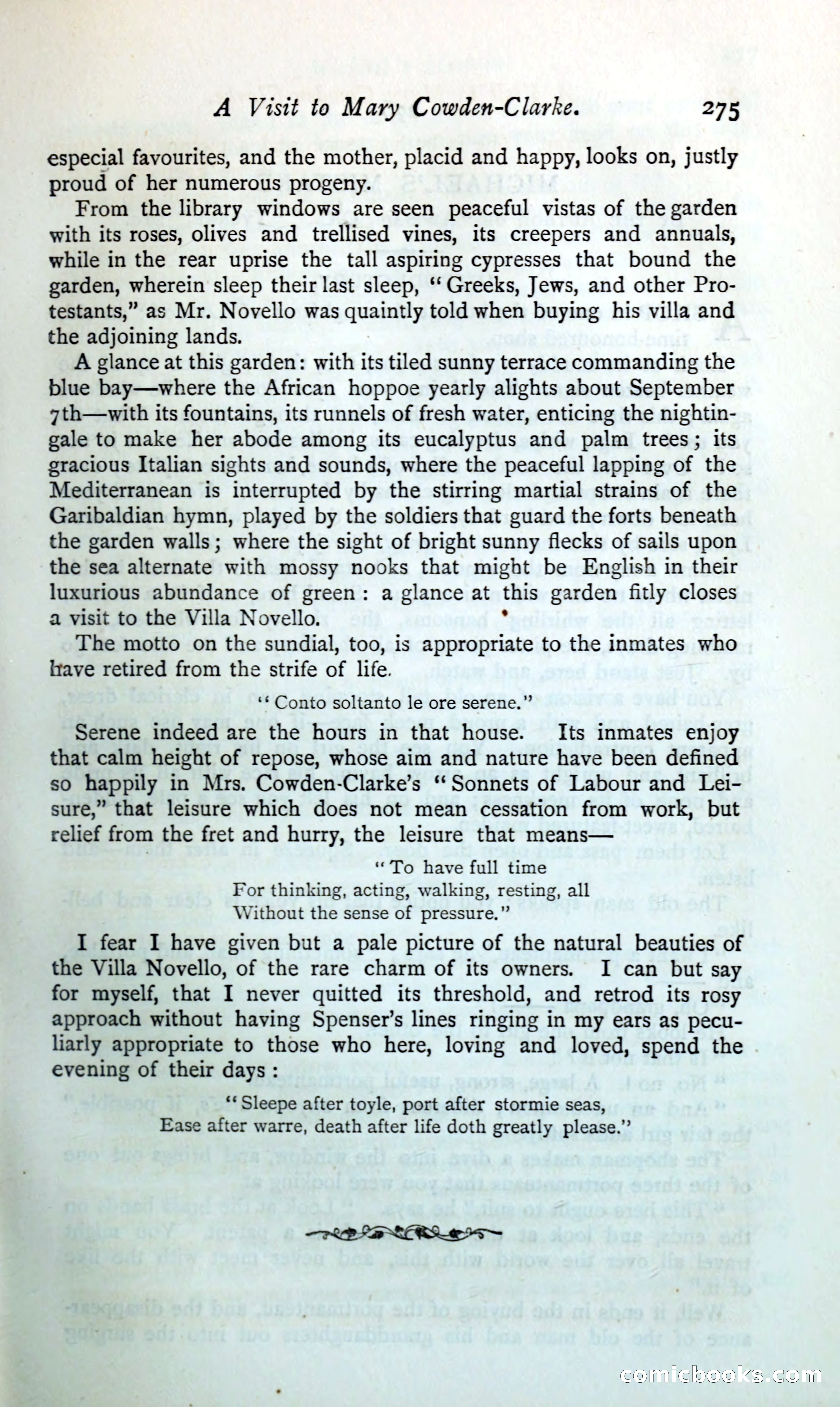
A restored page from Pulp Fiction, 1865. Page through the whole issue in the reader above.
📄 Transcribed text from this page (OCR, searchable)
Machine-transcribed from the original scan — historical spelling and the odd misread are preserved.
A Visit to Mary Cowden-Clarke. 275 especial favourites, and the mother, placid and happy, looks on, justly proud of her numerous progeny. From the library windows are seen peaceful vistas of the garden with its roses, olives and trellised vines, its creepers and annuals, while in the rear uprise the tall aspiring cypresses that bound the garden, wherein sleep their last sleep, ‘‘ Greeks, Jews, and other Pro- testants,” as Mr. Novello was quaintly told when buying his villa and the adjoining lands. A glance at this garden: with its tiled sunny terrace commanding the blue bay—where the African hoppoe yearly alights about September 7th—with its fountains, its runnels of fresh water, enticing the nightin- gale to make her abode among its eucalyptus and palm trees; its gracious Italian sights and sounds, where the peaceful lapping of the Mediterranean is interrupted by the stirring martial strains of the Garibaldian hymn, played by the soldiers that guard the forts beneath the garden walls; where the sight of bright sunny flecks of sails upon the sea alternate with mossy nooks that might be English in their luxurious abundance of green: a glance at this garden fitly closes a visit to the Villa Novello. : The motto on the sundial, too, is appropriate to the inmates who fave retired from the strife of life. ‘* Conto soltanto le ore serene,”’ Serene indeed are the hours in that house. Its inmates enjoy that calm height of repose, whose aim and nature have been defined so happily in Mrs. Cowden-Clarke’s “Sonnets of Labour and Lei- sure,” that leisure which does not mean cessation from work, but relief from the fret and hurry, the leisure that means— “To have full time For thinking, acting, walking, resting, all Without the sense of pressure.” I fear I have given but a pale picture of the natural beauties of the Villa Novello, of the rare charm of its owners. I can but say for myself, that I never quitted its threshold, and retrod its rosy approach without having Spenser’s lines ringing in my ears as pecu- liarly appropriate to those who here, loving and loved, spend the . evening of their days: ** Sleepe after toyle, port after stormie seas, Ease after warre, death after life doth greatly please.” CONNIE OOO KS (E(@) m