
Pulp Fiction, 1865 · page 143 of 399
The Argosy — page 143: what you’re looking at
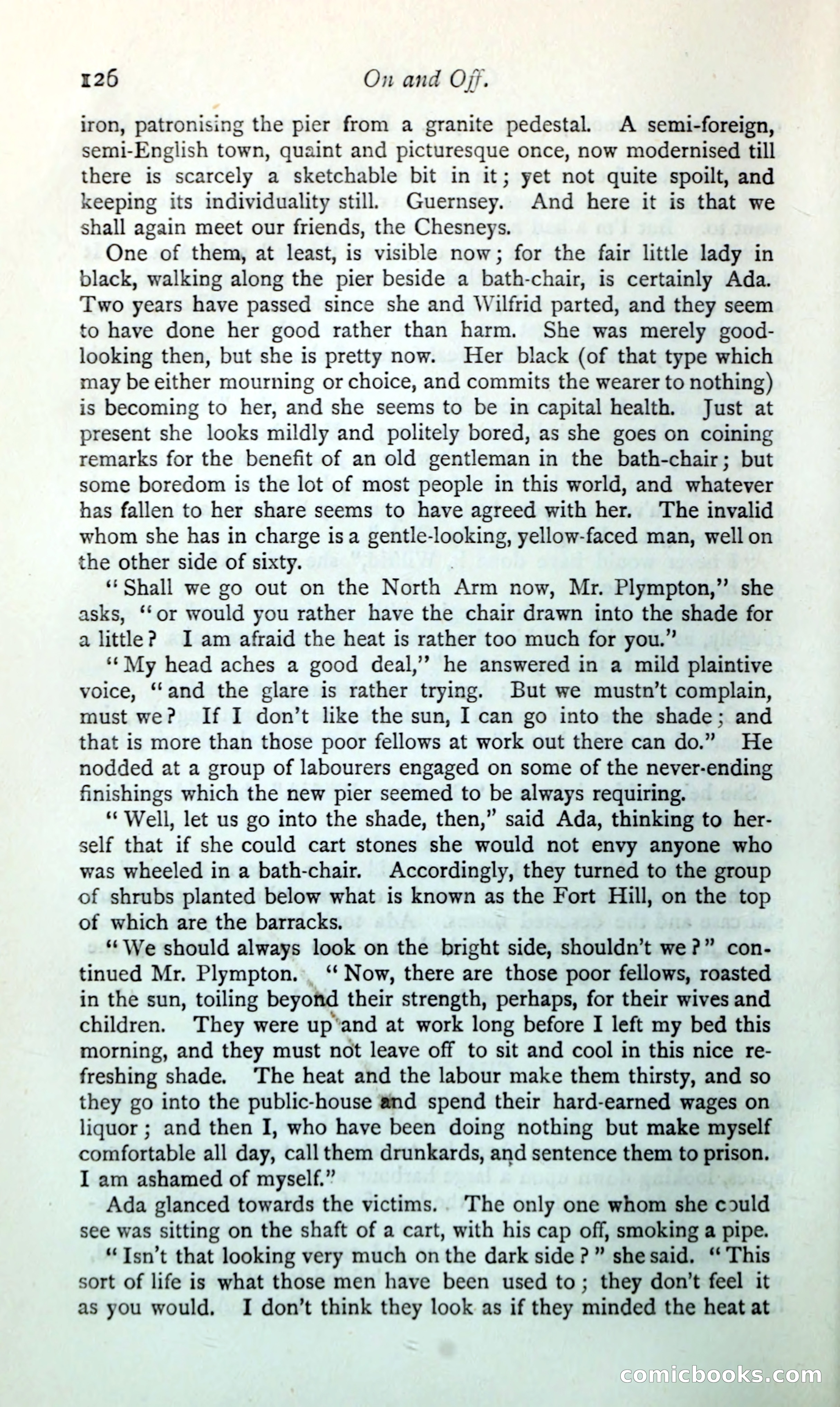
A restored page from Pulp Fiction, 1865. Page through the whole issue in the reader above.
📄 Transcribed text from this page (OCR, searchable)
Machine-transcribed from the original scan — historical spelling and the odd misread are preserved.
126 On and Off. iron, patronising the pier from a granite pedestal. A semi-foreign, semi-English town, quaint and picturesque once, now modernised till there is scarcely a sketchable bit in it; yet not quite spoilt, and keeping its individuality still. Guernsey. And here it is that we shall again meet our friends, the Chesneys. One of them, at least, is visible now; for the fair little lady in black, walking along the pier beside a bath-chair, is certainly Ada. Two years have passed since she and Wilfrid parted, and they seem to have done her good rather than harm. She was merely good- looking then, but she is pretty now. Her black (of that type which may be either mourning or choice, and commits the wearer to nothing) is becoming to her, and she seems to be in capital health. Just at present she looks mildly and politely bored, as she goes on coining remarks for the benefit of an old gentleman in the bath-chair; but some boredom is the lot of most people in this world, and whatever has fallen to her share seems to have agreed with her. The invalid whom she has in charge isa gentle-looking, yellow-faced man, well on the other side of sixty. ‘* Shall we go out on the North Arm now, Mr. Plympton,”’ she asks, ‘‘or would you rather have the chair drawn into the shade for a little ? I am afraid the heat is rather too much for you.” ‘‘My head aches a good deal,’’ he answered in a mild plaintive voice, “‘and the glare is rather trying. But we mustn’t complain, must we? If I don’t like the sun, I can go into the shade; and that is more than those poor fellows at work out there can do.” He nodded at a group of labourers engaged on some of the never-ending finishings which the new pier seemed to be always requiring. ‘Well, let us go into the shade, then,” said Ada, thinking to her- self that if she could cart stones she would not envy anyone who was wheeled in a bath-chair. Accordingly, they turned to the group of shrubs planted below what is known as the Fort Hill, on the top of which are the barracks. ‘We should always look on the bright side, shouldn’t we ? ” con- tinued Mr. Plympton. ‘* Now, there are those poor fellows, roasted in the sun, toiling beyond their strength, perhaps, for their wives and children. They were up’and at work long before I left my bed this morning, and they must not leave off to sit and cool in this nice re- freshing shade. ‘The heat and the labour make them thirsty, and so they go into the public-house and spend their hard-earned wages on liquor ; and then I, who have been doing nothing but make myself comfortable all day, call them drunkards, and sentence them to prison. I am ashamed of myself.” Ada glanced towards the victims... The only one whom she could see was sitting on the shaft of a cart, with his cap off, smoking a pipe. “Tsn’t that looking very much on the dark side?” shesaid. “ This sort of life is what those men have been used to; they don’t feel it as you would. I don’t think they look as if they minded the heat at Gomicbooks (E(o)