
Pulp Fiction, 1865 · page 136 of 399
The Argosy — page 136: what you’re looking at
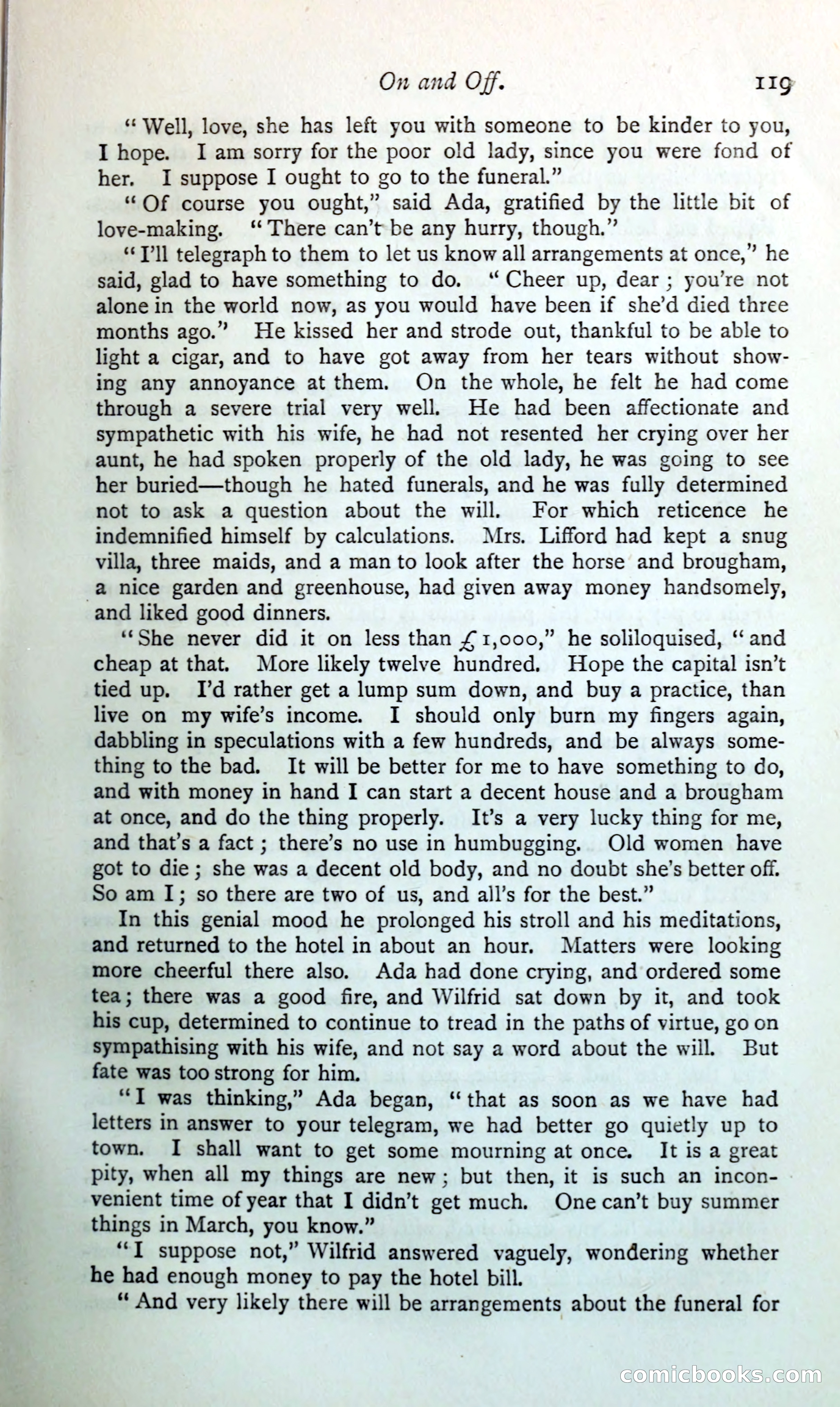
A restored page from Pulp Fiction, 1865. Page through the whole issue in the reader above.
📄 Transcribed text from this page (OCR, searchable)
Machine-transcribed from the original scan — historical spelling and the odd misread are preserved.
On and Off. 11g ‘Well, love, she has left you with someone to be kinder to you, I hope. Iam sorry for the poor old lady, since you were fond of her. I suppose I ought to go to the funeral.” “Of course you ought,” said Ada, gratified by the little bit of love-making. ‘‘ There can’t be any hurry, though.” ‘“‘T’ll telegraph to them to let us know all arrangements at once,” he said, glad to have something to do. “Cheer up, dear; you're not alone in the world now, as you would have been if she’d died three months ago.” He kissed her and strode out, thankful to be able to light a cigar, and to have got away from her tears without show- ing any annoyance at them. On the whole, he felt he had come through a severe trial very well. He had been affectionate and sympathetic with his wife, he had not resented her crying over her aunt, he had spoken properly of the old lady, he was going to see her buried—though he hated funerals, and he was fully determined not to ask a question about the will. For which reticence he indemnified himself by calculations. Mrs. Lifford had kept a snug villa, three maids, and a man to look after the horse and brougham, a nice garden and greenhouse, had given away money handsomely, and liked good dinners. “She never did it on less than £1,000,” he soliloquised, ‘‘ and cheap at that. More likely twelve hundred. Hope the capital isn’t tied up. I’d rather get a lump sum down, and buy a practice, than live on my wife’s income. I should only burn my fingers again, dabbling in speculations with a few hundreds, and be always some- thing to the bad. It will be better for me to have something to do, and with money in hand I can start a decent house and a brougham at once, and do the thing properly. It’s a very lucky thing for me, and that’s a fact ; there’s no use in humbugging. Old women have got to die; she was a decent old body, and no doubt she’s better off. So am I; so there are two of us, and all’s for the best.” In this genial mood he prolonged his stroll and his meditations, and returned to the hotel in about an hour. Matters were looking more cheerful there also. Ada had done crying, and ordered some tea; there was a good fire, and Wilfrid sat down by it, and took his cup, determined to continue to tread in the paths of virtue, go on sympathising with his wife, and not say a word about the will. But fate was too strong for him. “T was thinking,” Ada began, “that as soon as we have had letters in answer to your telegram, we had better go quietly up to town. I shall want to get some mourning at once. It is a great pity, when all my things are new; but then, it is such an incon- venient time of year that I didn’t get much. Onecan’t buy summer things in March, you know.” “I suppose not,” Wilfrid answered vaguely, wondering whether he had enough money to pay the hotel bill. “ And very likely there will be arrangements about the funeral for CONNIE OOOKS EC) m