
Pulp Fiction, 1865 · page 63 of 400
The Argosy — page 63: what you’re looking at
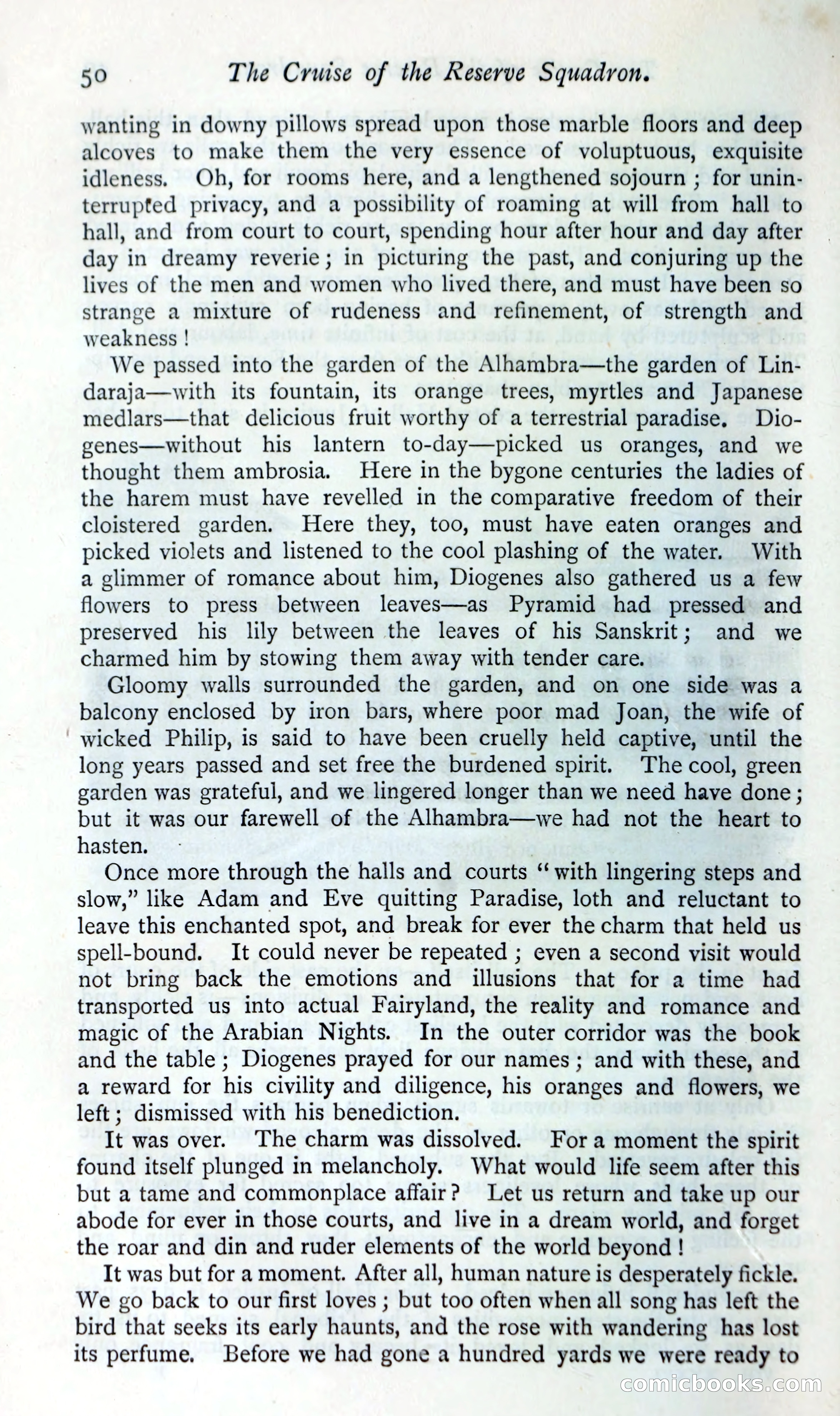
A restored page from Pulp Fiction, 1865. Page through the whole issue in the reader above.
📄 Transcribed text from this page (OCR, searchable)
Machine-transcribed from the original scan — historical spelling and the odd misread are preserved.
50 The Cruise of the Reserve Squadron. wanting in downy pillows spread upon those marble floors and deep alcoves to make them the very essence of voluptuous, exquisite idleness. Oh, for rooms here, and a lengthened sojourn ; for unin- terrupted privacy, and a possibility of roaming at will from hall to hall, and from court to court, spending hour after hour and day after day in dreamy reverie; in picturing the past, and conjuring up the lives of the men and women who lived there, and must have been so strange a mixture of rudeness and refinement, of strength and weakness ! We passed into the garden of the Alhambra—the garden of Lin- daraja—with its fountain, its orange trees, myrtles and Japanese medlars—that delicious fruit worthy of a terrestrial paradise. Dio- genes—without his lantern to-day—picked us oranges, and we thought them ambrosia. Here in the bygone centuries the ladies of the harem must have revelled in the comparative freedom of their cloistered garden. Here they, too, must have eaten oranges and picked violets and listened to the cool plashing of the water. With a glimmer of romance about him, Diogenes also gathered us a few flowers to press between leaves—as Pyramid had pressed and preserved his lily between the leaves of his Sanskrit; and we charmed him by stowing them away with tender care. Gloomy walls surrounded the garden, and on one side was a balcony enclosed by iron bars, where poor mad Joan, the wife of wicked Philip, is said to have been cruelly held captive, until the long years passed and set free the burdened spirit. The cool, green garden was grateful, and we lingered longer than we need have done; but it was our farewell of the Alhambra—we had not the heart to hasten. | Once more through the halls and courts “ with lingering steps and slow,” like Adam and Eve quitting Paradise, loth and reluctant to leave this enchanted spot, and break for ever the charm that held us spell-bound. It could never be repeated ; even a second visit would not bring back the emotions and illusions that for a time had transported us into actual Fairyland, the reality and romance and magic of the Arabian Nights. In the outer corridor was the book and the table ; Diogenes prayed for our names; and with these, and a reward for his civility and diligence, his oranges and flowers, we left ; dismissed with his benediction. It was over. The charm was dissolved. Fora moment the spirit found itself plunged in melancholy. What would life seem after this but a tame and commonplace affair? Let us return and take up our abode for ever in those courts, and live in a dream world, and forget the roar and din and ruder elements of the world beyond! It was but fora moment. After all, human nature is desperately fickle. We go back to our first loves ; but too often when all song has left the bird that seeks its early haunts, and the rose with wandering has lost its perfume. Before we had gone a hundred yards we were ready to ECORMIEDIOO KS. EO