
Pulp Fiction, 1865 · page 36 of 400
The Argosy — page 36: what you’re looking at
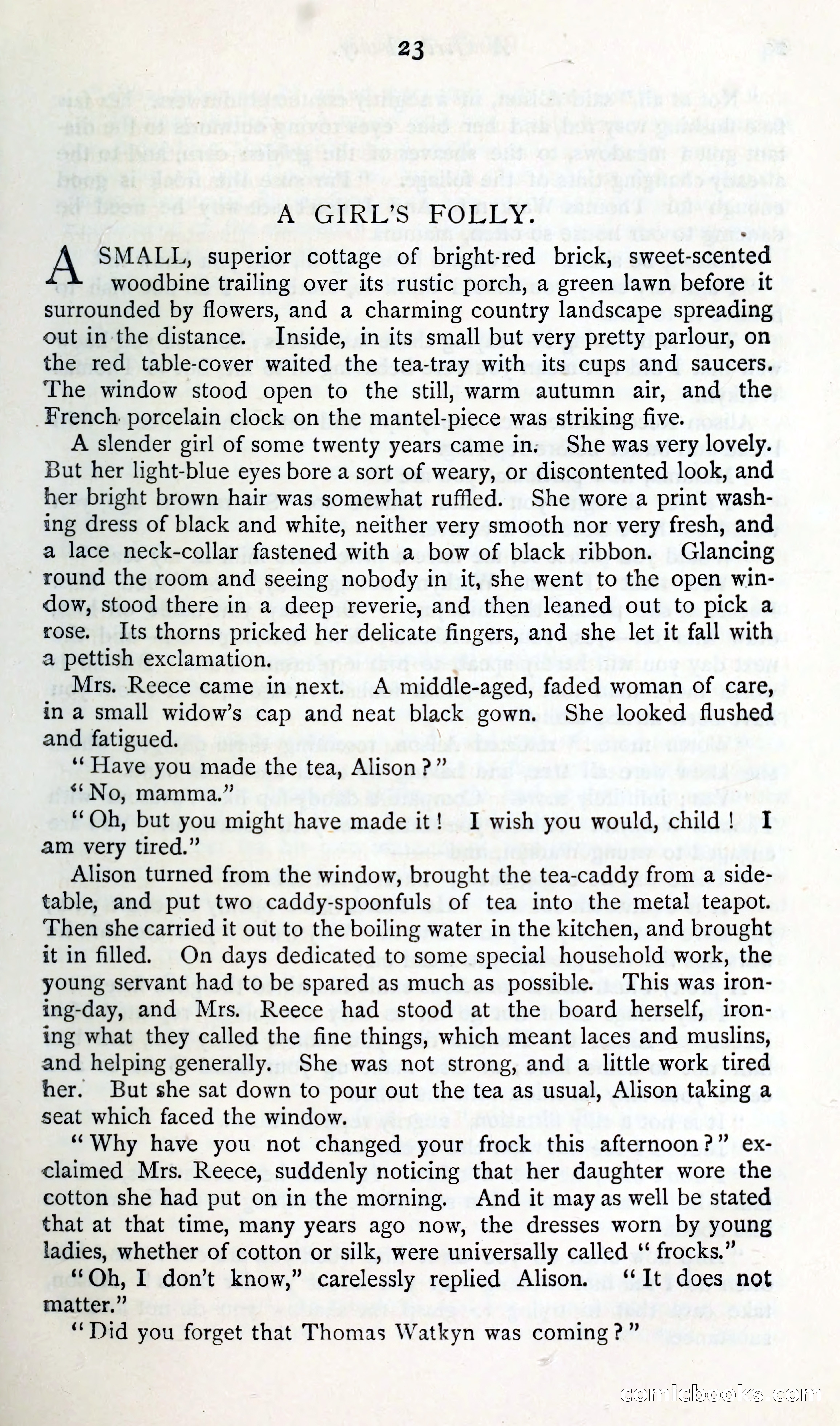
A restored page from Pulp Fiction, 1865. Page through the whole issue in the reader above.
📄 Transcribed text from this page (OCR, searchable)
Machine-transcribed from the original scan — historical spelling and the odd misread are preserved.
23 Perini Ss Oly A. SMALL, superior cottage of bright-red brick, sweet-scented woodbine trailing over its rustic porch, a green lawn before it surrounded by flowers, and a charming country landscape spreading out in the distance. Inside, in its small but very pretty parlour, on the red table-cover waited the tea-tray with its cups and saucers. The window stood open to the still, warm autumn air, and the French. porcelain clock on the mantel-piece was striking five. A slender girl of some twenty years came in. She was very lovely. But her light-blue eyes bore a sort of weary, or discontented look, and her bright brown hair was somewhat ruffled. She wore a print wash- ing dress of black and white, neither very smooth nor very fresh, and a lace neck-collar fastened with a bow of black ribbon. Glancing round the room and seeing nobody in it, she went to the open win- dow, stood there in a deep reverie, and then leaned out to pick a rose. Its thorns pricked her delicate fingers, and she let it fall with a pettish exclamation. Mrs. Reece came in next. A middle-aged, faded woman of care, in a small widow’s cap and neat black gown. She looked flushed and fatigued. ‘‘ Have you made the tea, Alison ?” ** No, mamma.” “Oh, but you might have made it! I wish you would, child! I am very tired.” Alison turned from the window, brought the tea-caddy from a side- table, and put two caddy-spoonfuls of tea into the metal teapot. Then she carried it out to the boiling water in the kitchen, and brought it in filled. On days dedicated to some special household work, the young servant had to be spared as much as possible. This was iron- ing-day, and Mrs. Reece had stood at the board herself, iron- ing what they called the fine things, which meant laces and muslins, and helping generally. She was not strong, and a little work tired her. But she sat down to pour out the tea as usual, Alison taking a seat which faced the window. “Why have you not changed your frock this afternoon?” ex- claimed Mrs. Reece, suddenly noticing that her daughter wore the cotton she had put on in the morning. And it may as well be stated that at that time, many years ago now, the dresses worn by young ladies, whether of cotton or silk, were universally called ‘ frocks,” ‘Oh, I don’t know,” carelessly replied Alison. ‘It does not matter.” “Did you forget that Thomas Watkyn was coming?” CONnNICHOOKS.EO