
Pulp Fiction, 1865 · page 293 of 400
The Argosy — page 293: what you’re looking at
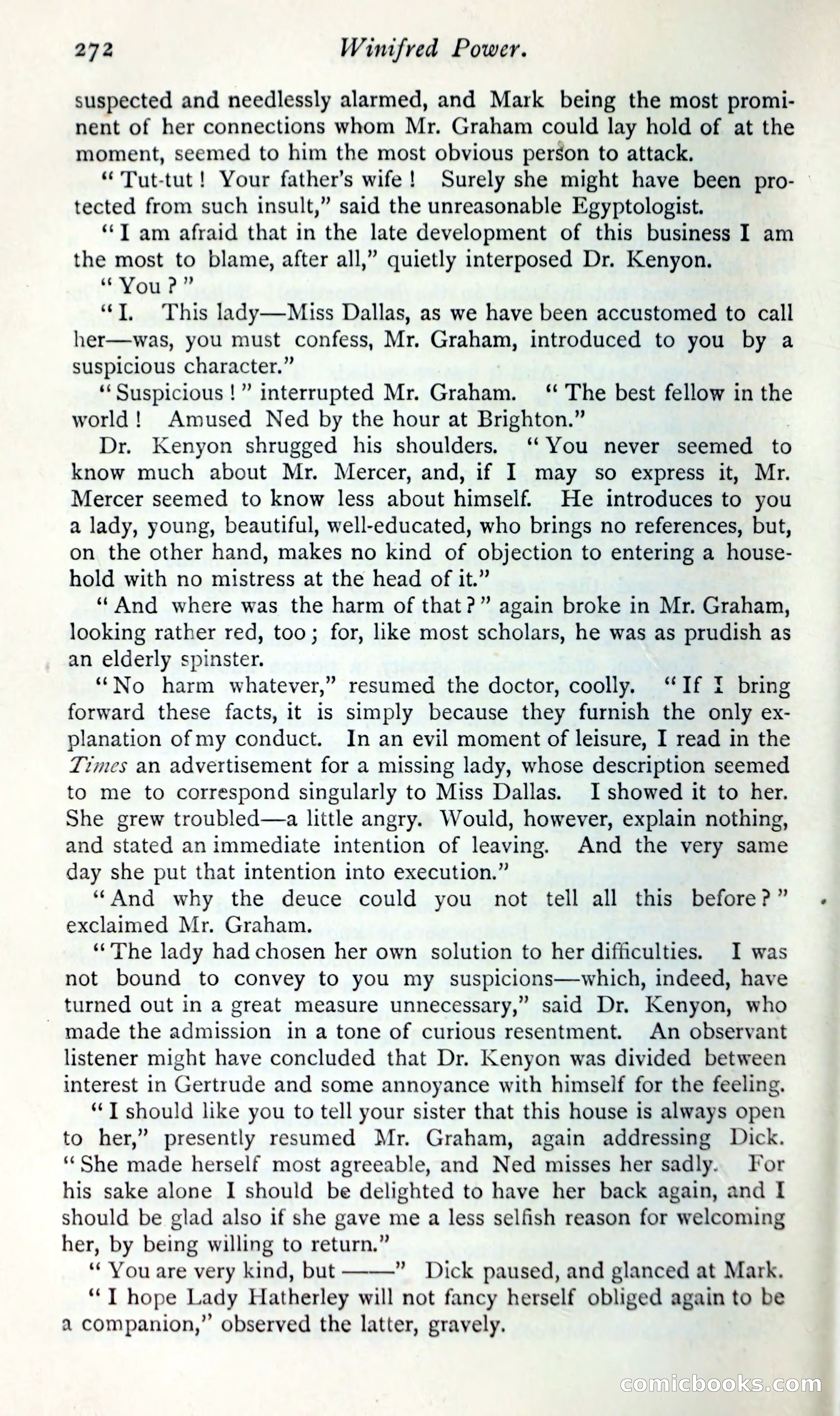
A restored page from Pulp Fiction, 1865. Page through the whole issue in the reader above.
📄 Transcribed text from this page (OCR, searchable)
Machine-transcribed from the original scan — historical spelling and the odd misread are preserved.
272 Winifred Power. suspected and needlessly alarmed, and Mark being the most promi- nent of her connections whom Mr. Graham could lay hold of at the moment, seemed to him the most obvious person to attack. “ Tut-tut ! Your father’s wife! Surely she might have been pro- tected from such insult,” said the unreasonable Egyptologist. “T am afraid that in the late development of this business I am the most to blame, after all,” quietly interposed Dr. Kenyon. “You?” ‘T, This lady—Miss Dallas, as we have been accustomed to call her—was, you must confess, Mr. Graham, introduced to you by a suspicious character.” ‘‘Suspicious!” interrupted Mr. Graham. ‘“ The best fellow in the world! Amused Ned by the hour at Brighton.” . Dr. Kenyon shrugged his shoulders. ‘‘ You never seemed to know much about Mr. Mercer, and, if I may so express it, Mr. Mercer seemed to know less about himself. He introduces to you a lady, young, beautiful, well-educated, who brings no references, but, on the other hand, makes no kind of objection to entering a house- hold with no mistress at the head of it.” “And where was the harm of that?” again broke in Mr. Graham, looking rather red, too; for, ike most scholars, he was as prudish as an elderly spinster. ‘No harm whatever,” resumed the doctor, coolly. “If I bring forward these facts, it is simply because they furnish the only ex- planation of my conduct. In an evil moment of leisure, I read in the Times an advertisement for a missing lady, whose description seemed to me to correspond singularly to Miss Dallas. I showed it to her. She grew troubled—a little angry. Would, however, explain nothing, and stated an immediate intention of leaving. And the very same day she put that intention into execution.” ‘And why the deuce could you not tell all this before?” exclaimed Mr. Graham. ‘‘'The lady had chosen her own solution to her difficulties. I was not bound to convey to you my suspicions—which, indeed, have turned out in a great measure unnecessary,” said Dr. Kenyon, who made the admission in a tone of curious resentment. An observant listener might have concluded that Dr. Kenyon was divided between interest in Gertrude and some annoyance with himself for the feeling. “ T should like you to tell your sister that this house is always open to her,” presently resumed Mr. Graham, again addressing Dick. ‘She made herself most agreeable, and Ned misses her sadly. for his sake alone I should be delighted to have her back again, and I should be glad also if she gave me a less selfish reason for welcoming her, by being willing to return.” ‘You are very kind, but ———” Dick paused, and glanced at Mark. ‘TI hope Lady Hatherley will not fancy herself obliged again to be a companion,”’ observed the latter, gravely. EOPMICELOOLKS.(e) m