
Pulp Fiction, 1865 · page 242 of 400
The Argosy — page 242: what you’re looking at
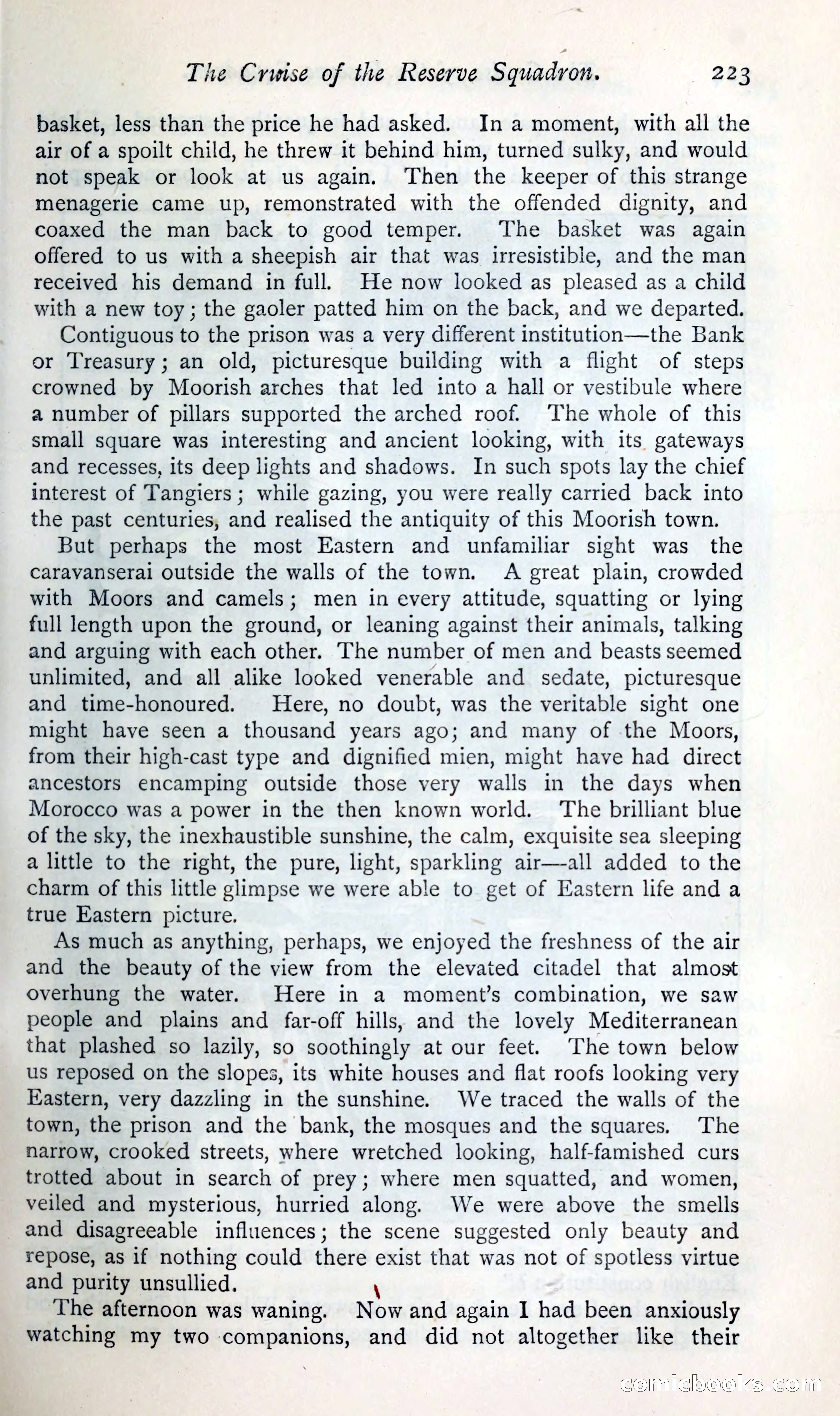
A restored page from Pulp Fiction, 1865. Page through the whole issue in the reader above.
📄 Transcribed text from this page (OCR, searchable)
Machine-transcribed from the original scan — historical spelling and the odd misread are preserved.
The Cruise of the Reserve Squadron. 223 basket, less than the price he had asked. Ina moment, with all the air of a spoilt child, he threw it behind him, turned sulky, and would not speak or look at us again. Then the keeper of this strange menagerie came up, remonstrated with the offended dignity, and coaxed the man back to good temper. The basket was again offered to us with a sheepish air that was irresistible, and the man received his demand in full. He now looked as pleased as a child with a new toy; the gaoler patted him on the back, and we departed. Contiguous to the prison was a very different institution—the Bank or Treasury; an old, picturesque building with a flight of steps crowned by Moorish arches that led into a hall or vestibule where a number of pillars supported the arched roof. ‘The whole of this small square was interesting and ancient looking, with its gateways and recesses, its deep lights and shadows. In such spots lay the chief interest of Tangiers; while gazing, you were really carried back into the past centuries, and realised the antiquity of this Moorish town. But perhaps the most Eastern and unfamiliar sight was the Caravanserai outside the walls of the town. A great plain, crowded with Moors and camels; men in every attitude, squatting or lying full length upon the ground, or leaning against their animals, talking and arguing with each other. The number of men and beasts seemed unlimited, and all alike looked venerable and sedate, picturesque and time-honoured. Here, no doubt, was the veritable sight one might have seen a thousand years ago; and many of the Moors, from their high-cast type and dignified mien, might have had direct ancestors encamping outside those very walls in the days when Morocco was a power in the then known world. The brilliant blue of the sky, the inexhaustible sunshine, the calm, exquisite sea sleeping a little to the right, the pure, light, sparkling air—all added to the charm of this little glimpse we were able to get of Eastern life and a true Eastern picture. As much as anything, perhaps, we enjoyed the freshness of the air and the beauty of the view from the elevated citadel that almost overhung the water. Here in a moment’s combination, we saw people and plains and far-off hills, and the lovely Mediterranean that plashed so lazily, so soothingly at our feet. The town below us reposed on the slopes, its white houses and flat roofs looking very Eastern, very dazzling in the sunshine. We traced the walls of the town, the prison and the bank, the mosques and the squares. The narrow, crooked streets, where wretched looking, half-famished curs trotted about in search of prey; where men squatted, and women, veiled and mysterious, hurried along. We were above the smells and disagreeable influences; the scene suggested only beauty and repose, as if nothing could there exist that was not of spotless virtue and purity unsullied. \ The afternoon was waning. Now and again I had been anxiously watching my two companions, and did not altogether like their COMIC OOO SS