
Pulp Fiction, 1865 · page 240 of 400
The Argosy — page 240: what you’re looking at
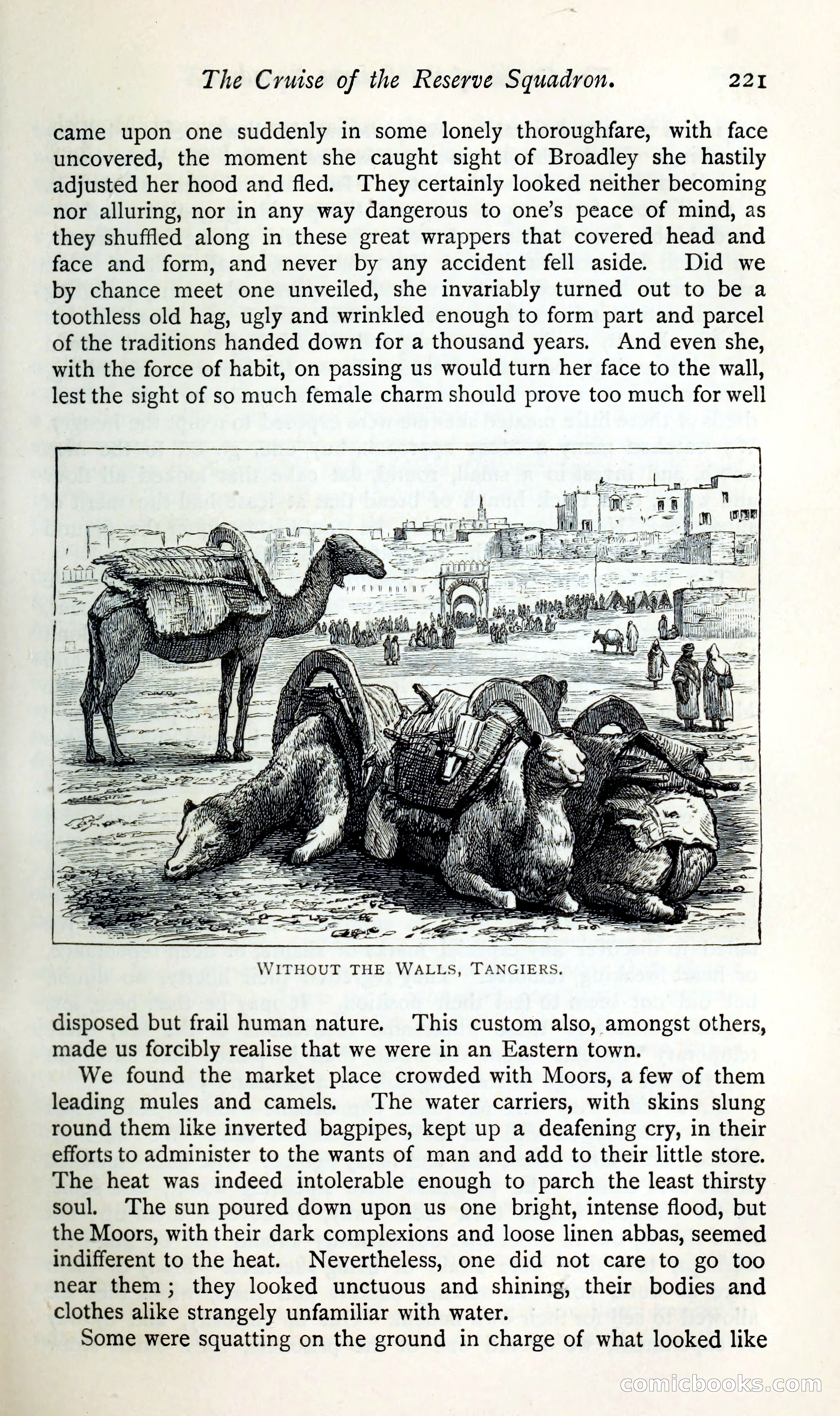
A restored page from Pulp Fiction, 1865. Page through the whole issue in the reader above.
📄 Transcribed text from this page (OCR, searchable)
Machine-transcribed from the original scan — historical spelling and the odd misread are preserved.
The Cruse of the Reserve Squadron. 221 came upon one suddenly in some lonely thoroughfare, with face uncovered, the moment she caught sight of Broadley she hastily adjusted her hood and fled. They certainly looked neither becoming nor alluring, nor in any way dangerous to one’s peace of mind, as they shuffled along in these great wrappers that covered head and face and form, and never by any accident fell aside. Did we by chance meet one unveiled, she invariably turned out to be a toothless old hag, ugly and wrinkled enough to form part and parcel of the traditions handed down for a thousand years. And even she, with the force of habit, on passing us would turn her face to the wall, lest the sight of so much female charm should prove too much for well y as a \ HS cn some { i) 4 Wotrs> "0 =i | co “2 ee ———— YS pheetehen ’ . fy We i, Sa AN i) © TRA ee = Ruts ~35 8 ("4 Me Ny ? iphie HEY, hitters 5 AY \ = { Py f ‘yi {! i V, , ; tn . af F ‘ " ‘ wre A VATAG v4 ‘4 ‘ ‘ we ’ P fy F 4 \/ be willy A \ Pity "fs Oa ow b) } , ey aw . J, d ~ods yin B ‘I Rr Ly 3 Kf TAN paar the a , ae - { i Why set sy ' ' or ( ; i 4 ‘Sa tt = ao? = “2< a = B 2 \ « , 4 —~ — s “eEee aA > a — 1) Ui ie F th \ +S Veta He —j—— Ne ‘ \ Ot) / 5} Te os ; _-—"— = 14! ss Y \\ ; _ , vArd . e , = dit! ee — a NN os fed —— ie - — — — — Z re Fe WITHOUT THE WALLS, TANGIERS. disposed but frail human nature. This custom also, amongst others, made us forcibly realise that we were in an Eastern town. We found the market place crowded with Moors, a few of them leading mules and camels. The water carriers, with skins slung round them like inverted bagpipes, kept up a deafening cry, in their efforts to administer to the wants of man and add to their little store. The heat was indeed intolerable enough to parch the least thirsty soul. The sun poured down upon us one bright, intense flood, but the Moors, with their dark complexions and loose linen abbas, seemed indifferent to the heat. Nevertheless, one did not care to go too near them; they looked unctuous and shining, their bodies and clothes alike strangely unfamiliar with water. Some were squatting on the ground in charge of what looked like connicloooks (C(O)