
Pulp Fiction, 1865 · page 202 of 400
The Argosy — page 202: what you’re looking at
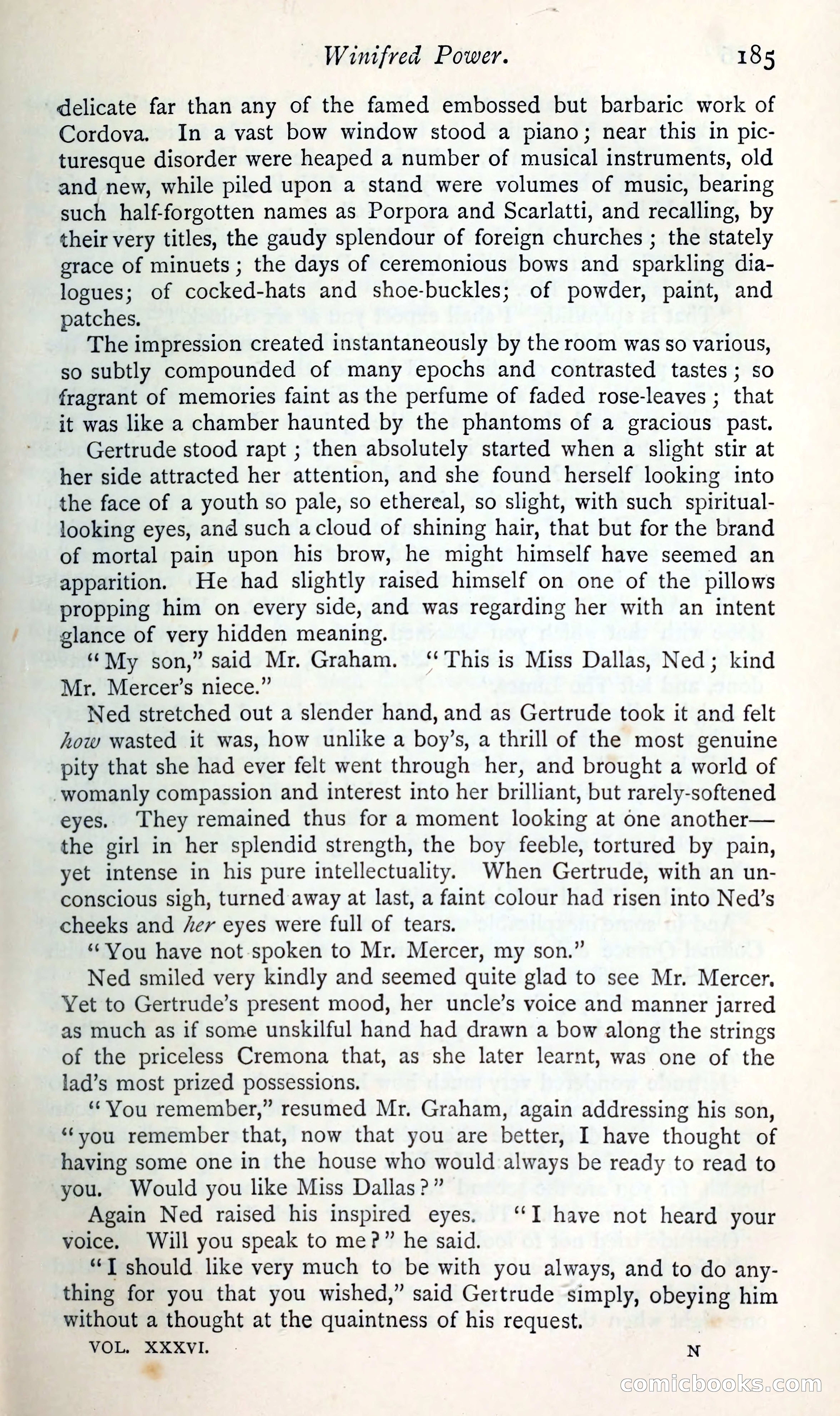
A restored page from Pulp Fiction, 1865. Page through the whole issue in the reader above.
📄 Transcribed text from this page (OCR, searchable)
Machine-transcribed from the original scan — historical spelling and the odd misread are preserved.
Winifred Power. 185 delicate far than any of the famed embossed but barbaric work of Cordova. In a vast bow window stood a piano; near this in pic- turesque disorder were heaped a number of musical instruments, old and new, while piled upon a stand were volumes of music, bearing such half-forgotten names as Porpora and Scarlatti, and recalling, by their very titles, the gaudy splendour of foreign churches ; the stately erace of minuets; the days of ceremonious bows and sparkling dia- logues; of cocked-hats and shoe-buckles; of powder, paint, and patches. The impression created instantaneously by the room was so various, so subtly compounded of many epochs and contrasted tastes; so fragrant of memories faint as the perfume of faded rose-leaves ; that it was like a chamber haunted by the phantoms of a gracious past. Gertrude stood rapt ; then absolutely started when a slight stir at her side attracted her attention, and she found herself looking into the face of a youth so pale, so ethereal, so slight, with such spiritual- looking eyes, and such acloud of shining hair, that but for the brand of mortal pain upon his brow, he might himself have seemed an apparition. He had slightly raised himself on one of the pillows propping him on every side, and was regarding her with an intent glance of very hidden meaning. “My son,” said Mr. Graham. ‘‘ This is Miss Dallas, Ned; kind Mr. Mercer’s niece.” Ned stretched out a slender hand, and as Gertrude took it and felt how wasted it was, how unlike a boy’s, a thrill of the most genuine pity that she had ever felt went through her, and brought a world of ‘womanly compassion and interest into her brilliant, but rarely-softened eyes. They remained thus for a moment looking at one another— the girl in her splendid strength, the boy feeble, tortured by pain, yet intense in his pure intellectuality. When Gertrude, with an un- conscious sigh, turned away at last, a faint colour had risen into Ned’s cheeks and Aer eyes were full of tears. “You have not spoken to Mr. Mercer, my son.” 3 Ned smiled very kindly and seemed quite glad to see Mr. Mercer. Yet to Gertrude’s present mood, her uncle’s voice and manner jarred as much as if some unskilful hand had drawn a bow along the strings of the priceless Cremona that, as she later learnt, was one of the lad’s most prized possessions. | ‘You remember,” resumed Mr. Graham, again addressing his son, ‘‘you remember that, now that you are better, I have thought of having some one in the house who would always be ready to read to you. Would you like Miss Dallas?” Again Ned raised his inspired eyes. “I have not heard your voice. Will you speak to me?” he said. “YT should like very much to be with you always, and to do any- thing for you that you wished,” said Gertrude simply, obeying him without a thought at the quaintness of his request. VOL. XXXVI. N « ECORnNICOOOKS EO