
Pulp Fiction, 1865 · page 19 of 400
The Argosy — page 19: what you’re looking at
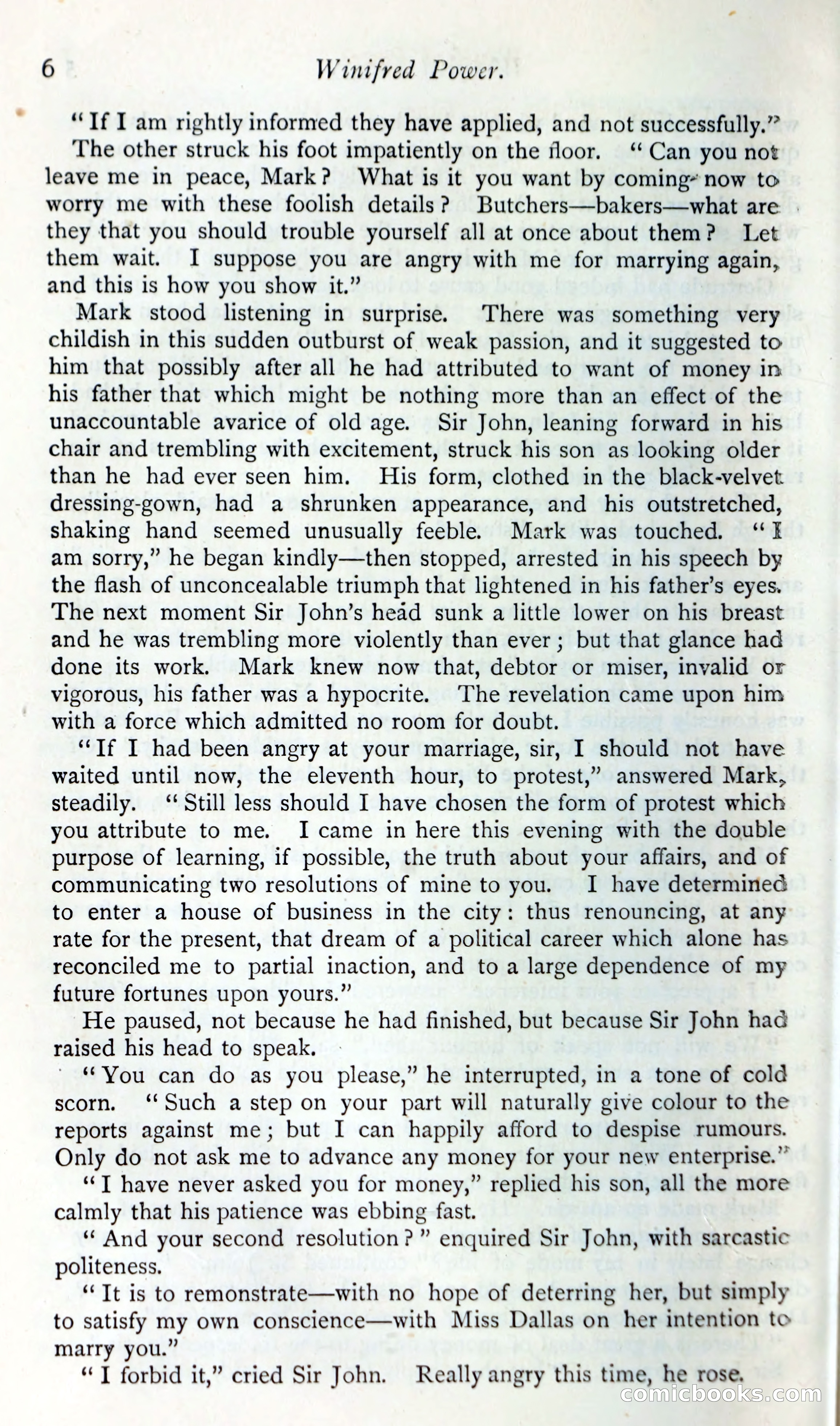
A restored page from Pulp Fiction, 1865. Page through the whole issue in the reader above.
📄 Transcribed text from this page (OCR, searchable)
Machine-transcribed from the original scan — historical spelling and the odd misread are preserved.
6 Wintfred Power. “If I am rightly informed they have applied, and not successfully.” The other struck his foot impatiently on the floor. ‘ Can you not leave me in peace, Mark? What is it you want by coming~ now to worry me with these foolish details? Butchers—bakers—what are | they that you should trouble yourself all at once about them? Let them wait. I suppose you are angry with me for marrying again, and this is how you show it.” Mark stood listening in surprise. There was something very childish in this sudden outburst of weak passion, and it suggested to him that possibly after all he had attributed to want of money in his father that which might be nothing more than an effect of the unaccountable avarice of old age. Sir John, leaning forward in his chair and trembling with excitement, struck his son as looking older than he had ever seen him. His form, clothed in the black-velvet dressing-gown, had a shrunken appearance, and his outstretched, shaking hand seemed unusually feeble) Mark was touched. ‘f am sorry,” he began kindly—then stopped, arrested in his speech by the flash of unconcealable triumph that lightened in his father’s eyes. The next moment Sir John’s head sunk a little lower on his breast and he was trembling more violently than ever; but that glance had done its work. Mark knew now that, debtor or miser, inyalid or vigorous, his father was a hypocrite. ‘The revelation came upon him with a force which admitted no room for doubt. “Tf I had been angry at your marriage, sir, I should not have waited until now, the eleventh hour, to protest,” answered Mark, steadily. ‘Still less should I have chosen the form of protest which you attribute to me. I came in here this evening with the double purpose of learning, if possible, the truth about your affairs, and of communicating two resolutions of mine to you. I have determined to enter a house of business in the city: thus renouncing, at any rate for the present, that dream of a political career which alone has reconciled me to partial inaction, and to a large dependence of my future fortunes upon yours.” He paused, not because he had finished, but because Sir John had raised his head to speak. ‘You can do as you please,” he interrupted, in a tone of cold scorn. ‘Such a step on your part will naturally give colour to the reports against me; but I can happily afford to despise rumours. Only do not ask me to advance any money for your new enterprise.” ‘‘T have never asked you for money,” replied his son, all the more calmly that his patience was ebbing fast. ‘“ And your second resolution?” enquired Sir John, with sarcastic politeness. ‘Tt is to remonstrate—with no hope of deterring her, but simply to satisfy my own conscience—with Miss Dallas on her intention to marry you.” ‘‘T forbid it,” cried Sir John. Really angry this time, he rose, C Omicbooksrco