
Pulp Fiction, 1865 · page 16 of 400
The Argosy — page 16: what you’re looking at
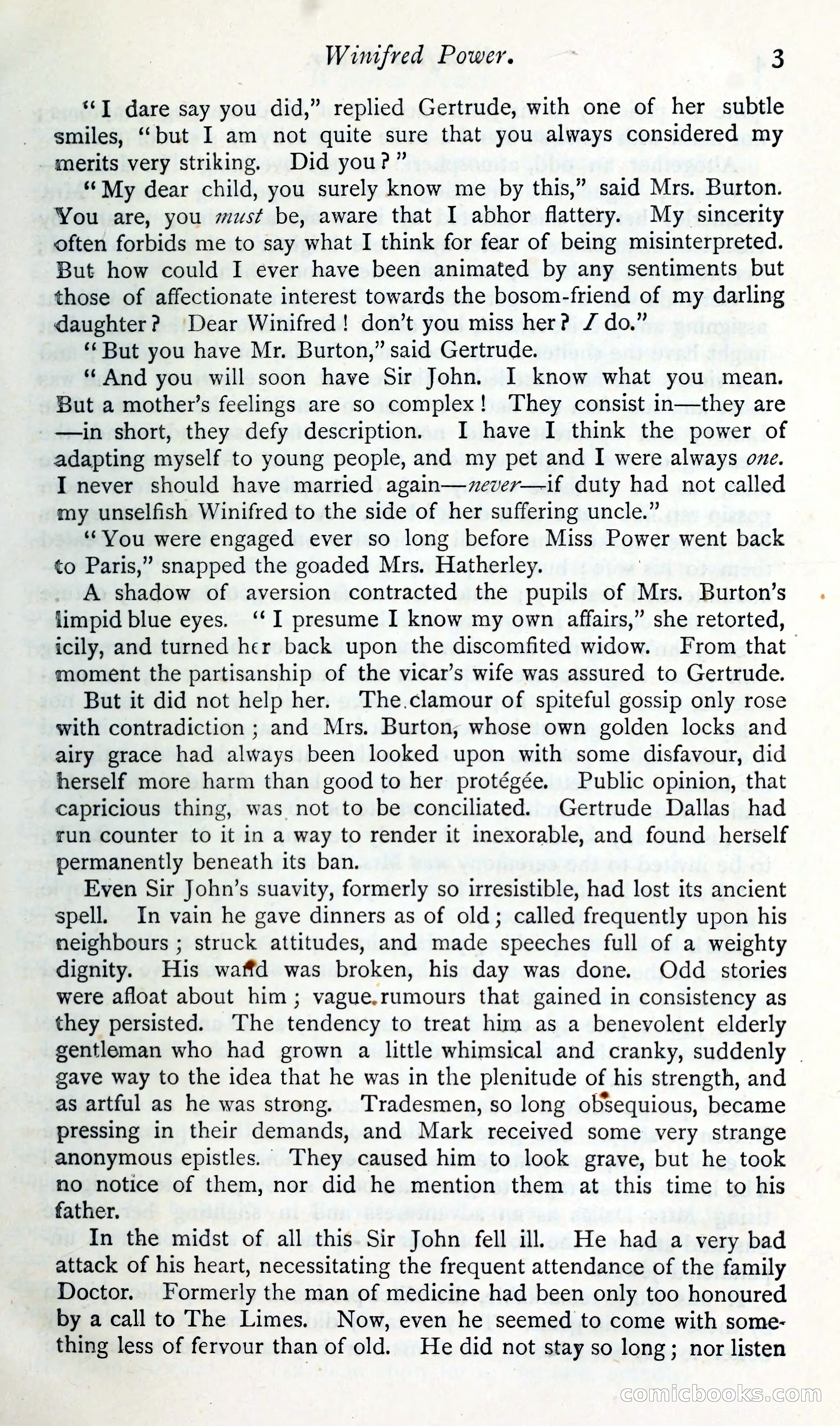
A restored page from Pulp Fiction, 1865. Page through the whole issue in the reader above.
📄 Transcribed text from this page (OCR, searchable)
Machine-transcribed from the original scan — historical spelling and the odd misread are preserved.
Winifred Power. 3 ‘I dare say you did,” replied Gertrude, with one of her subtle smiles, “but I am not quite sure that you always considered my -amerits very striking. Did you?” ‘My dear child, you surely know me by this,” said Mrs. Burton. You are, you must be, aware that I abhor flattery. My sincerity often forbids me to say what I think for fear of being misinterpreted. But how could I ever have been animated by any sentiments but those of affectionate interest towards the bosom-friend of my darling daughter? Dear Winifred! don’t you miss her? J do.” ‘But you have Mr. Burton,” said Gertrude. * And you will soon have Sir John. I know what you mean. But a mother’s feelings are so complex! They consist in—they are —in short, they defy description. I have I think the power of adapting myself to young people, and my pet and I were always one. I never should have married again—zever—if duty had not called my unselfish Winifred to the side of her suffering uncle.” ‘‘Vou were engaged ever so long before Miss Power went back to Paris,” snapped the goaded Mrs. Hatherley. | A shadow of aversion contracted the pupils of Mrs. Burton’s limpid blue eyes. ‘‘I presume I know my own affairs,” she retorted, icily, and turned her back upon the discomfited widow. From that moment the partisanship of the vicar’s wife was assured to Gertrude. But it did not help her. The.clamour of spiteful gossip only rose with contradiction ; and Mrs. Burton; whose own golden locks and airy grace had always been looked upon with some disfavour, did herself more harm than good to her protégée. Public opinion, that capricious thing, was not to be conciliated. Gertrude Dallas had run counter to it in a way to render it inexorable, and found herself permanently beneath its ban. Even Sir John’s suavity, formerly so irresistible, had lost its ancient spell. In vain he gave dinners as of old; called frequently upon his neighbours ; struck attitudes, and made speeches full of a weighty dignity. His waffd was broken, his day was done. Odd stories were afloat about him; vague.rumours that gained in consistency as they persisted. The tendency to treat him as a benevolent elderly gentleman who had grown a little whimsical and cranky, suddenly - gave way to the idea that he was in the plenitude of his strength, and as artful as he was strong. Tradesmen, so long obsequious, became pressing in their demands, and Mark received some very strange anonymous epistles. They caused him to look grave, but he took no notice of them, nor did he mention them at this time to his father. In the midst of all this Sir John fell ill. He had a very bad attack of his heart, necessitating the frequent attendance of the family Doctor. Formerly the man of medicine had been only too honoured by a call to The Limes. Now, even he seemed to come with some- thing less of fervour than of old. He did not stay so long; nor listen CONNICHOOKSs.EO