
Pulp Fiction, 1865 · page 39 of 399
The Argosy — page 39: what you’re looking at
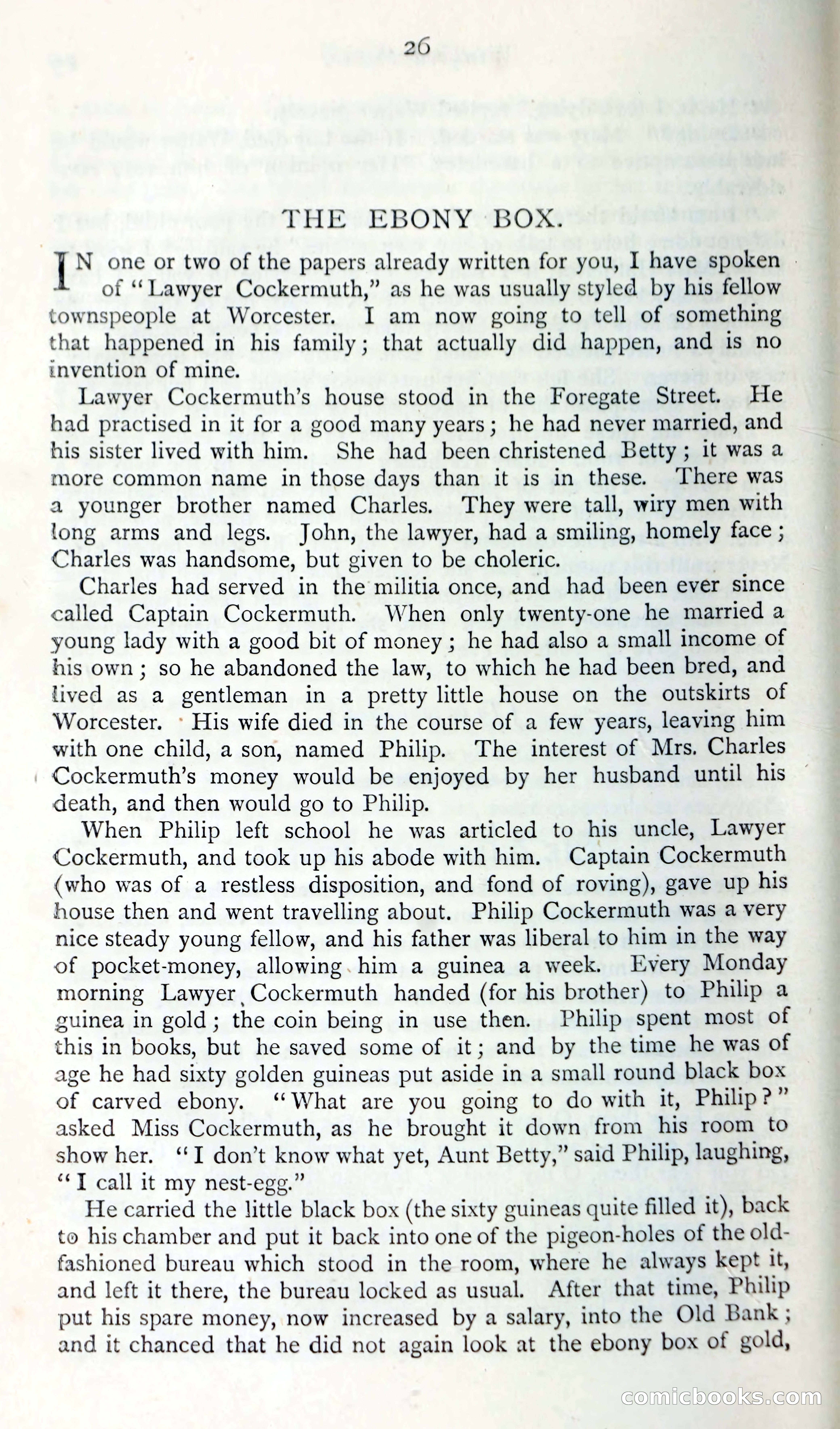
A restored page from Pulp Fiction, 1865. Page through the whole issue in the reader above.
📄 Transcribed text from this page (OCR, searchable)
Machine-transcribed from the original scan — historical spelling and the odd misread are preserved.
20 THE EBONY BOX. By one or two of the papers already written for you, I have spoken © of ‘Lawyer Cockermuth,” as he was usually styled by his fellow townspeople at Worcester. I am now going to tell of something that happened in his family; that actually did happen, and is no invention of mine. Lawyer Cockermuth’s house stood in the Foregate Street. He had practised in it for a good many years; he had never married, and his sister lived with him. She had been christened Betty; it was a more common name in those days than it is in these. ‘There was a younger brother named Charles. They were tall, wiry men with long arms and legs. John, the lawyer, had a smiling, homely face ; Charles was handsome, but given to be choleric. Charles had served in the militia once, and had been ever since © called Captain Cockermuth. When only twenty-one he married a young lady with a good bit of money ; he had also a small income of his own; so he abandoned the law, to which he had been bred, and lived as a gentleman in a pretty little house on the outskirts of Worcester. » His wife died in the course of a few years, leaving him with one child, a son, named Philip. The interest of Mrs. Charles Cockermuth’s money would be enjoyed by her husband until his ~ death, and then would go to Philip. When Philip left school he was articled to his uncle, Lawyer Cockermuth, and took up his abode with him. Captain Cockermuth (who was of a restless disposition, and fond of roving), gave up his house then and went travelling about. Philip Cockermuth was a very nice steady young fellow, and his father was liberal to him in the way of pocket-money, allowing. him a guinea a week. Every Monday morning Lawyer. Cockermuth handed (for his brother) to Philip a guinea in gold; the coin being in use then. Philip spent most of this in books, but he saved some of it; and by the time he was of age he had sixty golden guineas put aside in a small round black box of carved ebony. ‘What are you going to do with it, Philip?” asked Miss Cockermuth, as he brought it down from his room to show her. ‘I don’t know what yet, Aunt Betty,” said Philip, laughing, ‘““T call it my nest-egg.” He carried the little black box (the sixty guineas quite filled it), back to his chamber and put it back into one of the pigeon-holes of the old- fashioned bureau which stood in the room, where he always kept it, and left it there, the bureau locked as usual. After that time, Philip put his spare money, now increased by a salary, into the Old Bank ; and it chanced that he did not again look at the ebony box of gold, Gomicbooksnco m