
Pulp Fiction, 1865 · page 263 of 399
The Argosy — page 263: what you’re looking at
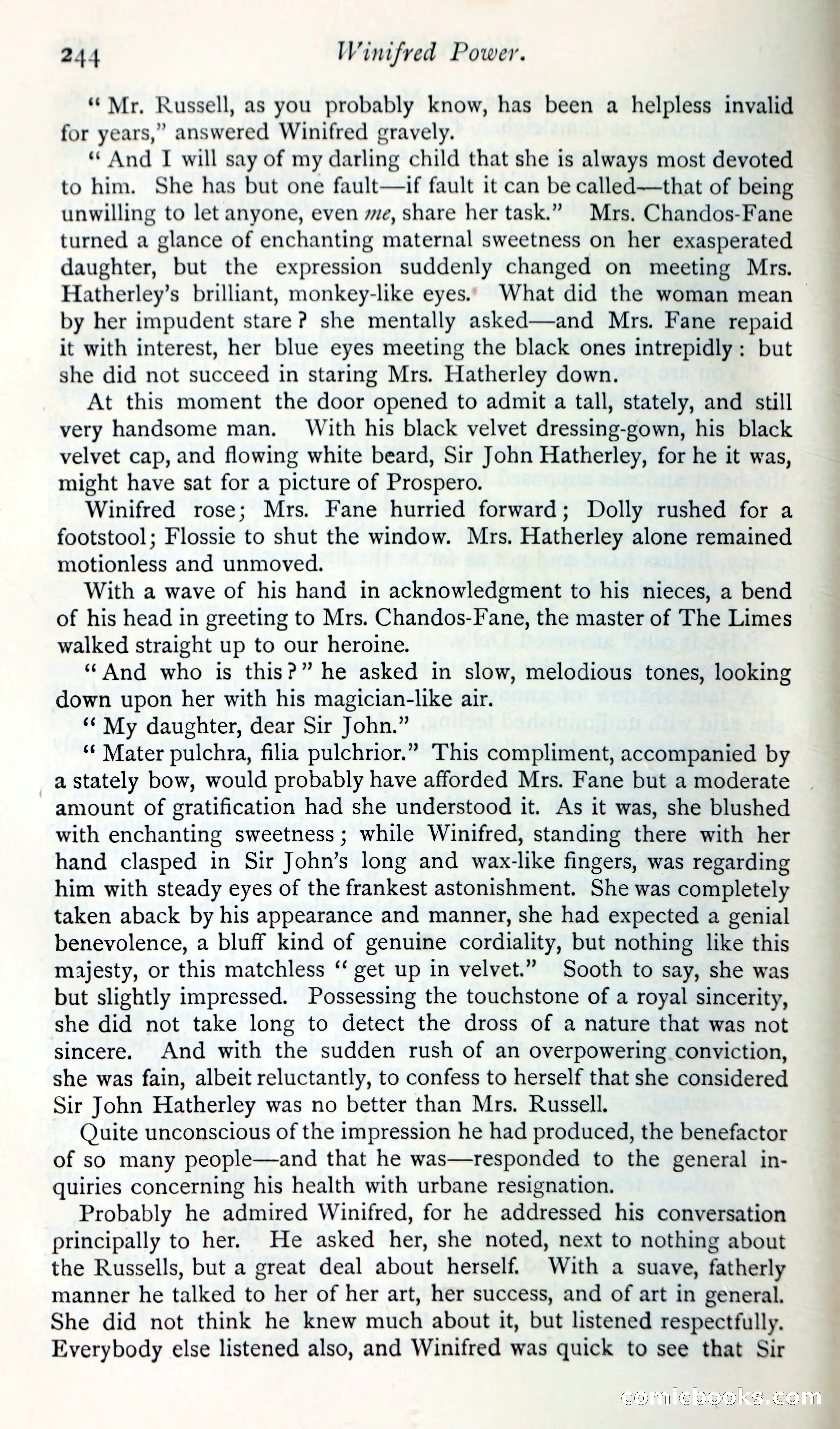
A restored page from Pulp Fiction, 1865. Page through the whole issue in the reader above.
📄 Transcribed text from this page (OCR, searchable)
Machine-transcribed from the original scan — historical spelling and the odd misread are preserved.
244 Winifred Power. “Mr. Russell, as you probably know, has been a helpless invalid for years,” answered Winifred gravely. “ And I will say of my darling child that she is always most devoted to him. She has but one fault—if fault it can be called—that of being unwilling to let anyone, even me, share her task.” Mrs. Chandos-Fane turned a glance of enchanting maternal sweetness on her exasperated daughter, but the expression suddenly changed on meeting Mrs. Hatherley’s brilliant, monkey-like eyes. What did the woman mean | by her impudent stare ? she mentally asked—and Mrs. Fane repaid it with interest, her blue eyes meeting the black ones intrepidly: but she did not succeed in staring Mrs. Hatherley down. At this moment the door opened to admit a tall, stately, and still very handsome man. With his black velvet dressing-gown, his black velvet cap, and flowing white beard, Sir John Hatherley, for he it was, might have sat for a picture of Prospero. Winifred rose; Mrs. Fane hurried forward; Dolly rushed for a footstool; Flossie to shut the window. Mrs. Hatherley alone remained motionless and unmoved. With a wave of his hand in acknowledgment to his nieces, a bend of his head in greeting to Mrs. Chandos-Fane, the master of The Limes walked straight up to our heroine. ‘And who is this?” he asked in slow, melodious tones, looking down upon her with his magician-like air. ‘¢ My daughter, dear Sir John.” ‘¢ Mater pulchra, filia pulchrior.” This compliment, accompanied by a stately bow, would probably have afforded Mrs. Fane but a moderate amount of gratification had she understood it. As it was, she blushed with enchanting sweetness; while Winifred, standing there with her hand clasped in Sir John’s long and wax-like fingers, was regarding him with steady eyes of the frankest astonishment. She was completely taken aback by his appearance and manner, she had expected a genial benevolence, a bluff kind of genuine cordiality, but nothing like this majesty, or this matchless “‘ get up in velvet.” Sooth to say, she was but slightly impressed. Possessing the touchstone of a royal sincerity, she did not take long to detect the dross of a nature that was not sincere. And with the sudden rush of an overpowering conviction, she was fain, albeit reluctantly, to confess to herself that she considered Sir John Hatherley was no better than Mrs. Russell. Quite unconscious of the impression he had produced, the benefactor of so many people—and that he was—responded to the general in- quiries concerning his health with urbane resignation. Probably he admired Winifred, for he addressed his conversation principally to her. He asked her, she noted, next to nothing about the Russells, but a great deal about herself. With a suave, fatherly manner he talked to her of her art, her success, and of art in general. She did not think he knew much about it, but listened respectfully. Everybody else listened also, and Winifred was quick to see that Sir GomicbooksnGo m ——