
Pulp Fiction, 1865 · page 26 of 399
The Argosy — page 26: what you’re looking at
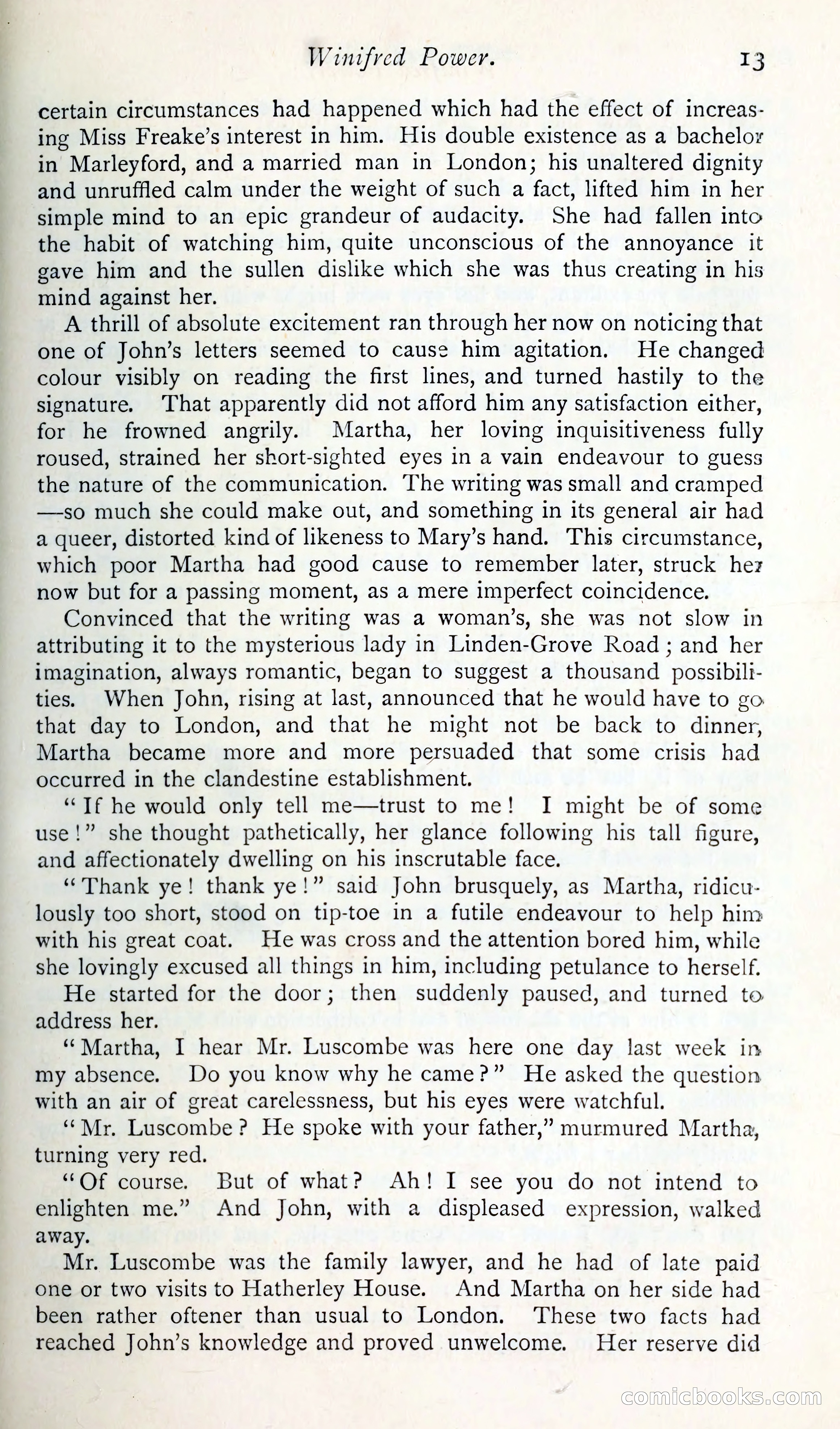
A restored page from Pulp Fiction, 1865. Page through the whole issue in the reader above.
📄 Transcribed text from this page (OCR, searchable)
Machine-transcribed from the original scan — historical spelling and the odd misread are preserved.
Winifred Power. 13 certain circumstances had happened which had the effect of increas- ing Miss Freake’s interest in him. His double existence as a bachelor in Marleyford, and a married man in London; his unaltered dignity and unruffled calm under the weight of such a fact, lifted him in her simple mind to an epic grandeur of audacity. She had fallen into the habit of watching him, quite unconscious of the annoyance it gave him and the sullen dislike which she was thus creating in his mind against her. A thrill of absolute excitement ran through her now on noticing that one of John’s letters seemed to cause him agitation. He changed colour visibly on reading the first lines, and turned hastily to the signature. That apparently did not afford him any satisfaction either, for he frowned angrily. Martha, her loving inquisitiveness fully roused, strained her short-sighted eyes in a vain endeavour to guess the nature of the communication. The writing was small and cramped —so much she could make out, and something in its general air had a queer, distorted kind of likeness to Mary’s hand. This circumstance, which poor Martha had good cause to remember later, struck her now but for a passing moment, as a mere imperfect coincidence. Convinced that the writing was a woman’s, she was not slow in attributing it to the mysterious lady in Linden-Grove Road ; and her imagination, always romantic, began to suggest a thousand possibill- ties. When John, rising at last, announced that he would have to go that day to London, and that he might not be back to dinner, Martha became more and more persuaded that some crisis had occurred in the clandestine establishment. “Tf he would only tell me—trust to me! I might be of some use!” she thought pathetically, her glance following his tall figure, and affectionately dwelling on his inscrutable face. “Thank ye! thank ye!” said John brusquely, as Martha, ridicu- lously too short, stood on tip-toe in a futile endeavour to help him with his great coat. He was cross and the attention bored him, while she lovingly excused all things in him, including petulance to herself. He started for the door; then suddenly paused, and turned to address her. “Martha, I hear Mr. Luscombe was here one day last week in my absence. Do you know why he came?” He asked the question with an air of great carelessness, but his eyes were watchful. ‘Mr. Luscombe? He spoke with your father,” murmured Martha, turning very red. “Of course. But of what? Ah! I see you do not intend to enlighten me.” And John, with a displeased expression, walked away. Mr. Luscombe was the family lawyer, and he had of late paid one or two visits to Hatherley House. And Martha on her side had been rather oftener than usual to London. These two facts had reached John’s knowledge and proved unwelcome. Her reserve did ECOnnicloooks (CO)