
Pulp Fiction, 1865 · page 226 of 399
The Argosy — page 226: what you’re looking at
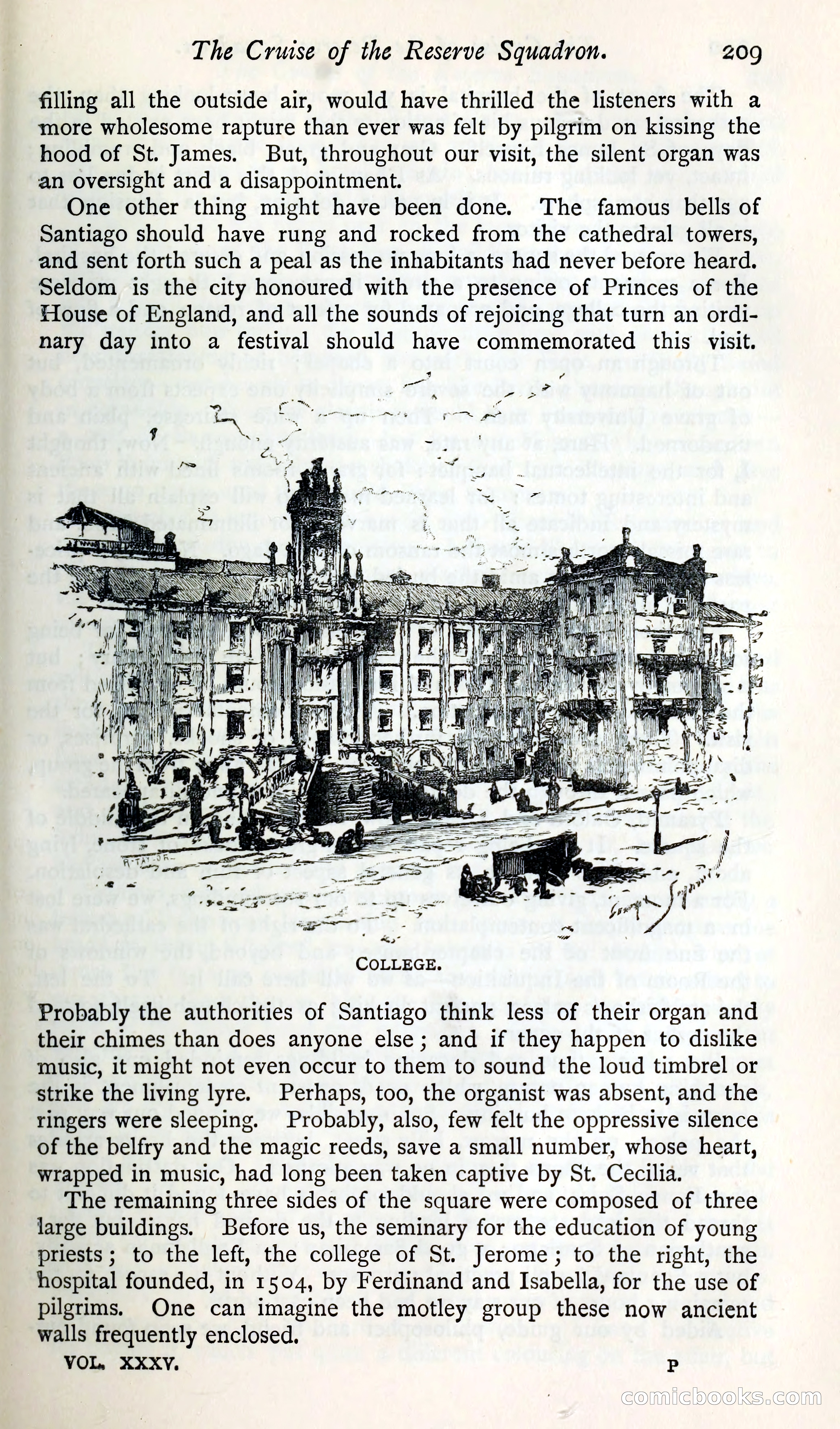
A restored page from Pulp Fiction, 1865. Page through the whole issue in the reader above.
📄 Transcribed text from this page (OCR, searchable)
Machine-transcribed from the original scan — historical spelling and the odd misread are preserved.
The Cruse of the Reserve Squadron. 209 filling all the outside air, would have thrilled the listeners with a more wholesome rapture than ever was felt by pilgrim on kissing the hood of St. James. But, throughout our visit, the silent organ was an oversight and a disappointment. One other thing might have been done. The famous bells of Santiago should have rung and rocked from the cathedral towers, and sent forth such a peal as the inhabitants had never before heard. Seldom is the city honoured with the presence of Princes of the House of England, and all the sounds of rejoicing that turn an ordi- nary day into a festival should have commemorated this visit. ARS, Bh Yar pL ey 3 SS \\ car a Sor lsnA ee eee oe Ihe me ' Ni} it af = . +s ~ . ~ ee wa ‘ t 1 | | - ~ , SX oN 2 EN ¥, 1 A Dh t ' I ay ed Wy ~ ; A U \ A 48 4 ’ ' ‘ ‘ = 22) SN eae aR AFA ed evn pie 12 A aH (fa | Hue ’ He ty ie LSS NS eh Ns ee, lua ~ 1 1 = hd abet ‘ ee ioe tus es 7 ‘ nif : ~~ “a = an = a <4 i rh Wh j I > hy Py 1 yh I > . Fai TRAPATT . \j «> q 1 . * The . , Lary, J ' ; , H! h * | na "We Zl we < ‘] J) { : iB i \ ¥, fr Wad ~@. f vt M4 4 ih \ ‘4 i 4 — b) =" 1 i] ' \ b ') ' ' F ; Fi ¥ j ss FJ { Verrrat i N Hb fa oy: te 1 bY eg oy HHL gh ta | apse ah) " } | ue { + cs ‘ ol use 3,%6 ' E 1 is ' r i] i 4 , ‘ t \ NW bm y ; COLLEGE. Probably the authorities of Santiago think less of their organ and their chimes than does anyone else; and if they happen to dislike music, it might not even occur to them to sound the loud timbrel or strike the living lyre. Perhaps, too, the organist was absent, and the ringers were sleeping. Probably, also, few felt the oppressive silence of the belfry and the magic reeds, save a small number, whose heart, wrapped in music, had long been taken captive by St. Cecilia. The remaining three sides of the square were composed of three large buildings. Before us, the seminary for the education of young priests; to the left, the college of St. Jerome; to the right, the hospital founded, in 1504, by Ferdinand and Isabella, for the use of pilgrims. One can imagine the motley group these now ancient walls frequently enclosed. VOL, XXXY. P ECOnnicloooks (GO