
Pulp Fiction, 1865 · page 223 of 399
The Argosy — page 223: what you’re looking at
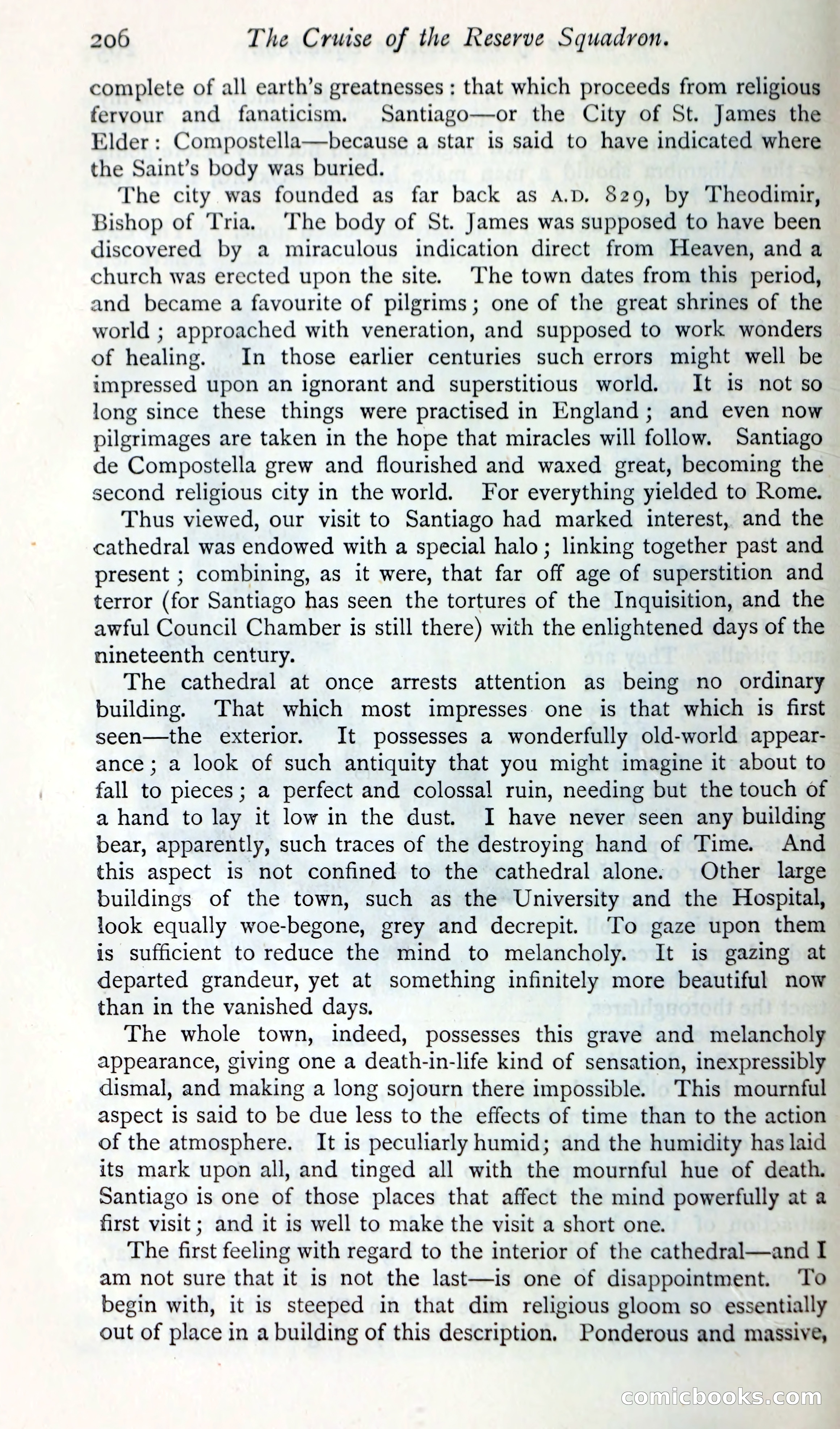
A restored page from Pulp Fiction, 1865. Page through the whole issue in the reader above.
📄 Transcribed text from this page (OCR, searchable)
Machine-transcribed from the original scan — historical spelling and the odd misread are preserved.
206 The Cruise of the Reserve Squadron. complete of all earth’s greatnesses ; that which proceeds from religious fervour and fanaticism. Santiago—or the City of St. James the Elder: Compostella—because a star is said to have indicated where the Saint’s body was buried. The city was founded as far back as A.D, 829, by Theodimuir, Bishop of Tria. ‘The body of St. James was supposed to have been discovered by a miraculous indication direct from Heaven, and a church was erected upon the site. The town dates from this period, and became a favourite of pilgrims; one of the great shrines of the world ; approached with veneration, and supposed to work wonders of healing. In those earlier centuries such errors might well be impressed upon an ignorant and superstitious world. It is not so long since these things were practised in England; and even now pilgrimages are taken in the hope that miracles will follow. Santiago de Compostella grew and flourished and waxed great, becoming the second religious city in the world. For everything yielded to Rome. Thus viewed, our visit to Santiago had marked interest, and the cathedral was endowed with a special halo; linking together past and present ; combining, as it were, that far off age of superstition and terror (for Santiago has seen the tortures of the Inquisition, and the awful Council Chamber is still there) with the enlightened days of the nineteenth century. The cathedral at once arrests attention as being no ordinary building. That which most impresses one is that which is first seen—the exterior. It possesses a wonderfully old-world appear- ance; a look of such antiquity that you might imagine it about to fall to pieces; a perfect and colossal ruin, needing but the touch of a hand to lay it low in the dust. I have never seen any building bear, apparently, such traces of the destroying hand of Time. And this aspect is not confined to the cathedral alone. Other large buildings of the town, such as the University and the Hospital, look equally woe-begone, grey and decrepit. ‘To gaze upon them is sufficient to reduce the mind to melancholy. It is gazing at departed grandeur, yet at something infinitely more beautiful now than in the vanished days. The whole town, indeed, possesses this grave and melancholy appearance, giving one a death-in-life kind of sensation, inexpressibly dismal, and making a long sojourn there impossible. This mournful aspect is said to be due less to the effects of time than to the action of the atmosphere. It is peculiarly humid; and the humidity has laid its mark upon all, and tinged all with the mournful hue of death. Santiago is one of those places that affect the mind powerfully at a first visit; and it is well to make the visit a short one. The first feeling with regard to the interior of the cathedral—and I am not sure that it is not the last—is one of disappointment. ‘To begin with, it is steeped in that dim religious gloom so essentially out of place in a building of this description, Ponderous and massive, CORNICE OOOKS COA