
Pulp Fiction, 1865 · page 192 of 399
The Argosy — page 192: what you’re looking at
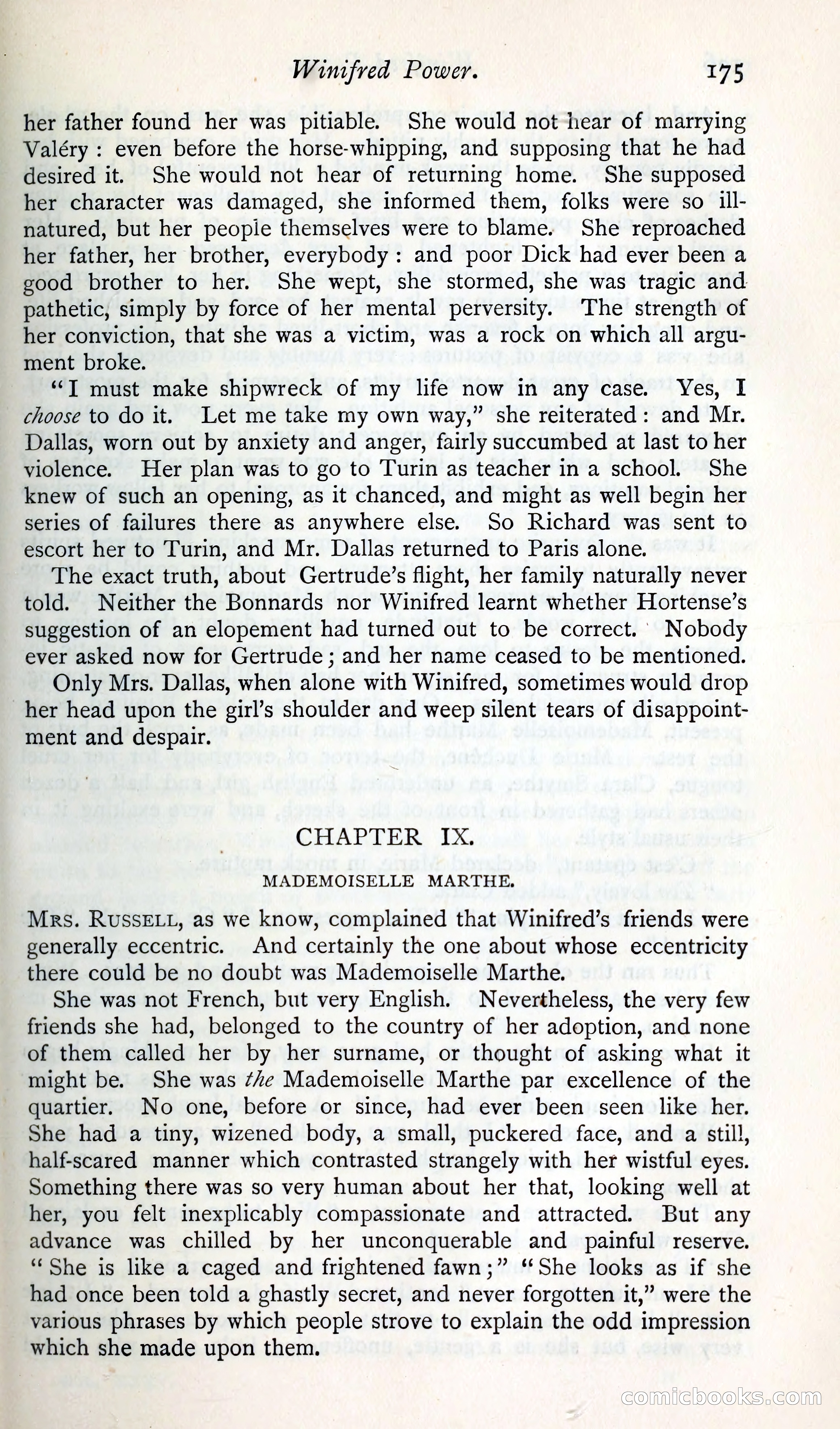
A restored page from Pulp Fiction, 1865. Page through the whole issue in the reader above.
📄 Transcribed text from this page (OCR, searchable)
Machine-transcribed from the original scan — historical spelling and the odd misread are preserved.
Winifred Power. 175 her father found her was pitiable. She would not hear of marrying Valéry : even before the horse-whipping, and supposing that he had desired it. She would not hear of returning home. She supposed her character was damaged, she informed them, folks were so ill- natured, but her peopie themselves were to blame. She reproached her father, her brother, everybody: and poor Dick had ever been a good brother to her. She wept, she stormed, she was tragic and pathetic, simply by force of her mental perversity. The strength of her conviction, that she was a victim, was a rock on which all argu- ment broke. ‘‘T must make shipwreck of my life now in any case. Yes, I choose to do it. Let me take my own way,” she reiterated: and Mr. Dallas, worn out by anxiety and anger, fairly succumbed at last to her violence. Her plan was to go to Turin as teacher in a school. She knew of such an opening, as it chanced, and might as well begin her series of failures there as anywhere else. So Richard was sent to escort her to Turin, and Mr. Dallas returned to Paris alone. The exact truth, about Gertrude’s flight, her family naturally never told. Neither the Bonnards nor Winifred learnt whether Hortense’s suggestion of an elopement had turned out to be correct.’ Nobody ever asked now for Gertrude; and her name ceased to be mentioned. Only Mrs. Dallas, when alone with Winifred, sometimes would drop her head upon the girl’s shoulder and weep silent tears of disappoint- ment and despair. CHAPTER IX, MADEMOISELLE MARTHE. Mrs. RUSSELL, as we know, complained that Winifred’s friends were generally eccentric. And certainly the one about whose eccentricity there could be no doubt was Mademoiselle Marthe. She was not French, but very English. Nevertheless, the very few friends she had, belonged to the country of her adoption, and none of them called her by her surname, or thought of asking what it might be. She was te Mademoiselle Marthe par excellence of the quartier. No one, before or since, had ever been seen like her. She had a tiny, wizened body, a small, puckered face, and a still, half-scared manner which contrasted strangely with her wistful eyes. Something there was so very human about her that, looking well at her, you felt inexplicably compassionate and attracted. But any advance was chilled by her unconquerable and painful reserve. ‘She is like a caged and frightened fawn;” ‘‘She looks as if she had once been told a ghastly secret, and never forgotten it,” were the various phrases by which people strove to explain the odd impression which she made upon them. CoOnniclooolkks (CS) mn