
Pulp Fiction, 1865 · page 99 of 400
The Argosy — page 99: what you’re looking at
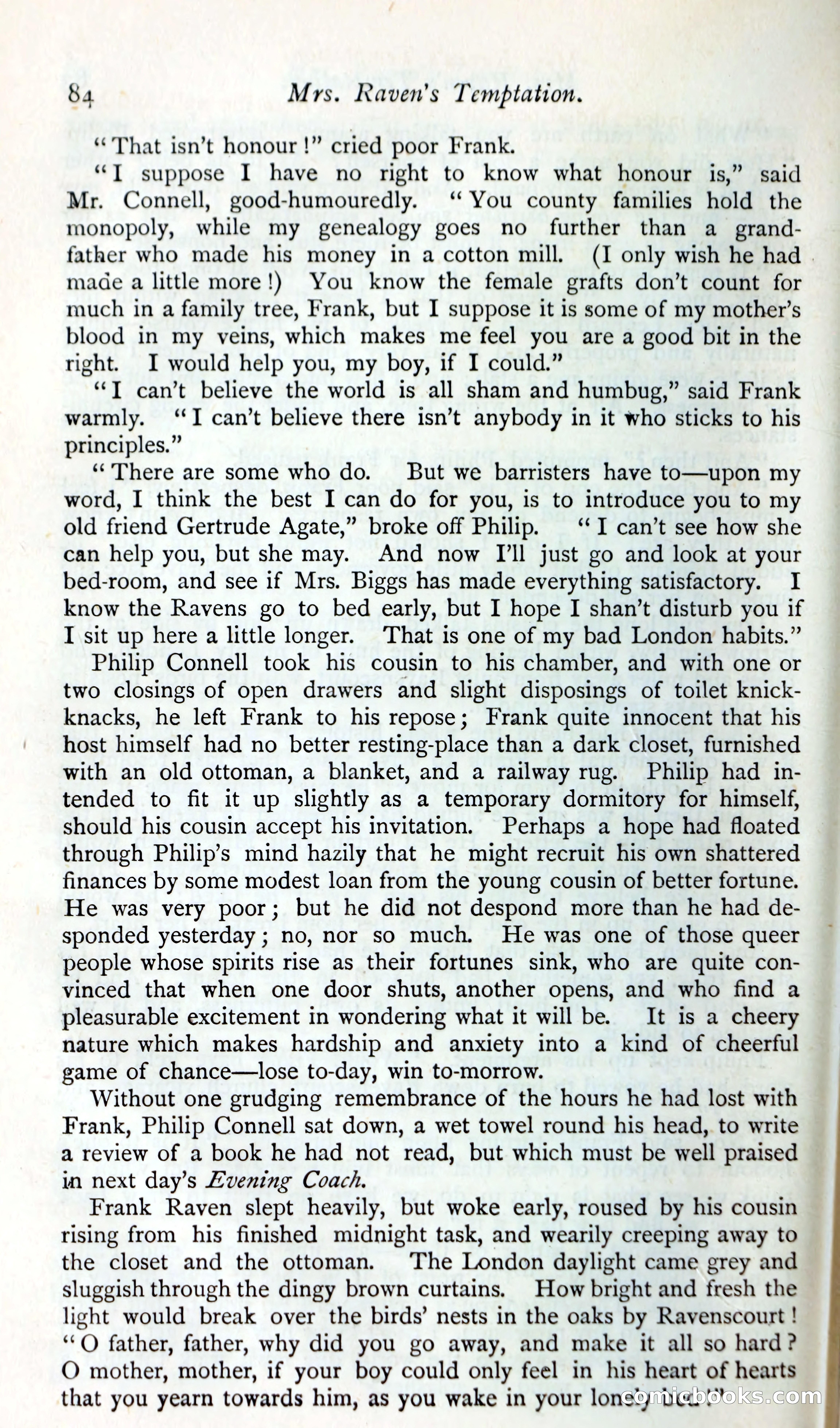
A restored page from Pulp Fiction, 1865. Page through the whole issue in the reader above.
📄 Transcribed text from this page (OCR, searchable)
Machine-transcribed from the original scan — historical spelling and the odd misread are preserved.
Sa Mrs. Raven's Temptation. ‘That isn’t honour!” cried poor Frank. ‘IT suppose I have no right to know what honour is,” said Mr. Connell, good-humouredly. ‘‘ You county families hold the monopoly, while my genealogy goes no further than a grand- father who made his money in a cotton mill. (I only wish he had | made a little more!) You know the female grafts don’t count for much in a family tree, Frank, but I suppose it is some of my mother’s blood in my veins, which makes me feel you are a good bit in the right. I would help you, my boy, if I could.” “T can’t believe the world is all sham and humbug,” said Frank warmly. ‘I can’t believe there isn’t anybody in it who sticks to his principles.” ‘There are some who do. ‘But we barristers have to—upon my word, I think the best I can do for you, is to introduce you to my old friend Gertrude Agate,” broke off Philip. ‘I can’t see how she can help you, but she may. And now [ll just go and look at your bed-room, and see if Mrs. Biggs has made everything satisfactory. I know the Ravens go to bed early, but I hope I shan’t disturb you if I sit up here a little longer. That is one of my bad London habits.” Philip Connell took his cousin to his chamber, and with one or two closings of open drawers and slight disposings of toilet knick- knacks, he left Frank to his repose; Frank quite innocent that his host himself had no better resting-place than a dark closet, furnished with an old ottoman, a blanket, and a railway rug. Philip had in- tended to fit it up slightly as a temporary dormitory for himself, should his cousin accept his invitation. Perhaps a hope had floated through Philip’s mind hazily that he might recruit his own shattered finances by some modest loan from the young cousin of better fortune. He was very poor; but he did not despond more than he had de- sponded yesterday ; no, nor so much. He was one of those queer people whose spirits rise as their fortunes sink, who are quite con- vinced that when one door shuts, another opens, and who find a pleasurable excitement in wondering what it will be. It is a cheery nature which makes hardship and anxiety into a kind of cheerful game of chance—lose to-day, win to-morrow. Without one grudging remembrance of the hours he had lost with Frank, Philip Connell sat down, a wet towel round his head, to write a review of a book he had not read, but which must be well praised in next day’s Lvening Coach. Frank Raven slept heavily, but woke early, roused by his cousin rising from his finished midnight task, and wearily creeping away to the closet and the ottoman. The London daylight came grey and sluggish through the dingy brown curtains. How bright and fresh the light would break over the birds’ nests in the oaks by Ravenscourt ! ‘‘Q father, father, why did you go away, and make it all so hard? O mother, mother, if your boy could only feel in his heart of hearts that you yearn towards him, as you wake in your lonsyVE@pers <.c®