
Pulp Fiction, 1865 · page 400 of 400
The Argosy — page 400: what you’re looking at
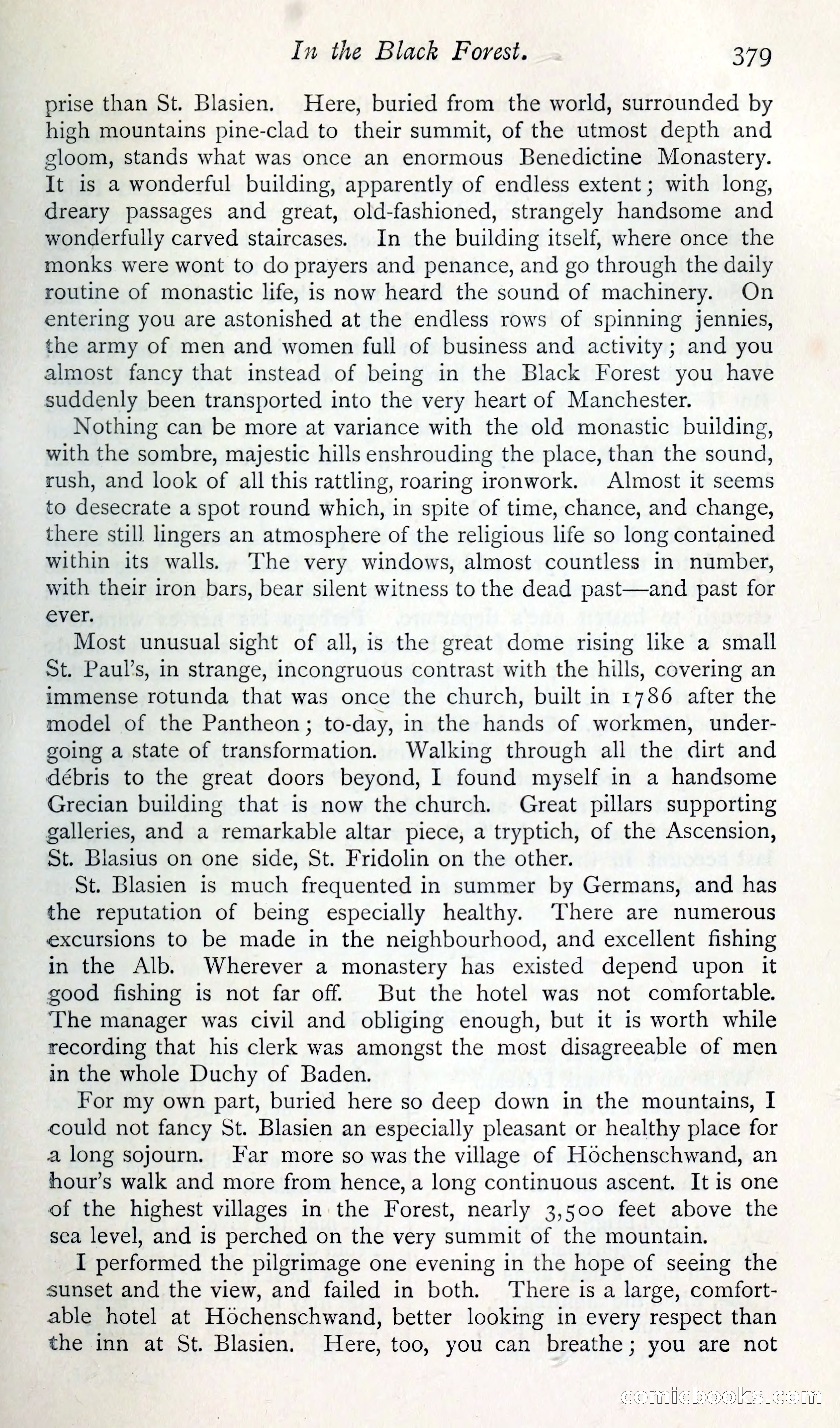
A restored page from Pulp Fiction, 1865. Page through the whole issue in the reader above.
📄 Transcribed text from this page (OCR, searchable)
Machine-transcribed from the original scan — historical spelling and the odd misread are preserved.
In the Black Forest. 379 prise than St. Blasien. Here, buried from the world, surrounded by high mountains pine-clad to their summit, of the utmost depth and gloom, stands what was once an enormous Benedictine Monastery. It is a wonderful building, apparently of endless extent; with long, dreary passages and great, old-fashioned, strangely handsome and wonderfully carved staircases. In the building itself, where once the monks were wont to do prayers and penance, and go through the daily routine of monastic life, is now heard the sound of machinery. On entering you are astonished at the endless rows of spinning jennies, the army of men and women full of business and activity; and you almost fancy that instead of being in the Black Forest you have suddenly been transported into the very heart of Manchester. Nothing can be more at variance with the old monastic building, with the sombre, majestic hills enshrouding the place, than the sound, rush, and look of all this rattling, roaring ironwork. Almost it seems to desecrate a spot round which, in spite of time, chance, and change, there still lingers an atmosphere of the religious life so long contained within its walls. The very windows, almost countless in number, with their iron bars, bear silent witness to the dead past—and past for ever. Most unusual sight of all, is the great dome rising like a small St. Paul’s, in strange, incongruous contrast with the hills, covering an immense rotunda that was once the church, built in 1786 after the model of the Pantheon; to-day, in the hands of workmen, under- going a state of transformation. Walking through all the dirt and débris to the great doors beyond, I found myself in a handsome Grecian building that is now the church. Great pillars supporting galleries, and a remarkable altar piece, a tryptich, of the Ascension, St. Blasius on one side, St. Fridolin on the other. St. Blasien is much frequented in summer by Germans, and has the reputation of being especially healthy. ‘There are numerous excursions to be made in the neighbourhood, and excellent fishing in the Alb. Wherever a monastery has existed depend upon it good fishing is not far off. But the hotel was not comfortable. The manager was civil and obliging enough, but it is worth while recording that his clerk was amongst the most disagreeable of men in the whole Duchy of Baden. For my own part, buried here so deep down in the mountains, I could not fancy St. Blasien an especially pleasant or healthy place for along sojourn. Far more so was the village of Hochenschwand, an hour’s walk and more from hence, a long continuous ascent. It is one of the highest villages in the Forest, nearly 3,500 feet above the sea level, and is perched on the very summit of the mountain. I performed the pilgrimage one evening in the hope of seeing the sunset and the view, and failed in both. There ts a large, comfort- able hotel at Hochenschwand, better looking in every respect than the inn at St. Blasien. Here, too, you can breathe; you are not CONMMICOOOKS.C©