
Pulp Fiction, 1865 · page 192 of 400
The Argosy — page 192: what you’re looking at
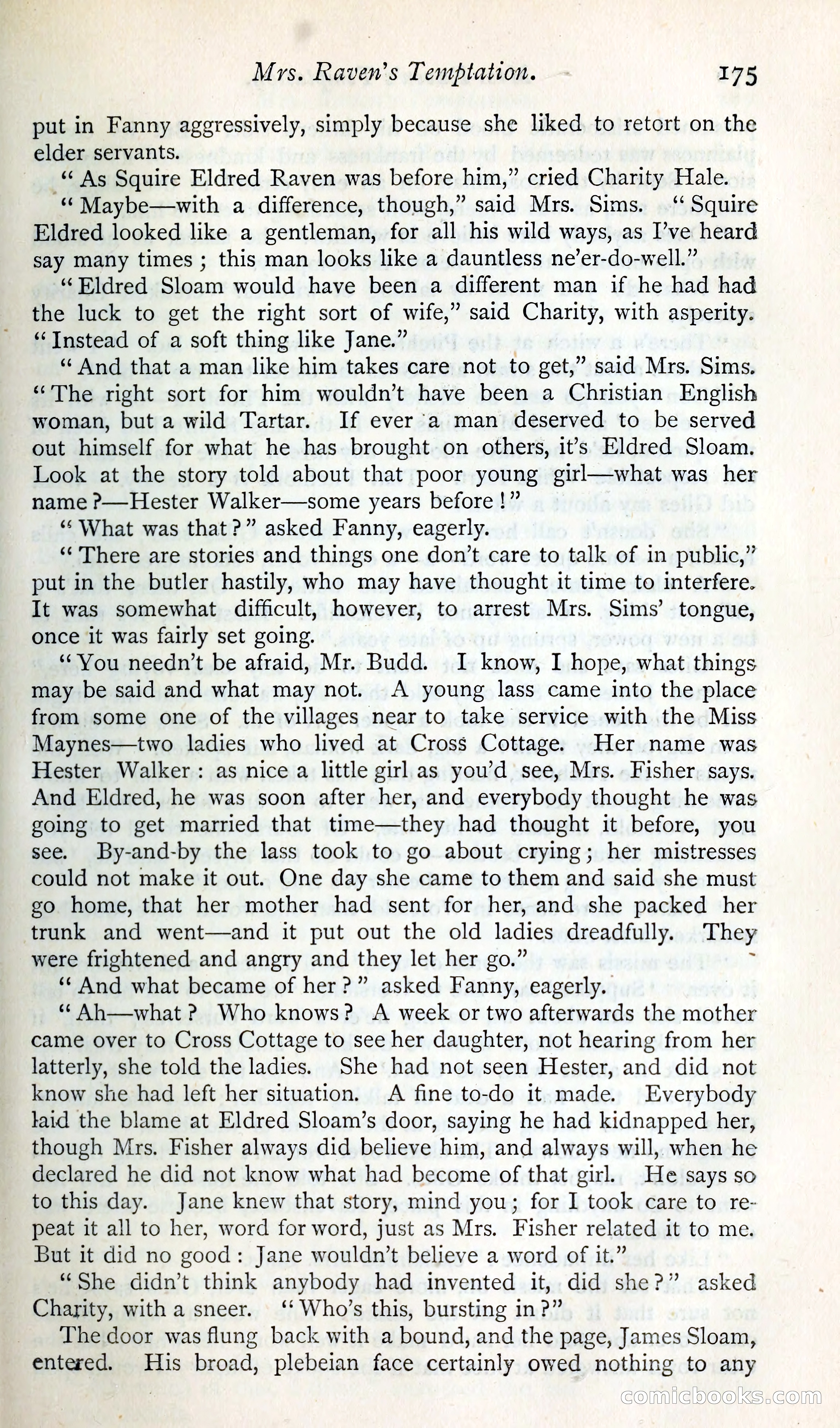
A restored page from Pulp Fiction, 1865. Page through the whole issue in the reader above.
📄 Transcribed text from this page (OCR, searchable)
Machine-transcribed from the original scan — historical spelling and the odd misread are preserved.
Mrs. Raven’s Temptation. 175 put in Fanny aggressively, simply because she liked to retort on the elder servants. “As Squire Eldred Raven was before him,” cried Charity Hale. 6 Maybe—with a difference, though,” said Mrs. Sims. ‘‘ Squire Eldred looked like a gentleman, for all his wild ways, as I’ve heard say many times ; this man looks like a dauntless ne’er-do-well.” “Eldred Sloam would have been a different man if he had had the luck to get the right sort of wife,” said Charity, with asperity. ‘Instead of a soft thing like Jane.” “ And that a man like him takes care not to get,” said Mrs. Sims, “The right sort for him wouldn’t have been a Christian English woman, but a wild Tartar. If ever 'a man deserved to be served out himself for what he has brought on others, it’s Eldred Sloam. Look at the story told about that poor young girl—what was her name ?—Hester Walker—some years before !” “ What was that?” asked Fanny, eagerly. ‘‘ There are stories and things one don’t care to talk of in public,” put in the butler hastily, who may have thought it time to interfere. It was somewhat difficult, however, to arrest Mrs. Sims’ tongue, once it was fairly set going. ‘You needn’t be afraid, Mr. Budd. I hice I hope, what things may be said and what may not. A young lass came into the place from some one of the villages near to take service with the Miss Maynes—two ladies who lived at Cross Cottage. Her name was Hester Walker: as nice a little girl as you’d see, Mrs. Fisher. says. And Eldred, he was soon after her, and everybody thought he was going to get married that time—they had thought it before, you see. By-and-by the lass took to go about crying; her mistresses could not make it out. One day she came to them and said she must go home, that her mother had sent for her, and she packed her trunk and went—and it put out the old ladies dreadfully. They were frightened and angry and they let her go.” ” ‘¢ And what became of her?” asked Fanny, eagerly. ‘* Ah—what ? Who knows? A week or two afterwards the mother came over to Cross Cottage to see her daughter, not hearing from her latterly, she told the ladies. She had not seen Hester, and did not know she had left her situation. A fine to-do it made. Everybody laid the blame at Eldred Sloam’s door, saying he had kidnapped her, though Mrs. Fisher always did believe him, and always will, when he declared he did not know what had become of that girl. He says so to this day. Jane knew that story, mind you; for I took care to re- peat it all to her, word for word, just as Mrs. Fisher related it to me. But it did no good: Jane wouldn’t believe a word of it.” “She didn’t think anybody had invented it, did she?” asked Charity, witha sneer. ‘‘ Who’s this, bursting in P” The door was flung back with a bound, and the page, James Sloam, entered. His broad, plebeian face certainly owed nothing to any Conniclooolks (C(O)