
Pulp Fiction, 1865 · page 115 of 400
The Argosy — page 115: what you’re looking at
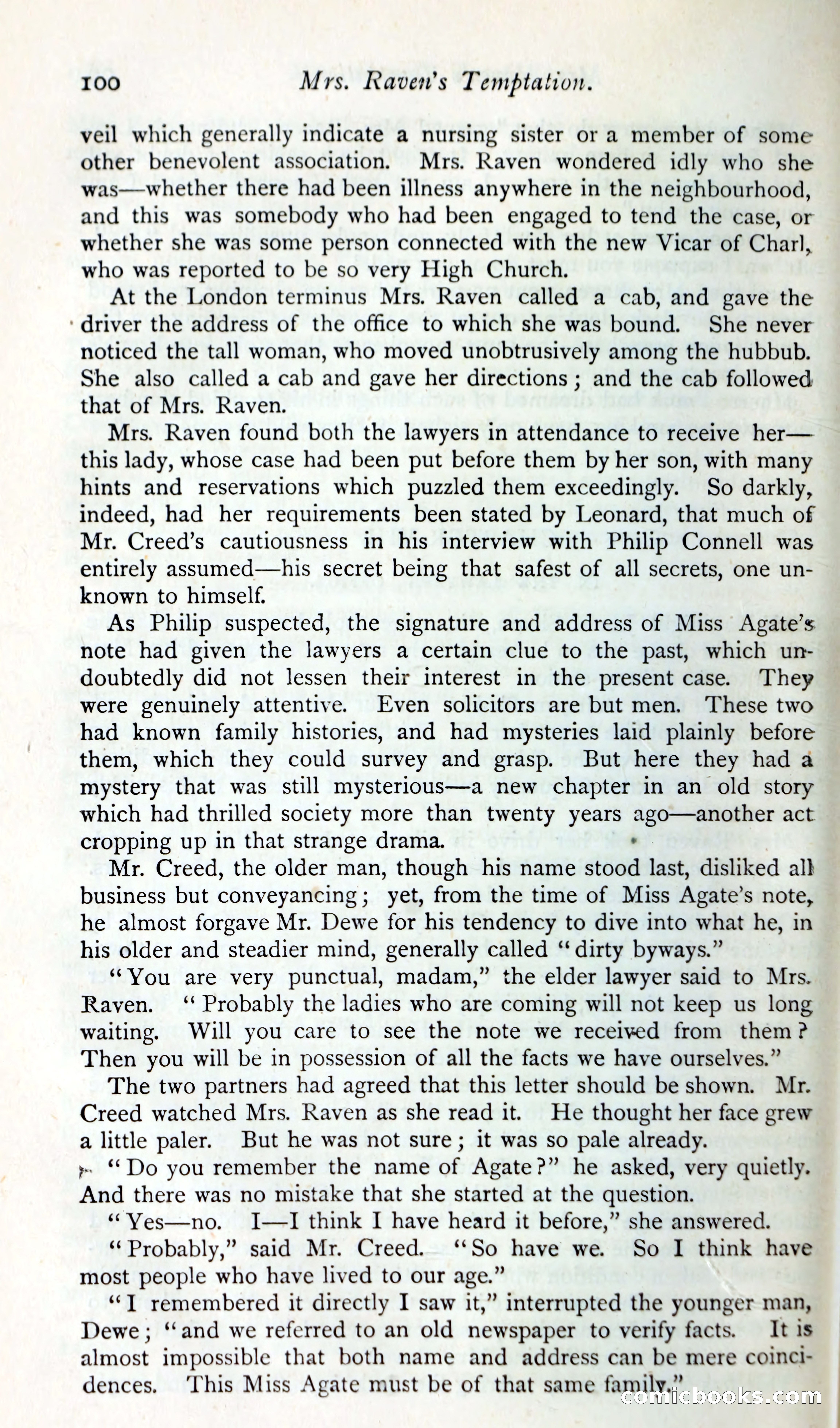
A restored page from Pulp Fiction, 1865. Page through the whole issue in the reader above.
📄 Transcribed text from this page (OCR, searchable)
Machine-transcribed from the original scan — historical spelling and the odd misread are preserved.
100 Mrs. Ravens Temptation. veil which generally indicate a nursing sister or a member of some other benevolent association. Mrs. Raven wondered idly who she was—whether there had been illness anywhere in the neighbourhood, and this was somebody who had been engaged to tend the case, or whether she was some person connected with the new Vicar of Charl, who was reported to be so very High Church. At the London terminus Mrs. Raven called a cab, and gave the ‘driver the address of the office to which she was bound. She never noticed the tall woman, who moved unobtrusively among the hubbub. She also called a cab and gave her directions ; and the cab followed that of Mrs. Raven. Mrs. Raven found both the lawyers in attendance to receive her— this lady, whose case had been put before them by her son, with many hints and reservations which puzzled them exceedingly. So darkly, indeed, had her requirements been stated by Leonard, that much of Mr. Creed’s cautiousness in his interview with Philip Connell was entirely assumed—his secret being that safest of all secrets, one un- known to himself. As Philip suspected, the signature and address of Miss Agate’s note had given the lawyers a certain clue to the past, which un- doubtedly did not lessen their interest in the present case. They were genuinely attentive. Even solicitors are but men. ‘These two had known family histories, and had mysteries laid plainly before them, which they could survey and grasp. But here they had a mystery that was still mysterlous—a new chapter in an old story which had thrilled society more than twenty years ago—another act cropping up in that strange drama. ae Mr. Creed, the older man, though his name stood last, disliked all business but conveyancing; yet, from the time of Miss Agate’s note, he almost forgave Mr. Dewe for his tendency to dive into what he, in his older and steadier mind, generally called ‘‘ dirty byways.” ‘“You are very punctual, madam,” the elder lawyer said to Mrs. Raven. ‘ Probably the ladies who are coming will not keep us long waiting. Will you care to see the note we received from them ? Then you will be in possession of all the facts we have ourselves.” The two partners had agreed that this letter should be shown. Mr. Creed watched Mrs. Raven as she read it. He thought her face grew a little paler. But he was not sure; it was so pale already. + **Do you remember the name of Agate?” he asked, very quietly. And there was no mistake that she started at the question. ‘Ves—no. JI—I think I have heard it before,” she answered. “Probably,” said Mr. Creed. ‘‘So have we. So I think have most people who have lived to our age.” ‘‘T remembered it directly I saw it,” interrupted the younger man, Dewe; ‘and we referred to an old newspaper to verify facts. It is almost impossible that both name and address can be mere coincl- dences. ‘This Miss Agate must be of that same family,” eee