
Pulp Fiction, 1865 · page 95 of 400
The Argosy — page 95: what you’re looking at
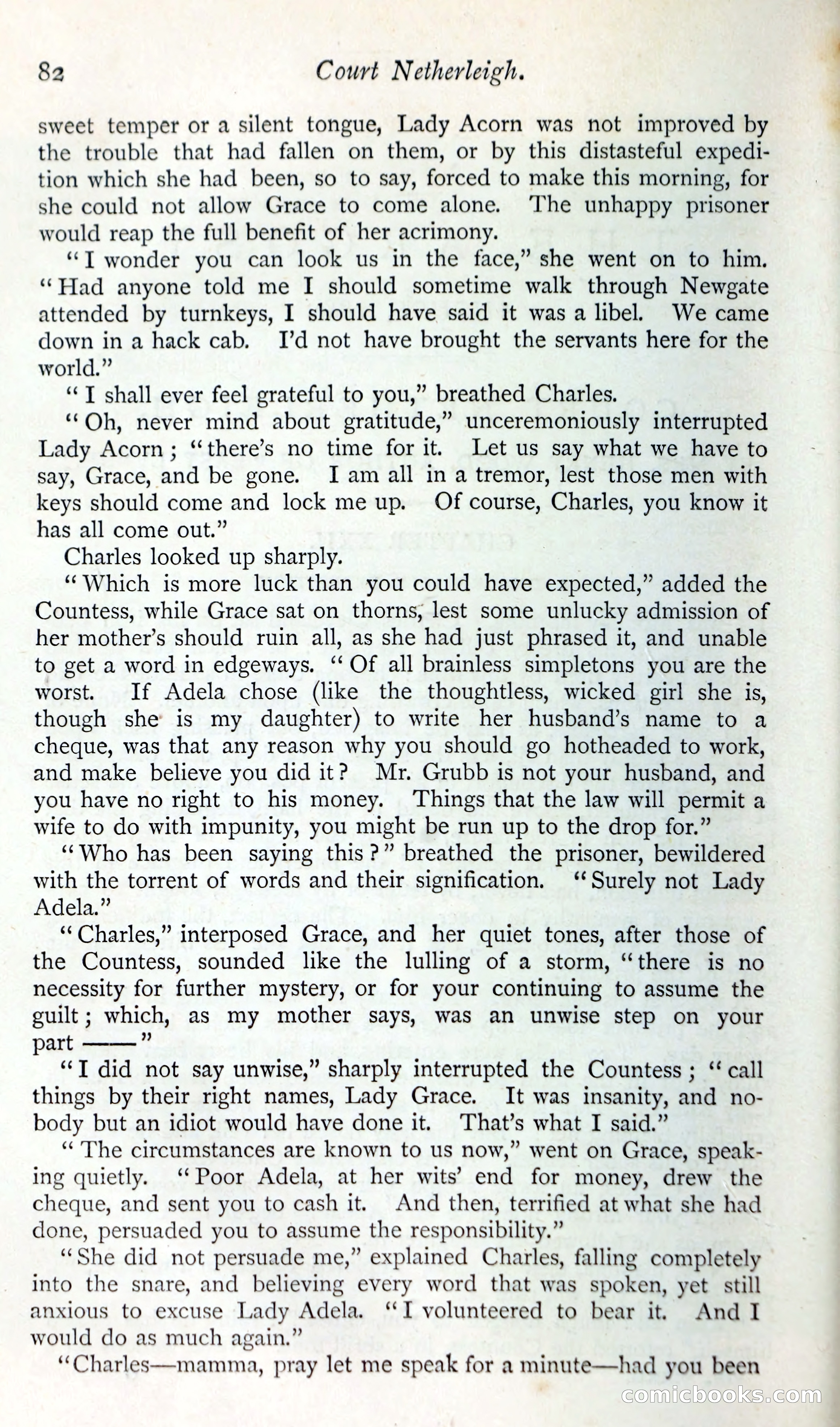
A restored page from Pulp Fiction, 1865. Page through the whole issue in the reader above.
📄 Transcribed text from this page (OCR, searchable)
Machine-transcribed from the original scan — historical spelling and the odd misread are preserved.
82 Court Netherleigh. sweet temper or a silent tongue, Lady Acorn was not improved by the trouble that had fallen on them, or by this distasteful expedi- tion which she had been, so to say, forced to make this morning, for she could not allow Grace to come alone. ‘The unhappy prisoner would reap the full benefit of her acrimony. ‘“T wonder you can look us in the face,” she went on to him. ‘Had anyone told me I should sometime walk through Newgate attended by turnkeys, I should have said it was a libel. We came down ina hack cab. I’d not have brought the servants here for the world.” ‘‘T shall ever feel grateful to you,” breathed Charles. ‘‘Oh, never mind about gratitude,” unceremoniously interrupted Lady Acorn; ‘‘there’s no time for it. Let us say what we have to say, Grace, and be gone. Iam all in a tremor, lest those men with keys should come and lock me up. Of course, Charles, you know it has all come out.” Charles looked up sharply. ‘Which is more luck than you could have expected,” added the Countess, while Grace sat on thorns, lest some unlucky admission of her mother’s should ruin all, as she had just phrased it, and unable to get a word in edgeways. ‘‘ Of all brainless simpletons you are the worst. If Adela chose (like the thoughtless, wicked girl she is, though she is my daughter) to write her husband’s name to a cheque, was that any reason why you should go hotheaded to work, and make believe you did it? Mr. Grubb is not your husband, and you have no right to his money. ‘Things that the law will permit a wife to do with impunity, you might be run up to the drop for.” ‘“Who has been saying this?” breathed the prisoner, bewildered with the torrent of words and their signification. ‘Surely not Lady Adela.” ‘“‘ Charles,” interposed Grace, and her quiet tones, after those of the Countess, sounded like the lulling of a storm, “there is no necessity for further mystery, or for your continuing to assume the guilt; which, as my mother says, was an unwise step on your part ‘ “T did not say unwise,” sharply interrupted the Countess; ‘ call things by their right names, Lady Grace. It was insanity, and no- body but an idiot would have done it. That’s what I said.” ‘The circumstances are known to us now,” went on Grace, speak- ing quietly. ‘‘Poor Adela, at her wits’ end for money, drew the cheque, and sent you to cash it. And then, terrified at what she had done, persuaded you to assume the responsibility.” ‘She did not persuade me,” explained Charles, falling completely into the snare, and believing every word that was spoken, yet still anxious to excuse Lady Adela. “I volunteered to bear it. And I would do as much again.” ‘““Charles—mamma, pray let me speak for a minute—had you been CORNICE OOO KS (E)