
Pulp Fiction, 1865 · page 301 of 400
The Argosy — page 301: what you’re looking at
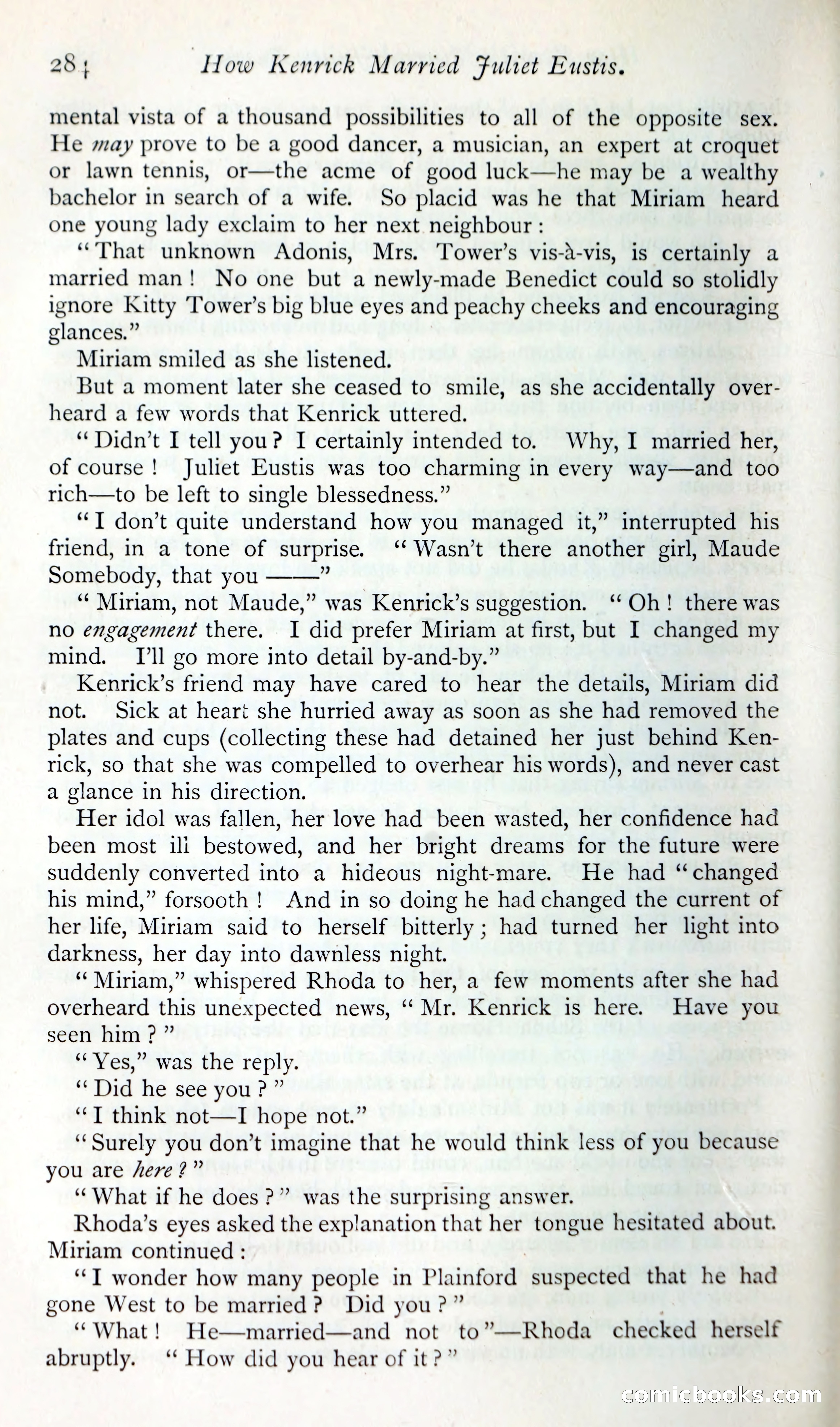
A restored page from Pulp Fiction, 1865. Page through the whole issue in the reader above.
📄 Transcribed text from this page (OCR, searchable)
Machine-transcribed from the original scan — historical spelling and the odd misread are preserved.
) om How Kenrick Married Fulrvet Hustis. mental vista of a thousand possibilities to all of the opposite sex. He may prove to be a good dancer, a musician, an expert at croquet or lawn tennis, or—the acme of good luck—he may be a wealthy bachelor in search of a wife. So placid was he that Miriam heard one young lady exclaim to her next neighbour : “That unknown Adonis, Mrs. Tower’s vis-a-vis, is certainly a married man! No one but a newly-made Benedict could so stolidly ignore Kitty Tower’s big blue eyes and peachy cheeks and encouraging glances.” Miriam smiled as she listened. But a moment later she ceased to smile, as she accidentally over- heard a few words that Kenrick uttered. ‘“Didn’t I tell you? I certainly intended to. Why, I married her, of course! Juliet Eustis was too charming in every way—and too rich—to be left to single blessedness.” “T don’t quite understand how you managed it,” interrupted his friend, in a tone of surprise. ‘‘ Wasn’t there another girl, Maude Somebody, that you ——” | “Miriam, not Maude,” was Kenrick’s suggestion. ‘Oh! there was no exgagement there. I did prefer Miriam at first, but I changed my mind. Tl go more into detail by-and-by.” Kenrick’s friend may have cared to hear the details, Miriam did not. Sick at heart she hurried away as soon as she had removed the plates and cups (collecting these had detained her just behind Ken- rick, so that she was compelled to overhear his words), and never cast a glance in his direction. Her idol was fallen, her love had been wasted, her confidence had been most ili bestowed, and her bright dreams for the future were suddenly converted into a hideous night-mare. He had “changed his mind,” forsooth ! And in so doing he had changed the current of her life, Miriam said to herself bitterly ; had turned her light into darkness, her day into dawnless night. “Miriam,” whispered Rhoda to her, a few moments after she had overheard this unexpected news, ‘‘ Mr. Kenrick is here. Have you seen him ?” “Yes,” was the reply. ‘Did he see you ?” ‘“‘T think not—I hope not.” ‘Surely you don’t imagine that he would think less of you because you are here?” ‘“What if he does ?” was the surprising answer. Rhoda’s eyes asked the explanation that her tongue hesitated about. Miriam continued : ‘“‘T wonder how many people in Plainford suspected that he had gone West to be married? Did you?” | “What! He—married—and not to”—Rhoda checked herself abruptly. ‘‘ How did you hear of it ?” ECOPMIELDOO KS, (EC)