
Pulp Fiction, 1865 · page 275 of 400
The Argosy — page 275: what you’re looking at
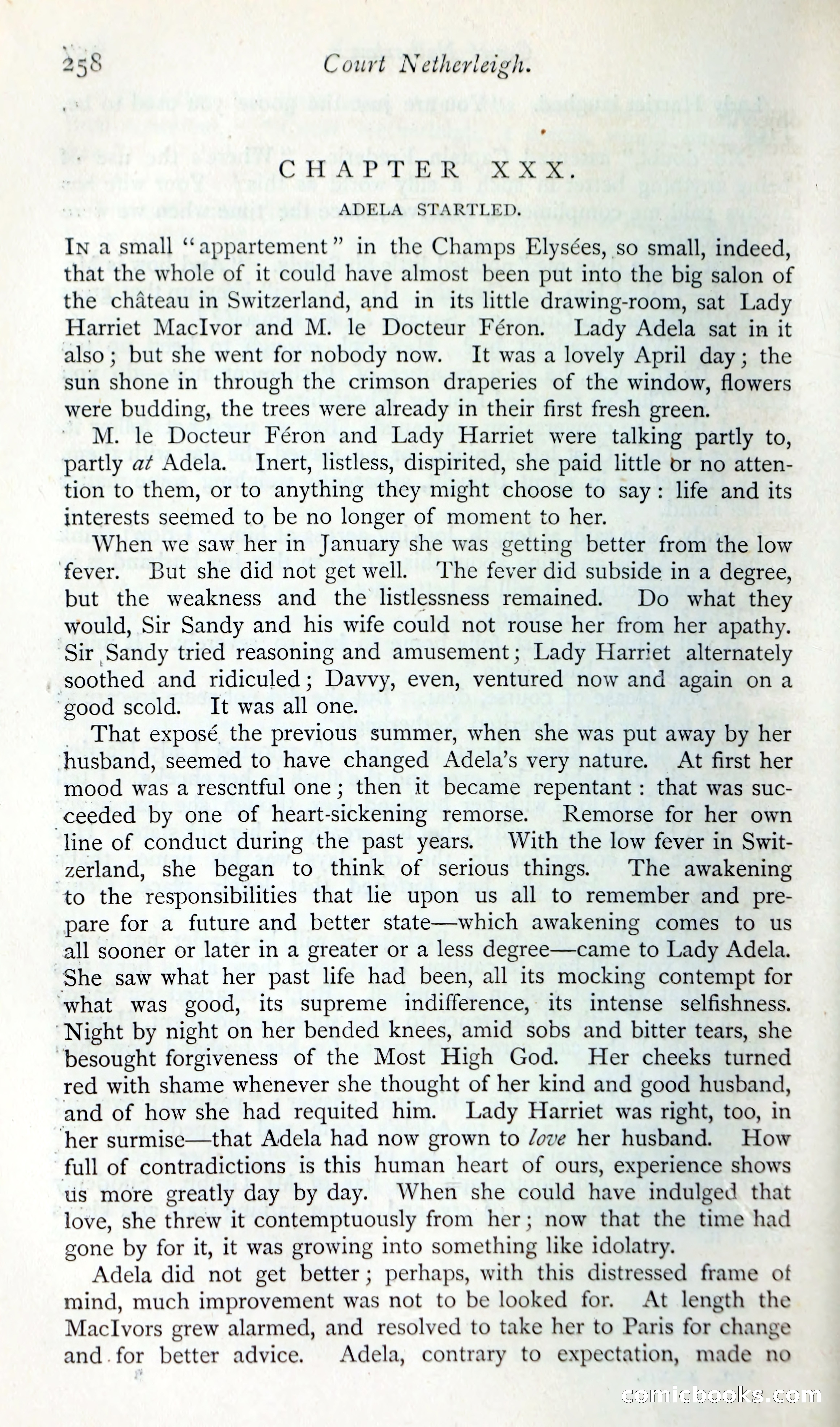
A restored page from Pulp Fiction, 1865. Page through the whole issue in the reader above.
📄 Transcribed text from this page (OCR, searchable)
Machine-transcribed from the original scan — historical spelling and the odd misread are preserved.
bh” un 09 Court Netherleigh. , CH A’P'T.E ER Xe ADELA STARTLED. In a small ‘‘appartement” in the Champs Elysées, so small, indeed, that the whole of it could have almost been put into the big salon of the chateau in Switzerland, and in its little drawing-room, sat Lady Harriet MacIvor and M. le Docteur Féron. Lady Adela sat in it also; but she went for nobody now. It was a lovely April day; the sun shone in through the crimson draperies of the window, flowers were budding, the trees were already in their first fresh green. M. le Docteur Féron and Lady Harriet were talking partly to, partly a¢ Adela. Inert, listless, dispirited, she paid little or no atten- tion to them, or to anything they might choose to say: life and its interests seemed to be no longer of moment to her. When we saw her in January she was getting better from the low fever. But she did not get well. The fever did subside in a degree, but the weakness and the listlessness remained. Do what they would, Sir Sandy and his wife could not rouse her from her apathy. ‘Sir Sandy tried reasoning and amusement; Lady Harriet alternately soothed and ridiculed; Davvy, even, ventured now and again ona ‘good scold. It was all one. _ That exposé the previous summer, when she was put away by her husband, seemed to have changed Adela’s very nature. At first her mood was a resentful one; then it became repentant: that was suc- ceeded by one of heart-sickening remorse. Remorse for her own line of conduct during the past years. With the low fever in Swit- -zerland, she began to think of serious things. The awakening to the responsibilities that lie upon us all to remember and pre- pare for a future and better state—which awakening comes to us all sooner or later in a greater or a less degree—came to Lady Adela. ‘She saw what her past life had been, all its mocking contempt for what was good, its supreme indifference, its intense selfishness. ‘Night by night on her bended knees, amid sobs and bitter tears, she besought forgiveness of the Most High God. Her cheeks turned red with shame whenever she thought of her kind and good husband, and of how she had requited him. Lady Harriet was right, too, in her surmise—that Adela had now grown to /ove her husband. How full of contradictions is this human heart of ours, experience shows us more greatly day by day. When she could have indulged that love, she threw it contemptuously from her; now that the time had gone by for it, it was growing into something like idolatry. Adela did not get better; perhaps, with this distressed frame of mind, much improvement was not to be looked for. At length the Maclvors grew alarmed, and resolved to take her to Paris for change and.for better advice. Adela, contrary to expectation, made no COPMICLIOO; KS, (EO)