
Pulp Fiction, 1865 · page 270 of 400
The Argosy — page 270: what you’re looking at
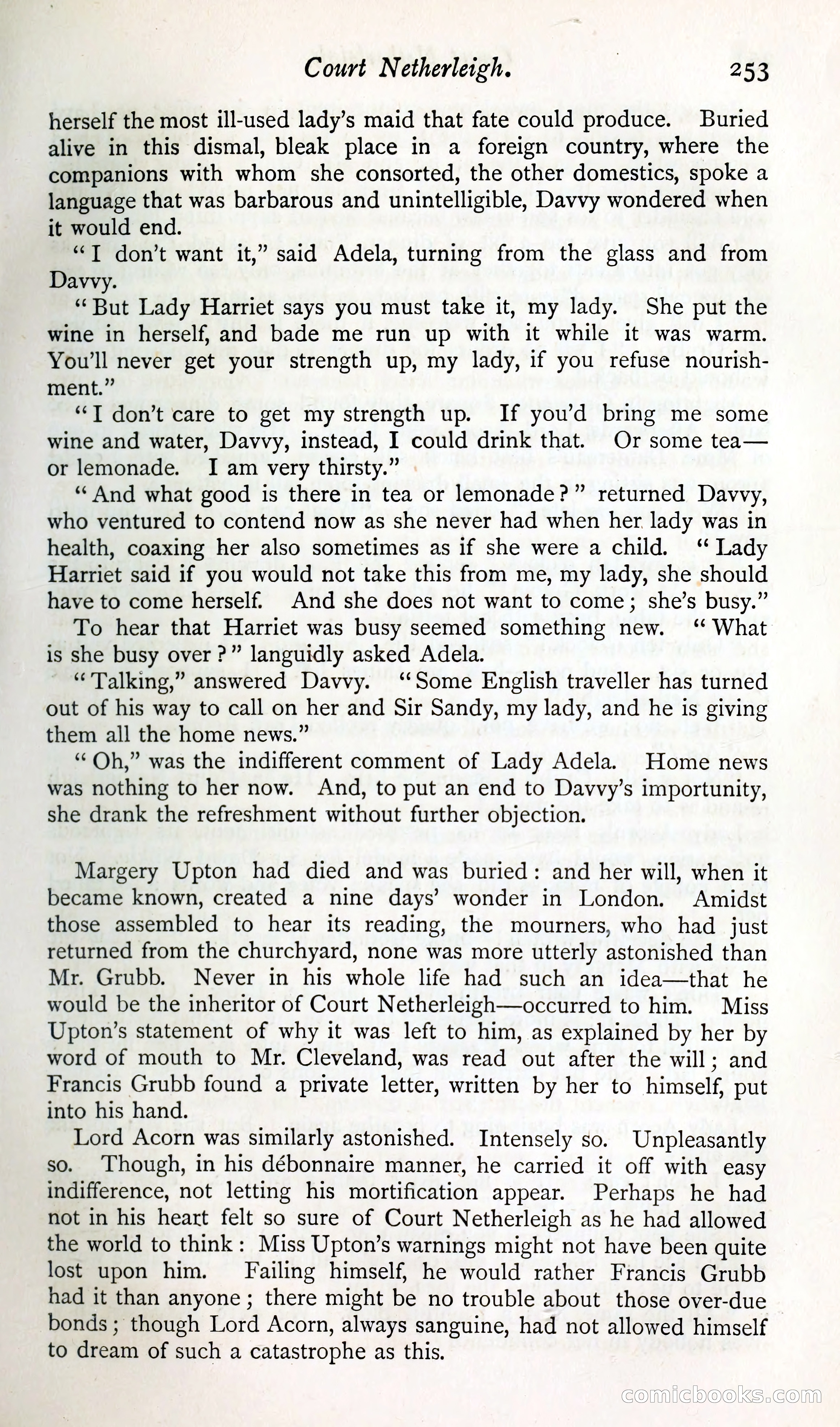
A restored page from Pulp Fiction, 1865. Page through the whole issue in the reader above.
📄 Transcribed text from this page (OCR, searchable)
Machine-transcribed from the original scan — historical spelling and the odd misread are preserved.
Court Netherleigh. | 253 herself the most ill-used lady’s maid that fate could produce. SBuried alive in this dismal, bleak place in a foreign country, where the companions with whom she consorted, the other domestics, spoke a language that was barbarous and unintelligible, Davvy wondered when it would end. “T don’t want it,” said Adela, turning from the glass and from Davvy. “But Lady Harriet says you must take it, my lady. She put the wine in herself, and bade me run up with it while it was warm. You'll never get your strength up, my lady, if you refuse nourish- ment.” ‘‘T don’t care to get my strength up. If you’d bring me some wine and water, Davvy, instead, I could drink that. Or some tea— or lemonade. I am very thirsty.” ‘¢ And what good is there in tea or lemonade?” returned Davvy, who ventured to contend now as she never had when her lady was in health, coaxing her also sometimes as if she were a child. ‘“* Lady Harriet said if you would not take this from me, my lady, she should have to come herself. And she does not want to come; she’s busy.” To hear that Harriet was busy seemed something new. ‘ What is she busy over ?” languidly asked Adela. “Talking,” answered Davvy. ‘‘Some English traveller has turned out of his way to call on her and Sir Sandy, my lady, and he is giving them all the home news.” “Oh,” was the indifferent comment of Lady Adela. Home news was nothing to her now. And, to put an end to Davvy’s importunity, she drank the refreshment without further objection. Margery Upton had died and was buried: and her will, when it became known, created a nine days’ wonder in London. Amidst those assembled to hear its reading, the mourners, who had just returned from the churchyard, none was more utterly astonished than Mr. Grubb. Never in his whole life had such an idea—that he would be the inheritor of Court Netherleigh—occurred to him. Miss Upton’s statement of why it was left to him, as explained by her by word of mouth to Mr. Cleveland, was read out after the will; and Francis Grubb found a private letter, written by her to himself, put into his hand. Lord Acorn was similarly astonished. Intensely so. Unpleasantly so. Though, in his débonnaire manner, he carried it off with easy indifference, not letting his mortification appear. Perhaps he had not in his heart felt so sure of Court Netherleigh as he had allowed the world to think: Miss Upton’s warnings might not have been quite lost upon him. Failing himself, he would rather Francis Grubb had it than anyone; there might be no trouble about those over-due bonds; though Lord Acorn, always sanguine, had not allowed himself to dream of such a catastrophe as this. ECORnnicloOoks (GO