
Pulp Fiction, 1865 · page 258 of 400
The Argosy — page 258: what you’re looking at
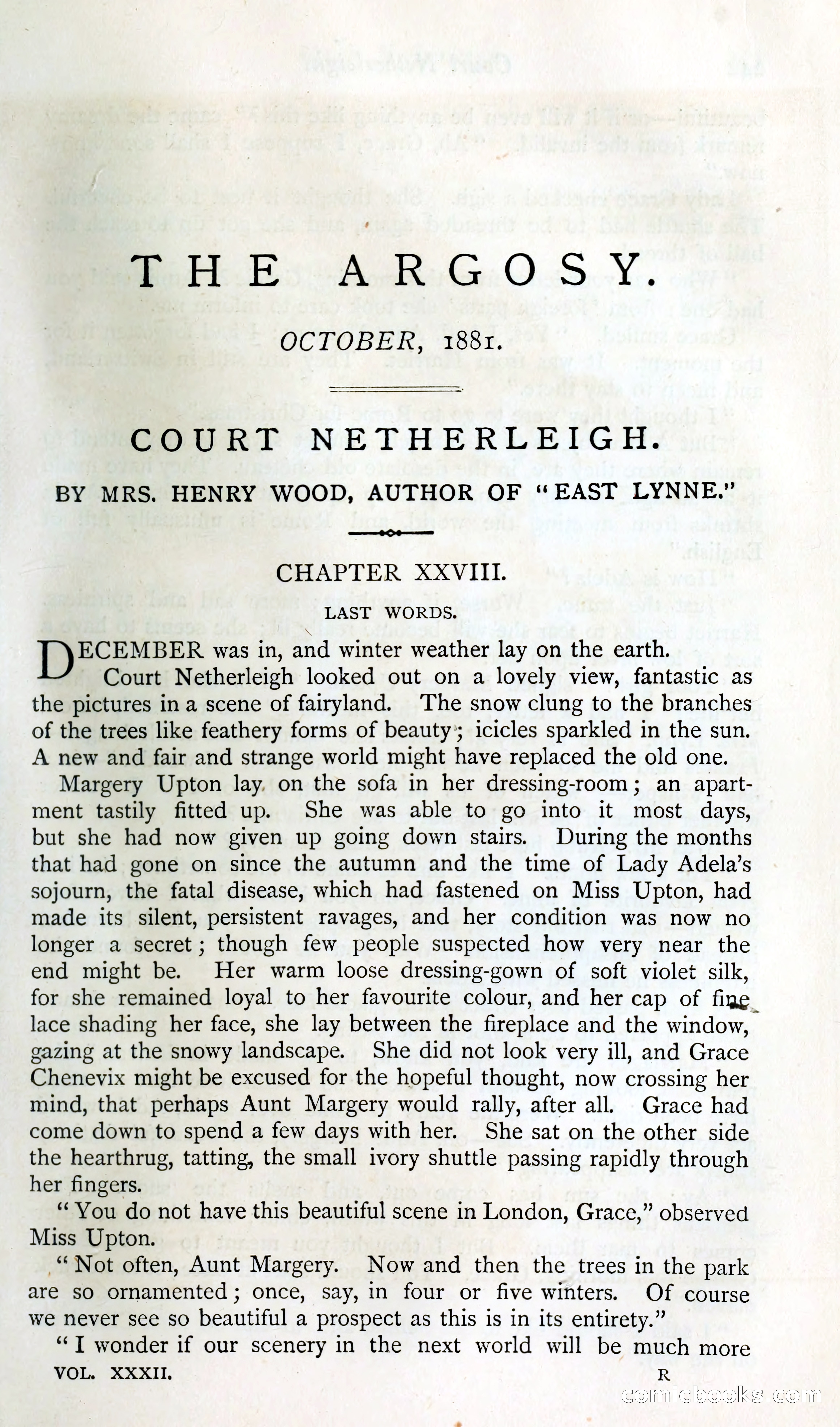
A restored page from Pulp Fiction, 1865. Page through the whole issue in the reader above.
📄 Transcribed text from this page (OCR, searchable)
Machine-transcribed from the original scan — historical spelling and the odd misread are preserved.
THE ARGOSY. OCTOBER, 1881. COURT NETHERLEIGH. BY MRS. HENRY WOOD, AUTHOR OF “EAST LYNNE.” CHAPTER XXVIII. LAST WORDS. fee ER was in, and winter weather lay on the earth. Court Netherleigh looked out on a lovely view, fantastic as the pictures in a scene of fairyland. The snow clung to the branches of the trees like feathery forms of beauty’ icicles sparkled in the sun. A new and fair and strange world might have replaced the old one. Margery Upton lay. on the sofa in her dressing-room; an apart- ment tastily fitted up. She was able to go into it most days, but she had now given up going down stairs. During the months that had gone on since the autumn and the time of Lady Adela’s sojourn, the fatal disease, which had fastened on Miss Upton, had made its silent, persistent ravages, and her condition was now no longer a secret; though few people suspected how very near the end might be. Her warm loose dressing-gown of soft violet silk, for she remained loyal to her favourite colour, and her cap of fiyg lace shading her face, she lay between the fireplace and the window, gazing at the snowy landscape. She did not look very ill, and Grace Chenevix might be excused for the hopeful thought, now crossing her mind, that perhaps Aunt Margery would rally, after all. Grace had come down to spend a few days with her. She sat on the other side the hearthrug, tatting, the small ivory shuttle passing rapidly through her fingers. ‘You do not have this beautiful scene in London, Grace,” observed Miss Upton. “Not often, Aunt Margery. Now and then the trees in the park are sO ornamented; once, say, in four or five winters. Of course we never see so beautiful a prospect as this is in its entirety.” ‘“‘T wonder if our scenery in the next world will be much more VOL. XXXII. R Ccomniclooolkks (c©@)