
Pulp Fiction, 1865 · page 224 of 400
The Argosy — page 224: what you’re looking at
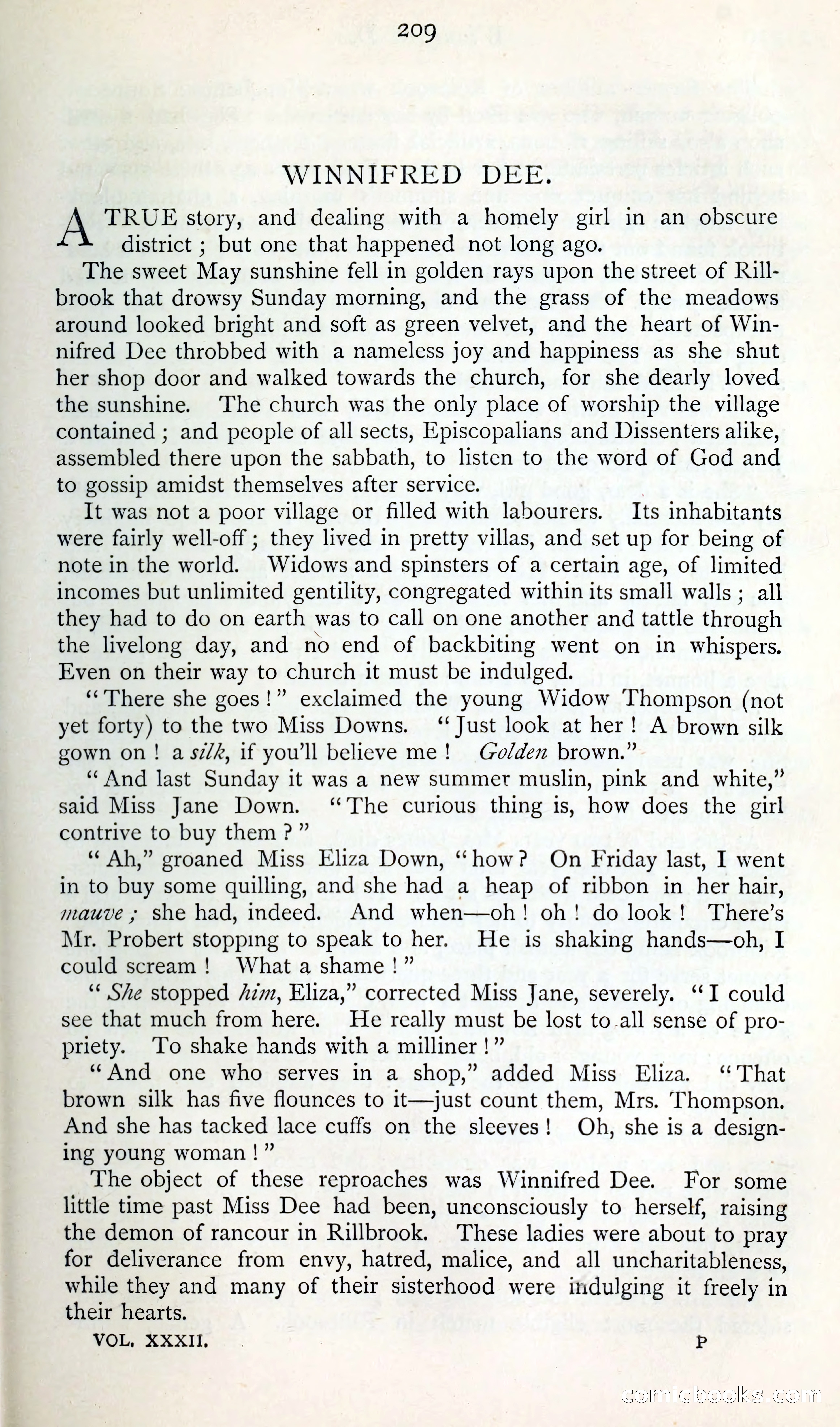
A restored page from Pulp Fiction, 1865. Page through the whole issue in the reader above.
📄 Transcribed text from this page (OCR, searchable)
Machine-transcribed from the original scan — historical spelling and the odd misread are preserved.
209 WINNIFRED DEE. A TRUE story, and dealing with a homely girl in an obscure district ; but one that happened not long ago. The sweet May sunshine fell in golden rays upon the street of Rull- brook that drowsy Sunday morning, and the grass of the meadows around looked bright and soft as green velvet, and the heart of Win- nifred Dee throbbed with a nameless joy and happiness as she shut her shop door and walked towards the church, for she dearly loved the sunshine. ‘The church was the only place of worship the village contained ; and people of all sects, Episcopalians and Dissenters alike, assembled there upon the sabbath, to listen to the word of God and to gossip amidst themselves after service. | It was not a poor village or filled with labourers. Its inhabitants were fairly well-off ; they lived in pretty villas, and set up for being of note in the world. Widows and spinsters of a certain age, of limited incomes but unlimited gentility, congregated within its small walls; all they had to do on earth was to call on one another and tattle through the livelong day, and no end of backbiting went on in whispers. Even on their way to church it must be indulged. “There she goes!” exclaimed the young Widow Thompson (not yet forty) to the two Miss Downs. ‘‘Just look at her! A brown silk gown on! asi, if you'll believe me! Golden brown.” ‘And last Sunday it was a new summer muslin, pink and white,” said Miss Jane Down. “The curious thing is, how does the girl contrive to buy them ?” “ Ah,” groaned Miss Eliza Down, “how? On Friday last, I went in to buy some quilling, and she had a heap of ribbon in her hair, mauve ; she had, indeed. And when—oh! oh! do look! There’s Mr. Probert stopping to speak to her. He is shaking hands—oh, I could scream! What ashame!” “« She stopped /zm, Eliza,” corrected Miss Jane, severely. ‘I could see that much from here. He really must be lost to-all sense of pro- priety. ‘To shake hands with a milliner!” “And one who serves in a shop,” added Miss Eliza. ‘That brown silk has five flounces to it—just count them, Mrs. Thompson. And she has tacked lace cuffs on the sleeves! Oh, she is a design- ing young woman!” The object of these reproaches was Winnifred Dee. For some little time past Miss Dee had been, unconsciously to herself, raising the demon of rancour in Rillbrook. These ladies were about to pray for deliverance from envy, hatred, malice, and all uncharitableness, while they and many of their sisterhood were indulging it freely in their hearts. VOL. XXXII, , Pp CONnNICLOOKS.EO mn