
Pulp Fiction, 1865 · page 160 of 400
The Argosy — page 160: what you’re looking at
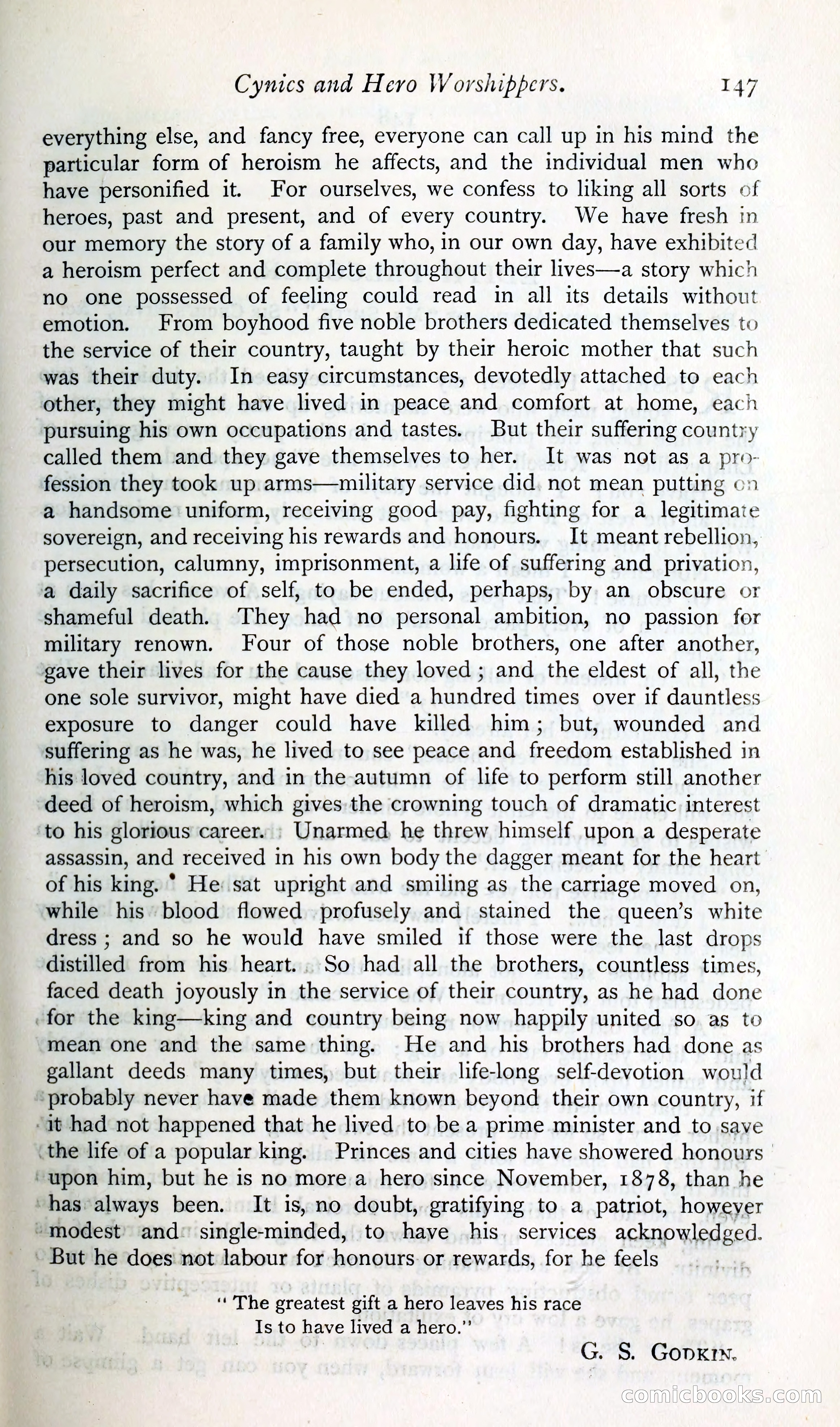
A restored page from Pulp Fiction, 1865. Page through the whole issue in the reader above.
📄 Transcribed text from this page (OCR, searchable)
Machine-transcribed from the original scan — historical spelling and the odd misread are preserved.
Cynics and Hero Worshippers. 147 everything else, and fancy free, everyone can call up in his mind the particular form of heroism he affects, and the individual men who have personified it. For ourselves, we confess to liking all sorts of heroes, past and present, and of every country. We have fresh in our memory the story of a family who, in our own day, have exhibited a heroism perfect and complete throughout their lives—a story which no one possessed of feeling could read in all its details without emotion. From boyhood five noble brothers dedicated themselves to the service of their country, taught by their heroic mother that such was their duty. In easy circumstances, devotedly attached to each other, they might have lived in peace and comfort at home, each pursuing his own occupations and tastes. But their suffering country called them and they gave themselves to her. It was not as a pro- fession they took up arms—nmilitary service did. not mean putting on a handsome uniform, receiving good pay, fighting for a legitimate sovereign, and receiving his rewards and honours. It meant rebellion, persecution, calumny, imprisonment, a life of suffering and privation, a daily sacrifice of self, to be ended, perhaps, by an obscure or shameful death. ‘They had no personal ambition, no passion for military renown. Four of those noble brothers, one after another, gave their lives for the cause they loved; and the eldest of all, the one sole survivor, might have died a hundred times over if dauntless exposure to danger could have killed him; but, wounded and suffering as he was, he lived to see peace and freedom established in his loved country, and in the autumn of life to perform still another deed of heroism, which gives the crowning touch of dramatic interest to his glorious career. ; Unarmed, he threw himself upon a desperate assassin, and received in his own body the dagger meant for the heart of his king. ° He sat upright and smiling as the carriage moved on, while his blood flowed profusely and stained the queen’s white dress ; and so he would have smiled if those were the last drops distilled from his heart... So had all the brothers, countless times, faced death joyously in the service of their country, as he had done .for the king—king and country being now happily united so as to mean one and the same thing. He and his brothers had done as gallant deeds many times, but their life-long self-devotion would ‘probably never have made them known beyond their own country, if -it had not happened that he lived to be a prime minister and to save the life of a popular king. Princes and cities have showered honours | “upon him, but he is no more a hero since November, 1878, than he -has always been. It is, no doubt, gratifying to a patriot, however modest’ and: single-minded, to have his. services acknowledged. _* But he does not labour for honours or rewards, for he feels ‘The greatest gift a hero leaves his race Is to have lived a hero.”’ G. S. Gonxrn. ECOnnicloooks mn