
Pulp Fiction, 1865 · page 148 of 400
The Argosy — page 148: what you’re looking at
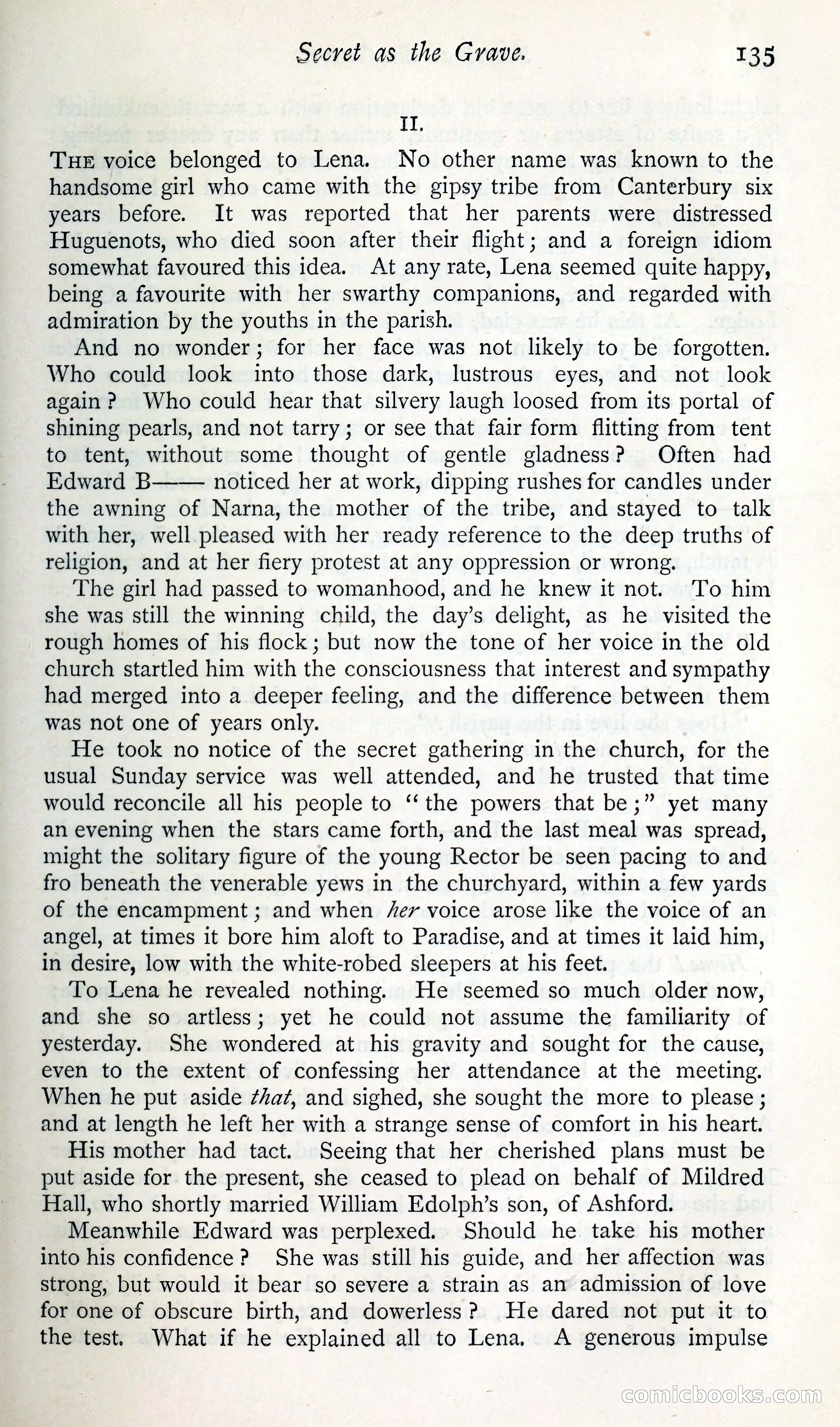
A restored page from Pulp Fiction, 1865. Page through the whole issue in the reader above.
📄 Transcribed text from this page (OCR, searchable)
Machine-transcribed from the original scan — historical spelling and the odd misread are preserved.
Secret as the Grave. 135 IT, THE voice belonged to Lena. No other name was known to the handsome girl who came with the gipsy tribe from Canterbury six years before. It was reported that her parents were distressed Huguenots, who died soon after their flight; and a foreign idiom somewhat favoured this idea. At any rate, Lena seemed quite happy, being a favourite with her swarthy companions, and regarded with admiration by the youths in the parish. And no wonder; for her face was not likely to be forgotten. Who could look into those dark, lustrous eyes, and not look again? Who could hear that silvery laugh loosed from its portal of shining pearls, and not tarry; or see that fair form flitting from tent to tent, without some thought of gentle gladness? Often had Edward B—— noticed her at work, dipping rushes for candles under the awning of Narna, the mother of the tribe, and stayed to talk with her, well pleased with her ready reference to the deep truths of religion, and at her fiery protest at any oppression or wrong. The girl had passed to womanhood, and he knew it not. To him she was still the winning child, the day’s delight, as he visited the rough homes of his flock; but now the tone of her voice in the old church startled him with the consciousness that interest and sympathy had merged into a deeper feeling, and the difference between them was not one of years only. He took no notice of the secret gathering in the church, for the usual Sunday service was well attended, and he trusted that time would reconcile all his people to ‘‘the powers that be;” yet many an evening when the stars came forth, and the last meal was spread, might the solitary figure of the young Rector be seen pacing to and fro beneath the venerable yews in the churchyard, within a few yards of the encampment; and when “er voice arose like the voice of an angel, at times it bore him aloft to Paradise, and at times it laid him, in desire, low with the white-robed sleepers at his feet. To Lena he revealed nothing. He seemed so much older now, and she so artless; yet he could not assume the familiarity of yesterday. She wondered at his gravity and sought for the cause, even to the extent of confessing her attendance at the meeting. When he put aside ¢az, and sighed, she sought the more to please; and at length he left her with a strange sense of comfort in his heart. His mother had tact. Seeing that her cherished plans must be put aside for the present, she ceased to plead on behalf of Mildred Hall, who shortly married William Edolph’s son, of Ashford. Meanwhile Edward was perplexed. Should he take his mother into his confidence? She was still his guide, and her affection was strong, but would it bear so severe a strain as an admission of love for one of obscure birth, and dowerless? He dared not put it to the test. What if he explained all to Lena, A generous impulse ECoOnnicloooks (C(O)