
Pulp Fiction, 1865 · page 128 of 400
The Argosy — page 128: what you’re looking at
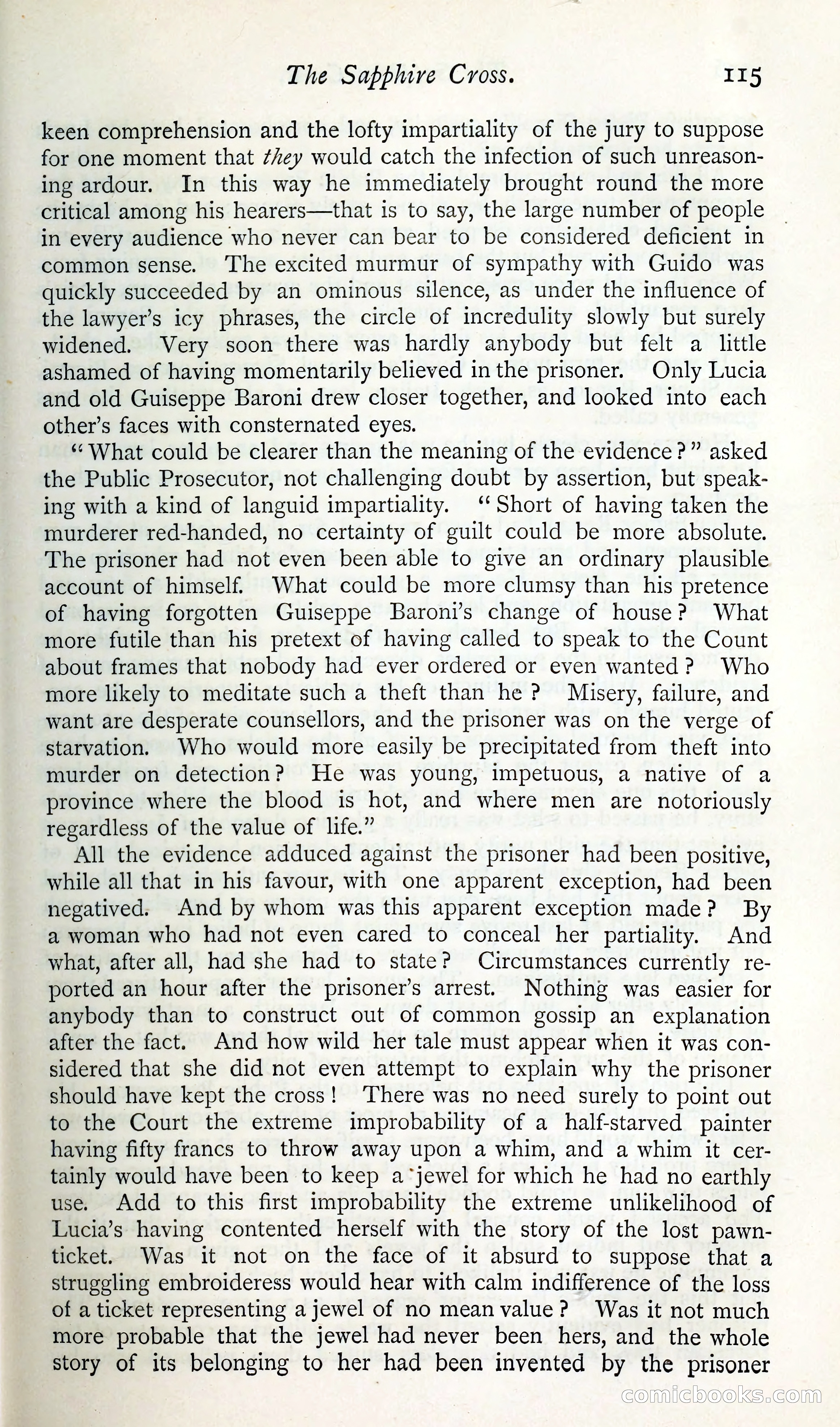
A restored page from Pulp Fiction, 1865. Page through the whole issue in the reader above.
📄 Transcribed text from this page (OCR, searchable)
Machine-transcribed from the original scan — historical spelling and the odd misread are preserved.
The Sapplure Cross. II5 keen comprehension and the lofty impartiality of the jury to suppose for one moment that ¢AZey would catch the infection of such unreason- ing ardour. In this way he immediately brought round the more critical among his hearers—that 1s to say, the large number of people in every audience who never can bear to be considered deficient in common sense. The excited murmur of sympathy with Guido was quickly succeeded by an ominous silence, as under the influence of the lawyer’s icy phrases, the circle of incredulity slowly but surely widened. Very soon there was hardly anybody but felt a little ashamed of having momentarily believed in the prisoner. Only Lucia and old Guiseppe Baroni drew closer together, and looked into each other’s faces with consternated eyes. ‘What could be clearer than the meaning of the evidence P” asked the Public Prosecutor, not challenging doubt by assertion, but speak- ing with a kind of languid impartiality. ‘Short of having taken the murderer red-handed, no certainty of guilt could be more absolute. The prisoner had not even been able to give an ordinary plausible account of himself. What could be more clumsy than his pretence of having forgotten Guiseppe Baroni’s change of house? What more futile than his pretext of having called to speak to the Count about frames that nobody had ever ordered or even wanted? Who more likely to meditate such a theft than he? Misery, failure, and want are desperate counsellors, and the prisoner was on the verge of starvation. Who would more easily be precipitated from theft into murder on detection? He was young, impetuous, a native of a province where the blood is hot, and where men are notoriously regardless of the value of life.” All the evidence adduced against the prisoner had been positive, while all that in his favour, with one apparent exception, had been negatived. And by whom was this apparent exception made? By a woman who had not even cared to conceal her partiality. And what, after all, had she had to state? Circumstances currently re- ported an hour after the prisoner’s arrest. Nothing was easier for anybody than to construct out of common gossip an explanation after the fact. And how wild her tale must appear when it was con- sidered that she did not even attempt to explain why the prisoner should have kept the cross! There was no need surely to point out to the Court the extreme improbability of a half-starved painter having fifty francs to throw away upon a whim, and a whim it cer- tainly would have been to keep a ‘jewel for which he had no earthly use. Add to this first improbability the extreme unlikelihood of Lucia’s having contented herself with the story of the lost pawn- ticket. Was it not on the face of it absurd to suppose that a struggling embroideress would hear with calm indifference of the loss of a ticket representing a jewel of no mean value? Was it not much more probable that the jewel had never been hers, and the whole story of its belonging to her had been invented by the prisoner COMICOOOKS.CO